Therm-a-Rest ProLite 3 Sleeping Pad Review
A look back at the discontinued Therm-a-Rest ProLite 3 self-inflating pad — what made it a thru-hiker staple and why it's now retired.
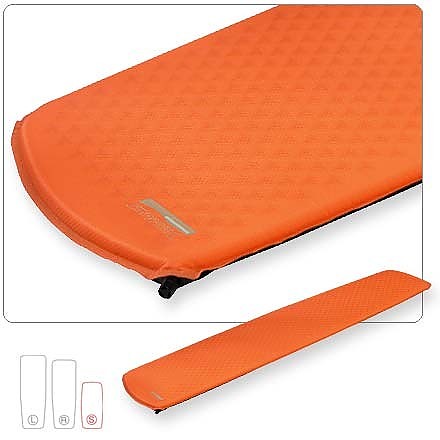
Overview
The ProLite 3 was part of Therm-a-Rest’s old numbered ProLite lineup (1 through 4, differentiated mostly by length and thickness) that predated the current Regular/Large sizing system. It’s a self-inflating foam pad built for 3-season backpacking — the kind of “set it and forget it” insulation that doesn’t require you to blow up an air chamber from scratch every night. Therm-a-Rest has since discontinued the ProLite 3 specifically, folding its niche into the modern ProLite line, but plenty of these pads are still floating around used gear bins and eBay listings, which is likely why you’re reading this.
Key Specs
| Spec | Detail |
|---|---|
| Brand | Therm-a-Rest |
| Model | ProLite 3 |
| Category | Sleeping Pad |
| Construction | Self-inflating open-cell foam |
| Seasons | 3-season |
| Weight | 564 g (~19.9 oz) |
| Status | Discontinued |
| Successor | Therm-a-Rest ProLite (current lineup) |
| R-value | Not officially documented for this specific model; comparable ProLite pads from the same era rated in the 2.4–3.2 range |

Build your Gear Closet
View all of your gear in one place, create packing lists and hit the trail with confidence. Available on iOS, Android and the web.
Get StartedPerformance
Finding hard data on the ProLite 3 specifically is tough — Therm-a-Rest’s old numbering scheme (ProLite 1/2/3/4, plus Small/Short/Regular/Large variants) has been retired for years, and most retailer archives have since scrubbed the listing. What we can lean on is the broader ProLite family’s track record, since the foam-and-fabric formula didn’t change dramatically across generations.
The core self-inflating pitch holds up: self-inflating sleeping pads are not nearly as popular as they were 20 years ago, but they are more durable than a lot of the ultralight air pads that replaced them. You unroll it, open the valve, and it does most of the work — a few extra breaths get you to full firmness. That’s a real advantage over air-only pads when you’re setting up camp in the dark and don’t want to spend five minutes huffing into a valve.
On warmth, later versions of the plain ProLite (not the Plus) were rated at an R-value of 2.4, and reviewers found that with a stated R-value of 2.4, the Therm-a-Rest ProLite has enough warmth for most three season backcountry adventures, and one reviewer found it perfectly adequate for backpacking through Rocky Mountain National Park all summer. Given the ProLite 3 sits in that same family, it’s reasonable to expect similar performance — comfortable down into the 30s°F, but not a pad you’d want deep into winter. Notably, of the nine testers who used it, none complained about being cold in three-season conditions.
Comfort is where these older ProLites earn their cult following. On Reddit’s r/Ultralight, longtime owners consistently describe them as their favorite pad to sleep on, even decades after purchase — one person mentioned a Prolite 4 almost 20 years old, with hundreds of nights on it, at least 50 nights a year for 10 years, and still going strong. Another longtime owner in the same thread noted the trade-off plainly: the prolite is their favorite sleeping pad, just so damn comfortable — though it does get left behind a lot for being heavy. That’s the ProLite 3 in a nutshell: it’s a firm, stable, faceplant-into-a-rock-and-not-notice kind of sleep surface, but it’s not going to compete on weight with modern air pads.
Durability is the other pillar of the ProLite reputation. Self-inflating foam pads are simply harder to puncture-kill than a bare air chamber, and multiple long-term owners report decades of service with minimal maintenance — including one account of a pad used for a decade with just one hole fixed along the way. If your ProLite 3 has survived this long without a leak, that tracks with the model’s general reputation.
Where it falls short by today’s standards is packed size and weight. At 564 g, it’s noticeably heavier than current ultralight air pads (many of which land in the 350–450 g range for a Regular), and self-inflating foam simply doesn’t compress as small as air-only construction. Reviewers of the modern ProLite echoed this same gap, noting that at 17oz it’s far from the lightest pad around, and rivals like the NeoAir XTherm weigh less, pack smaller, and are more comfortable — though at double the price and less durable.
Pros & Cons
Pros
- Genuinely durable — many owners report 10-20+ years of use with the same pad
- Self-inflating design means fast, easy setup with no need to fully blow it up by mouth
- Firm, stable sleep surface that side, back, and stomach sleepers generally get along with
- Field-repairable and simple in construction — no fussy air chambers or baffles to fail
Cons
- Heavier and bulkier than virtually any current ultralight air pad
- R-value on the lower end for the “ProLite” name — fine for summer/shoulder season, not a cold-weather pad
- Discontinued, so you’re buying used or new-old-stock with no warranty support
- Specs (exact R-value, dimensions) for this particular numbered version are poorly documented online
Who Should Buy This
This pad makes sense for someone who already owns one, loves how it sleeps, and just needs it patched or replaced with an identical used unit — not someone shopping new for a lightweight pad in 2026. If you’re drawn to the ProLite 3 because you’ve heard good things about the self-inflating format generally, you’re better served by Therm-a-Rest’s current ProLite or ProLite Apex, which use updated StrataCore foam and come with actual warranty support. Car campers and short-trip backpackers who don’t mind a bit of extra weight for a comfortable, low-maintenance pad are the ideal fit here.
Verdict
The ProLite 3 was a workhorse in its day, and the secondhand units still knocking around clearly have staying power — but it’s a discontinued product with thin documentation, middling warmth, and a weight penalty that current pads have long since solved. If you already have one and it holds air, keep using it. If you’re pad shopping fresh, put your money toward the current ProLite lineup instead. I’d put this at a 6.5/10 as a legacy product — solid in its era, outclassed today.