Sea to Summit Comfort Light Insulated Air Sleeping Pad Review
Sea to Summit's Comfort Light Insulated pad trades weight and warmth for a quilted, stable sleeping surface that suits side sleepers on three-season trips.
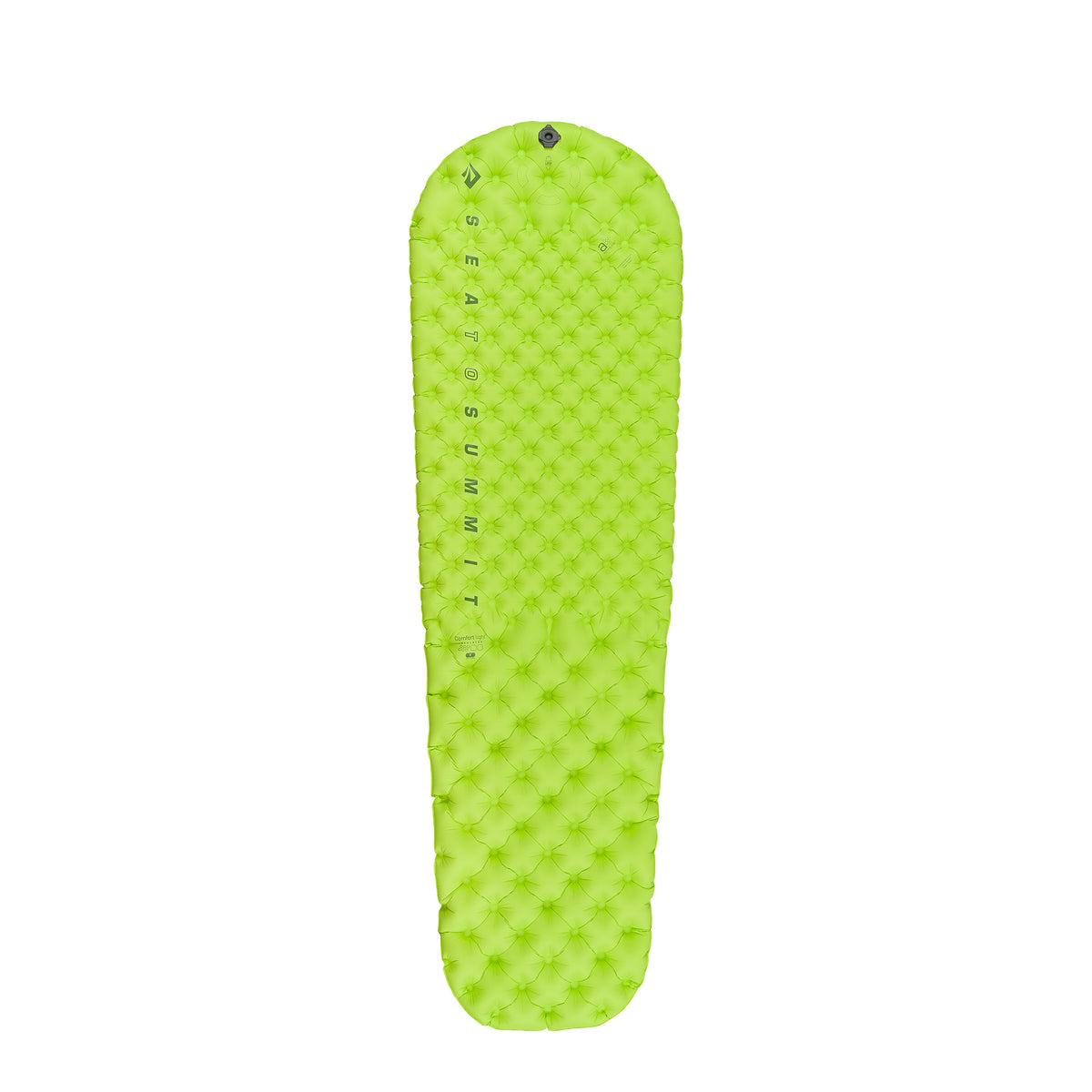
Overview
The Comfort Light Insulated is Sea to Summit’s three-season air pad for hikers who put sleep quality ahead of gram counting. Instead of long tube baffles, it uses a quilt of small Air Sprung Cells, with THERMOLITE synthetic insulation and a reflective Exkin Platinum layer. The trade-off is plain: at 635 g and an R-value of 3.7, it is heavier and cooler than the leading pads in the category, but it sleeps more like a mattress than most.
Key Specs
| Spec | Detail |
|---|---|
| Weight | 635 g (22.4 oz), Regular |
| R-value | 3.7 |
| Thickness | 2.5 in |
| Dimensions | 72 x 21.5 in (Regular) |
| Packed size | 4.5 x 9 in (Regular) |
| Construction | Air Sprung Cells, zoned for the torso |
| Insulation | THERMOLITE synthetic fill with Exkin Platinum reflective fabric |
| Face fabric | 30D/40D nylon |
| Valve | Multi-function valve for inflation, rapid deflation and fine-tuning |
| Season | Three-season |

Would the Comfort Light Insulated Air Sleeping Pad earn its spot in your pack?
635 g · 22.4 ozAdd the Sea to Summit Comfort Light Insulated Air Sleeping Pad to your Gear Closet and see exactly what it does to your base weight, then start packing for your next trip.
Free · No credit card · iOS, Android & web · Trusted by 3,000+ backpackers
Performance
Comfort. This is where the pad earns its keep. The Air Sprung Cells behave like small individual springs rather than a few large tubes, and the layout is zoned. Under the torso the cells are smaller, closer together and double-layered. At the head and feet, where little weight lands, there is a single layer. A reviewer at ADV Pulse found the pad firm enough at full inflation that some air had to come out, and noted that a side-sleeping hip stayed off the ground. Better Trail’s tester came to a similar conclusion, saying the dense box-baffle torso cradles the body more effectively than many thicker pads, especially for side sleepers. TreeLine Backpacker described the cells as gentle support for back and stomach sleepers without a lumpy feel, though a side sleeper with a bad shoulder still woke up with some soreness at 2.5 inches of loft.
Warmth. An R-value of 3.7 covers summer and shoulder-season nights, and not much beyond. Better Trail rated the warmth-to-weight ratio just 2.5 out of 5, calling the pad suitable for true summer backpacking and pointing out lighter, warmer alternatives. The same tester slept on it on snow-covered ground in sub-freezing temperatures and was surprised by how warm it felt, but credited the sleeping bag and layering more than the pad. Older versions of this pad were marketed with higher R-values of 4.2 to 4.3, so owners reading early reviews should expect the current 3.7 rating to be more conservative. Anyone planning on frost should treat it as a pad for warm nights and look elsewhere for cold ones.
Weight and packed size. At 635 g, the Regular is not an ultralight pad by current standards. Better Trail marked it down for being heavier and thinner than leading options at its $199 price. One Slickdeals commenter, discussing a Sam’s Club promotion, summed it up as a backpacking pad that isn’t particularly light. It does roll down to 4.5 x 9 in, small enough to disappear into the bottom of a pack, and Better Trail rated its packed size 4 out of 5.
Setup and valve. The multi-function valve handles rapid inflation, instant deflation and fine adjustment of firmness, and reviewers have praised it since the line launched. One early tester called it the fastest pad to inflate and deflate they had used, and reported that it held air without leaking. REI buyers of the women’s version specifically praise the lightweight pump sack, which clips to the valve. Better Trail noted efficient inflation and setup.
Noise and surface. The face fabric can be slick, a complaint dating to early reviews, and one AT hiker reported that the pad is a bit noisy when you toss and turn. Restless sleepers inside a shared shelter will notice.
Shape. The 21.5 in width in the Regular is enough room to curl the legs while side sleeping and stay centered on the pad, according to Better Trail. That is about the narrowest width most side sleepers will accept.
Pros & Cons
Pros
- Quilted Air Sprung Cells with a double-layer torso zone give supportive, mattress-like comfort, particularly for side sleepers
- Quick, adjustable multi-function valve for inflation and deflation
- Stable surface that keeps hips off the ground
- Compact 4.5 x 9 in packed size
- Synthetic insulation and reflective layer give consistent warmth for summer and shoulder-season trips
Cons
- 635 g is heavy next to the ultralight pads in the category
- R-value of 3.7 limits it to fair-weather use
- Slick, somewhat noisy surface
- At $199, reviewers see weak value versus lighter, warmer options
- 2.5 in thickness is not enough for some heavy side sleepers
Who Should Buy This
Hikers who sleep on their sides, who have trouble getting comfortable on thin or tubular pads, and who camp mostly from late spring to early fall. It also suits weekend and section hikers who care more about a good night’s sleep than a base-weight target. Gram-counting thru-hikers, shoulder-season campers who expect frost, and cold sleepers should look at a lighter or higher-R pad.
Verdict
The Comfort Light Insulated is a comfortable, well-designed pad that asks for extra weight and money in exchange, and gives modest warmth back. It is a good fit for side sleepers on summer trips, and a poor fit for ultralight thru-hikers or anyone chasing cold-weather performance.