REI Co-op Helix Insulated Air Sleeping Pad Review
The REI Co-op Helix Insulated Air offers a certified 4.9 R-value and a quiet, grippy feel at a competitive price — but its baffle design has real comfort trade-offs worth knowing before you buy.
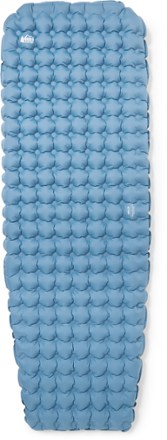
Overview
The REI Co-op Helix Insulated Air is a three-season-plus backpacking pad built around a 4.9 R-value (ASTM F3340 certified), 3-inch loft, and 2-layer reflective insulation — all at a price point that undercuts many of its direct rivals. It’s aimed squarely at the camper or shoulder-season backpacker who wants genuine cold-weather warmth without paying premium ultralight prices. The trade-off, as we’ll get into, is weight and a baffle design that divides opinion.
Key Specs
| Spec | Value |
|---|---|
| Weight | 594 g / 1.31 lb (regular); up to 1.81 lb (large wide) |
| Dimensions | 72 × 24 in. regular; wide (25 in.) and long sizes available |
| Thickness | 3 in. |
| R-Value | 4.9 (ASTM F3340 standard) |
| Insulation Type | 2-layer reflective aluminum-coated PET film |
| Material | 30D ripstop polyester, TPU lamination |
| In the Box | Pump sack, stuff sack, Velcro strap, field repair kit |
| Price | $169–$199 |

Would the Helix Insulated Air Sleeping Pad earn its spot in your pack?
594 g · 21.0 ozAdd the REI Co-op Helix Insulated Air Sleeping Pad to your Gear Closet and see exactly what it does to your base weight, then start packing for your next trip.
Free · No credit card · iOS, Android & web · Trusted by 3,000+ backpackers
Performance
Warmth
At 4.9, the Helix’s R-value sits right at the top of the three-season range. With its 4.9 R-value and two layers of internal reflective insulation, the Helix is nominally a three-season-plus pad — though true winter-worthy pads generally cross the 5.0 threshold. In practice, it’s a strong option for chilly shoulder-season hikes; paired with a warm sleeping bag, you should stay comfortable down to around 20°F. That said, one professional reviewer noted that actual warmth performance didn’t fully match the rated specs in field conditions — worth keeping in mind if you’re relying on this pad as your primary insulation layer in colder temps.
Comfort
This is where things get nuanced, and where you’ll find the starkest split in user feedback. On the positive side, the ripstop polyester face fabric is soft and substantial — a genuine improvement over the slippery, noisier nylon found on pads like the Therm-a-Rest NeoAir XLite NXT. The centering baffle design also does a decent job of keeping you in place, and the soft, slightly tacky material contributes to a stable night’s sleep. It’s also impressively quiet — you won’t be waking up your tent partner every time you roll over.
The flip side: although the Helix is 3 inches thick, it doesn’t perform like a cushy pad. Between the air cells are dead spots of flat, uninflated fabric, making the pad feel flimsy — and those spots are especially obvious when side sleeping, where you can feel the ground more closely than the loft would suggest. Because of this, the Helix lacks structural rigidity and doesn’t lie completely flat in a tent.
Reddit and forum users are more forgiving. Multiple side sleepers have vouched for the pad, and a number of experienced backpackers call it the best pad they’ve owned. One review scored it a 10/10 for back sleepers and a 7–8 for side sleepers — that range probably captures the reality well. Back and stomach sleepers will likely be very happy; heavier side sleepers may feel underserved. One 200-lb side sleeper reported that hips came close to — but didn’t quite touch — the ground when fully inflated.
Setup & Pack-Down
Setup is genuinely easy: a one-way valve handles efficient inflation, and a dedicated dump valve makes deflation fast.
The included color-coded pump sack streamlines inflation and reduces the risk of introducing moisture into the pad.
About five pump-sack fills typically does the job.
The separate valves are more foolproof than stacked designs (like Nemo’s), where it’s possible to accidentally detach the deflation valve when removing the pump sack.
The trade-off is that two valves mean added weight and two potential leak points.
The included stuff sack is generously sized, which makes rolling up and packing away easier than many competitors. REI also throws in a Velcro strap if you’d rather skip the sack entirely.
Weight & Packability
This is the Helix’s clearest weakness relative to the competition. It ranked among the heaviest pads in CleverHiker’s test field, and while there are pads in this price range that weigh significantly less, few match its warmth output at the same cost. It’s also bulkier than other backpacking pads, which can slow down teardown and make fitting it into a packed bag more of a puzzle. For gram-counters, the Nemo Tensor All-Season and Sea to Summit Ether Light XT both come in lighter for comparable warmth.
Durability
Made from 30D ripstop polyester with TPU lamination, the Helix sits in the middle of the pack for durability among air pads.
The 30D fabric is relatively lightweight and holds up well for shorter trips on soft to moderate terrain
— don’t expect it to shrug off sharp gravel without a ground cloth. One tester did report a puncture developing on the second night of use inside a tent, which is a concern; that said, REI includes a field repair kit, and most long-term users report no major durability issues across multiple seasons.
Your sleep style matters here too — restless or heavier side sleepers may put more stress on the seams over time.
Value
Retailing at $169–$199 depending on size, the Helix is competitive rather than cheap.
It’s a solid choice for budget-conscious backpackers prioritizing high insulation
, and REI’s regular 20%-off member sales bring the price down to genuinely attractive territory. Sizing flexibility is a real plus:
the Helix is wide at the shoulders to accommodate different body types, and REI offers wide and long versions at no extra cost — which is not the norm in this category.
Pros & Cons
Pros
- Certified 4.9 R-value at a price most competitors can’t match for equivalent warmth
- Soft, quiet 30D polyester face — noticeably less slippery and less crinkly than nylon alternatives
- Body-centering baffle design keeps you on the pad through the night
- Separate inflation and deflation valves are intuitive and reliable
- Generous stuff sack; easy pack-up
- Wide and long sizes available at no upcharge
Cons
- Dead spots between air cells undermine the 3-inch loft claim — the pad feels thinner than it measures
- Heavy and bulky relative to competitors with similar R-values
- Durability concerns at valve seams; two valves = two potential failure points
- Doesn’t fully lie flat, which can create pressure points in a tight tent footprint
- Real-world warmth may fall slightly short of the rated spec in demanding conditions
Who Should Buy This
The Helix Insulated Air is best suited to back sleepers and stomach sleepers doing three-season shoulder-season trips who want verified warmth and don’t want to pay NeoAir or Tensor prices. It’s also a strong value pick if you catch it on an REI sale. If you’re a side sleeper over 180 lbs, a gram-counter, or someone doing extended trips where pack volume is precious, the weight and comfort limitations will likely frustrate you — and you’d be better served by the Nemo Tensor All-Season or the Sea to Summit Ether Light XT Insulated.
Verdict
The REI Co-op Helix Insulated Air is a genuinely warm, quiet, and grippy pad that delivers on its R-value promise at a price that’s hard to argue with — especially on sale. But the baffle dead spots are a real comfort issue that stop it from being a top recommendation for side sleepers or anyone expecting a plush, mattress-like feel to match the 3-inch spec. It earns its place as a solid mid-tier option, not a category leader. Rating: 6.5/10