Big Agnes Q-Core SLX Review
The Big Agnes Q-Core SLX is a thick, synthetic-insulated three-season pad that trades a little warmth and bulk for exceptional side-sleeper comfort.
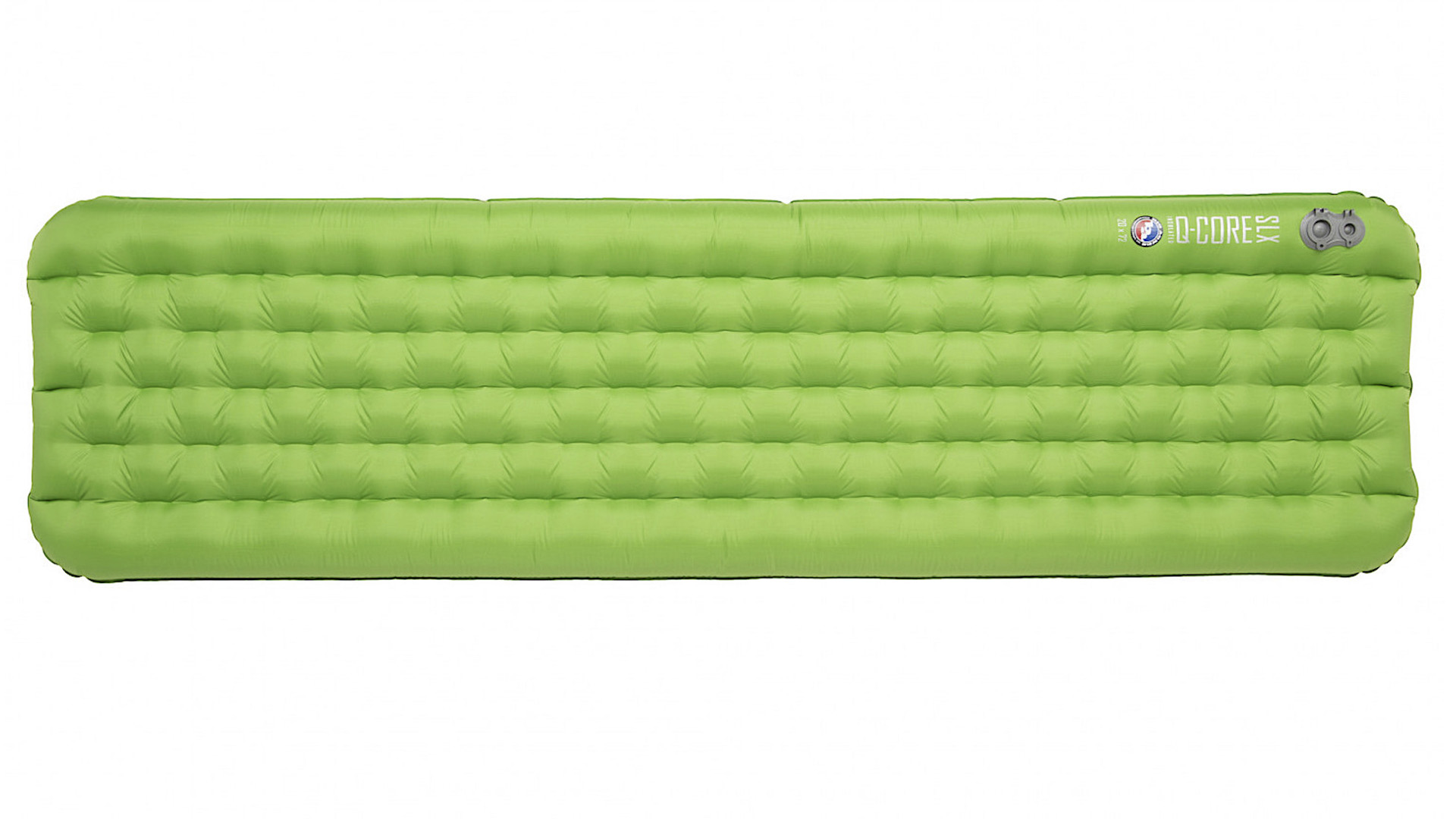
Overview
The Q-Core SLX is Big Agnes’s insulated three-season air pad, built around offset I-beam baffles and PrimaLoft Silver insulation. It’s aimed at backpackers who want a mattress-like sleep surface at a pound or so, and it’s especially friendly to side sleepers. The trade-off is a pad that inflates big, asks a lot of your lungs, and isn’t as warm as its thickness suggests.
Key Specs
| Spec | Value |
|---|---|
| Weight | 454–567 g depending on size |
| R-value | 3.2 |
| Dimensions | 25” x 72” |
| Thickness | 3.5” |
| Packed size | 4” x 8” |
| Insulation | PrimaLoft Silver |
| Construction | Offset I-beam quilted baffles |
| Season | Three-season |
Versions compared
| Version | Weight | vs. lightest |
|---|---|---|
| Standard | 454 g (16.0 oz) | lightest |
| Wide Regular | 567 g (20.0 oz) | +113 g |

Would the Q-Core SLX earn its spot in your pack?
454 g · 16.0 ozAdd the Big Agnes Q-Core SLX to your Gear Closet and see exactly what it does to your base weight, then start packing for your next trip.
Free · No credit card · iOS, Android & web · Trusted by 3,000+ backpackers
Performance
Comfort. This is the SLX’s reason to exist. The quilted I-beam layout creates a pillowy, slightly sinking surface rather than the tube-over-tube feel of conventional horizontal baffles. Outdoor Gear Lab’s testers scored comfort highest of any category, at 8 out of 10, and singled the pad out for side sleepers: it’s thick enough that shoulders and hips don’t bottom out even when it isn’t pumped to full firmness. Enlarged side rails cradle the sleeper and make it harder to roll off the edge, and the dimpled top surface helps keep a bag from sliding around. Reviewers who like a firmer, flatter platform have found it too soft, and one tester likened a night on it to floating on a raft.
Warmth. At R 3.2, the SLX is a shoulder-season pad, not a winter one. Owners report sleeping comfortably in the 30s Fahrenheit, and one buyer who normally carries a Therm-a-Rest NeoAir XLite said he noticed no difference in warmth. Testers are less generous: Outdoor Gear Lab scored warmth 6 out of 10, and its reviewers of the narrower size judged the insulation modest given how small the pad packs. Treat it as a pad for temperatures down to around freezing, and pair it with a closed-cell foam sheet if the forecast goes lower.
Weight and packed size. At 454 g for the Standard, the SLX sits close to other 16-ounce pads, though it doesn’t match the lightest in its class. Therm-a-Rest’s NeoAir XLite NXT MAX in Regular Wide, for comparison, weighs 650 g with a 3-inch profile. Deflated, the pad falls flat like a sheet of nylon, with no foam fighting the roll, so it packs to roughly a Nalgene’s footprint without needing someone to kneel on it. When inflated, though, it takes up a lot of tent floor.
Inflation and valve. Thickness has a cost in breaths. Reviewers note that filling a pad this tall by mouth takes more effort than a typical 2.5-inch model, particularly at altitude, and the pad doesn’t ship with a pump sack. The dedicated deflation valve gets consistent praise: it dumps air quickly and makes rolling the pad up painless.
Durability and noise. The shell uses a double rip-stop nylon that Big Agnes says is 25 percent more tear-resistant than the earlier Q-Core. Testers still call durability middling, which is typical of ultralight fabrics; Outdoor Gear Lab gave it 6 out of 10. One owner slept on rocky ground at the base of Mount Baker without worrying about the pad, and Big Agnes’s warranty is a recurring reason owners cite for buying. Noise is modest: there’s no crinkle, though a reviewer in New Zealand noted a squeak when rolling over, and others heard only a soft shift of baffles and clothing.
Choosing a Version
The two versions share the same construction, R-value and thickness; what changes is the footprint and the weight.
- Standard (454 g): The pick for most backpackers. It’s the lighter option and the better match for anyone counting grams on a long trail.
- Wide Regular (567 g): Adds 113 g for extra width. It makes sense for broad-shouldered sleepers, restless side sleepers who tend to drift off the pad, and anyone who feels cramped on a standard-width pad. The extra weight is hard to justify if you sleep still and compactly.
Pros & Cons
Pros
- Exceptionally cushy, with side-sleeper support that few backpacking pads match
- Large side rails and a dimpled top keep sleepers centered and bags in place
- Fast, effective deflation valve and a flat, easy roll
- Packs to about the size of a water bottle
- Insulated well enough for typical three-season use at R 3.2
- Backed by a warranty that owners trust
Cons
- Thickness means more breaths to inflate, and no pump sack is included
- Not as warm as the thickness implies; R 3.2 limits it to cold shoulder-season nights
- Heavier than the lightest pads in its class
- Shell fabric is only moderately durable
- Inflates bulky, and soft enough that firm-surface sleepers may dislike it
Who Should Buy This
The SLX suits three-season backpackers who sleep on their sides, move around at night, or simply value comfort over the last few ounces. It’s a fit for weekend trips and long-distance hikers who rarely camp below freezing. Cold-weather campers should look for a higher R-value, and gram-counting minimalists or back sleepers who like a firm platform will find lighter, thinner pads that serve them better.
Verdict
The Q-Core SLX is a comfort-first pad that delivers on its main promise: a plush, stable night’s sleep at about a pound, in a package that stuffs away small. It’s not the warmest or lightest option, but for side sleepers who camp in mild conditions, it’s among the better-feeling pads going.