Sawyer Mini Water Filter Review
The 2-oz Sawyer Mini is a cheap, tiny hollow-fiber filter that suits solo and short trips, but its flow slows and clogs faster than the full-size Squeeze.
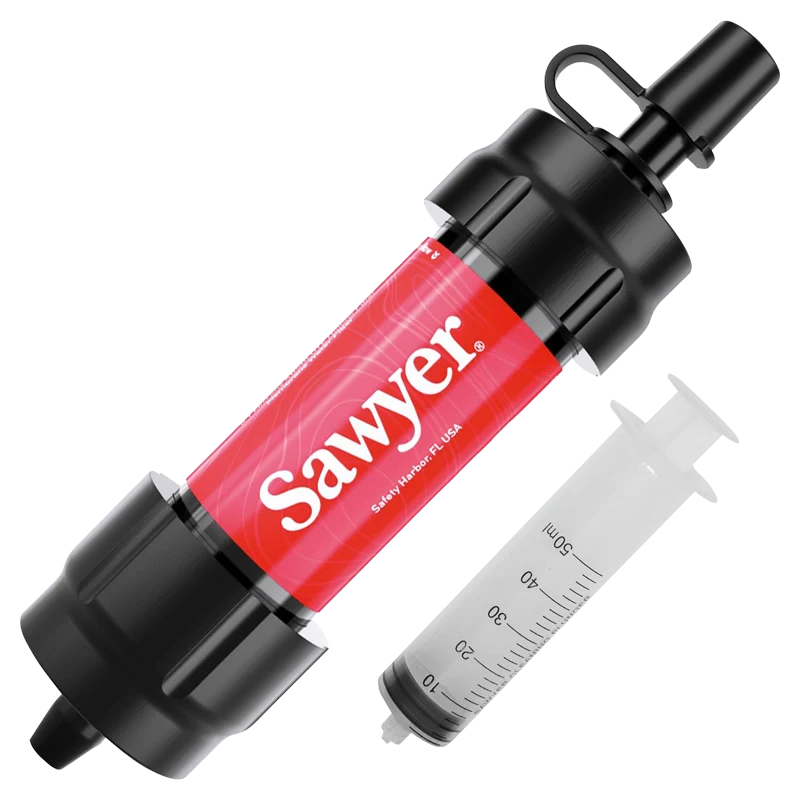
Overview
The Sawyer Mini is a palm-sized hollow-fiber filter that threads onto a pouch, a 28 mm soda or Smartwater bottle, or a hydration hose, or works as a straw. It has been a default budget filter for solo backpackers for years, and it’s still among the lightest ways to carry treated water. The trade-off is flow: the Mini is slower and clogs sooner than its larger sibling, the Sawyer Squeeze, and it asks for more maintenance than its tiny size suggests.
Key Specs
| Spec | Value |
|---|---|
| Filter media | Hollow-fiber membrane |
| Pore rating | 0.1 micron absolute |
| Rated filter life | Up to 100,000 gallons |
| Filter weight | 56.7 g (2 oz) |
| Kit weight with accessories | 4.93 oz (about 140 g) |
| Included | 16 fl oz reusable squeeze pouch, straw, cleaning syringe |
| Removes | Bacteria, protozoa, microplastics |
| Does not remove | Viruses |
| Attachments | 28 mm threaded bottles, hydration packs, included pouch, straw |

Build your Gear Closet
View all of your gear in one place, create packing lists and hit the trail with confidence. Available on iOS, Android and the web.
Get StartedPerformance
Filtration. Sawyer rates the membrane at 0.1 micron absolute and claims removal of 99.99999 percent of bacteria such as salmonella, cholera and E. coli, 99.9999 percent of protozoa, and all microplastics. Outdoor Gear Lab’s testers describe it as reliable against bacteria and protozoa, including Giardia and Cryptosporidium, but note that it does not handle viruses. For most North American backcountry water that is sufficient. Travelers heading to regions with viral risk need a chemical or UV step added.
Weight and packability. At 56.7 g, the filter alone is small enough to forget in a side pocket. With the pouch, straw and syringe, the kit runs 4.93 oz (about 140 g). Many hikers leave the pouch at home and thread the filter onto a disposable bottle instead, which saves weight and avoids the pouch’s well-documented weak spot.
Flow rate. This is where the Mini gives ground. Owners describe it as fine for one person drinking at the source or filling a bottle or two at a time, with one buyer reporting roughly a quart a minute when new. Filtering for extra people got “slow and laborious.” Outdoor Gear Lab points to the narrow output nozzle as the reason water takes real effort to push through. The Trek’s comparison of the Mini and the Squeeze found the Mini noticeably slower out of the box, and reported that Mini users often see reduced flow within a week or two of heavy use. The same piece allows that results vary, citing one blogger whose Mini and Squeeze ended up with about the same flow after extensive use.
Clogging and maintenance. Backpacking Light forum threads show the split clearly. Some owners backflush only once every few trips and never notice a problem. Others report a Mini that clogged badly on a single Sierra trip, with flow around 20 minutes per liter that backflushing only partly fixed. The common advice: collect from the clearest water available, skip silty pools, and push a little clean water backward through the filter after each session rather than waiting for it to slow. Thru-hikers on the forum describe carrying the included syringe for this. Others suggest a periodic faucet-pressure backwash at home. Water left sitting in the filter between trips makes later cleaning harder.
Freezing. Like every Sawyer, the hollow-fiber membrane can be damaged if it freezes, and the damage is invisible. Water still flows, but it may not be filtered properly. In shoulder season, hikers sleep with the filter in the bag and carry it in a pocket during cold days.
Pouch durability. The included 16 oz pouch is the least-loved piece. Outdoor Gear Lab reports the bags break regularly given how hard they must be squeezed, and one owner replaced theirs with sturdier third-party bags. Cold hands make the squeezing worse. One backpacker reported that a hiking partner had to take turns because of the effort.
Value. Owners on Reddit routinely cite a price around $20, and they favor it over drinking-straw filters at a similar price. At that cost, replacing a worn Mini between seasons is a realistic strategy, one that some owners openly follow.
Pros & Cons
Pros
- Filter weighs 56.7 g; full kit is about 140 g
- 0.1 micron absolute rating handles bacteria, protozoa and microplastics
- Threads onto 28 mm bottles, hydration hoses and the included pouch, or works as a straw
- Very low price for a filter with a 100,000-gallon rated life
- Includes a cleaning syringe for field backflushing
Cons
- Slower than the Squeeze, and prone to clogging with silty or organic-heavy water
- Needs regular backflushing to stay usable
- Does not remove viruses
- Freeze damage is undetectable
- Included pouch tears and is tiring to squeeze
Who Should Buy This
The Mini suits solo weekend and section hikers, travelers, and anyone building an emergency kit who wants a filter that costs little and weighs next to nothing. It works best for people who drink from clear streams, backflush habitually, and don’t mind waiting. It is a poor match for long-distance thru-hikers, couples sharing one filter, or anyone filtering cloudy water week after week. Those users should step up to the full-size Sawyer Squeeze, which carries a modest weight penalty in exchange for faster flow and fewer clogs.
Verdict
The Sawyer Mini earns its place as a cheap, featherweight filter for one person on short or moderate trips. Treat the pouch as disposable, backflush often, and keep it from freezing. Anyone planning months of continuous use should buy the Squeeze instead.