Katadyn Micropur MP1 Review
Katadyn's Micropur MP1 chlorine dioxide tablets add virus and Cryptosporidium protection to a pack for about an ounce, but the 4-hour wait is a real cost.
Overview
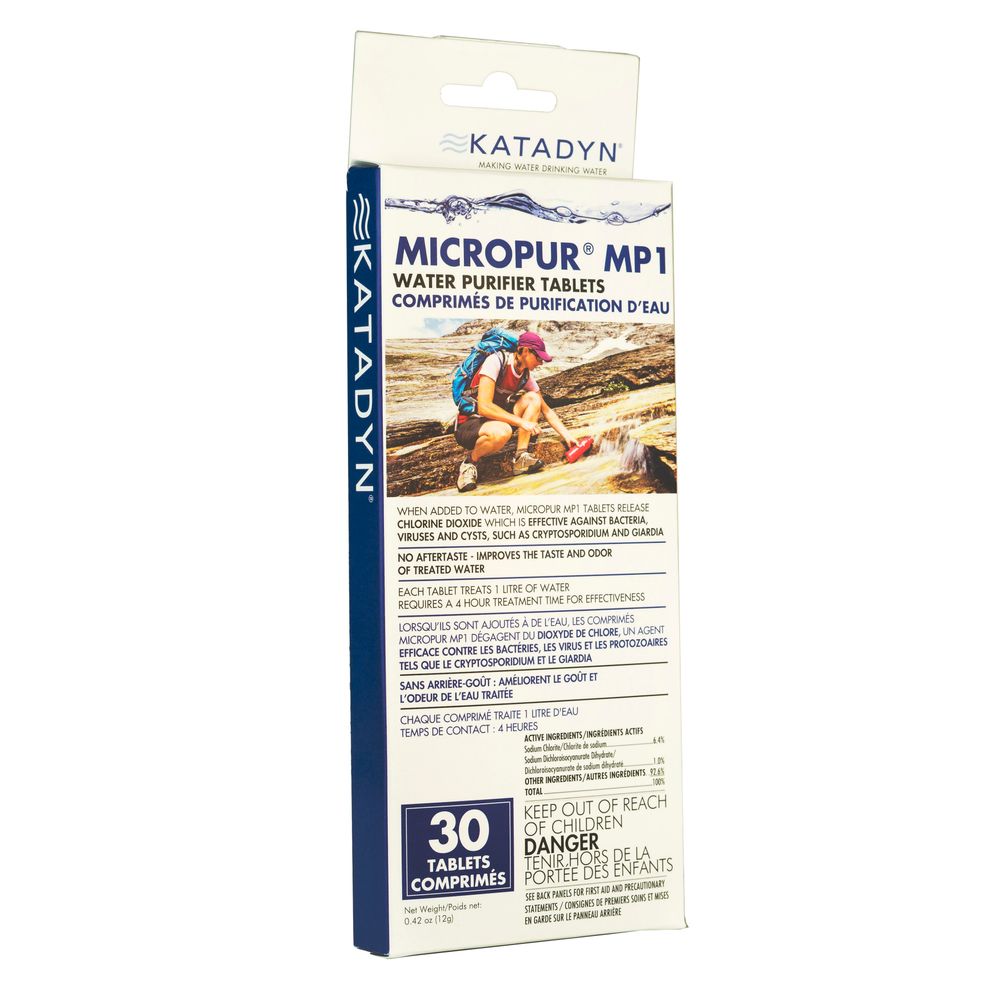
The Micropur MP1 is a foil-wrapped chlorine dioxide tablet that treats one liter of water, and it is the standard lightweight answer to the virus gap in hollow-fiber filters. It suits ultralight hikers who want a backup for questionable water, or a primary treatment on trips where every ounce counts. The trade-off is time: bacteria and viruses take 15 minutes, but a full Cryptosporidium kill takes four hours.
Key Specs
| Spec | Detail |
|---|---|
| Active ingredient | Chlorine dioxide (generated from sodium chlorite) |
| Dose | 1 tablet per 1 liter |
| Contact time: bacteria and viruses | 15 minutes |
| Contact time: Giardia | 30 minutes |
| Contact time: Cryptosporidium | 4 hours |
| Weight | 12.8 g |
| Shelf life | 5 years from manufacture, sealed in individual foil strips |
| Pack sizes | 20 or 30 tablets |
| Water suitability | Clear water; pre-filter or settle cloudy sources |

Build your Gear Closet
View all of your gear in one place, create packing lists and hit the trail with confidence. Available on iOS, Android and the web.
Get StartedPerformance
Protection. The MP1 covers all three pathogen classes: viruses, bacteria and protozoan cysts. That includes Cryptosporidium, which iodine does not reliably kill. Retailers and Katadyn describe it as EPA-registered as a microbiological water purifier. For hikers carrying a Sawyer Squeeze or BeFree, which stop bacteria and protozoa but not viruses, the tablets close the remaining gap. CleverHiker’s gear analyst carried them as a second line of defense on a 500-mile GR11 thru-hike. The route crosses pastureland, and many of its water sources are shared with cattle.
Speed. This is the weak spot. Outdoor Gear Lab gave the tablets a 10 for weight and a 3 for speed. Its testers called the four-hour recommendation a “huge turn-off”. They also noted that nobody can know whether a given stream carries Cryptosporidium, so shortening the wait is a gamble. In practice, hikers split the difference. They drop a tablet in at a source and drink it a few miles later. Or they filter first and add a tablet only for virus insurance, a pairing owners on Trailspace describe using with pump filters. On a hot afternoon with an empty bottle, a tablet will not rescue anyone.
Taste. Most users rate the MP1 well here. Reviewers report that the tablets dissolve quickly and leave little aftertaste, and one Trailspace owner compared the result to tap water. A faint chlorine smell shows up while the chemistry works, but it is hardly noticeable in clean water. 99Boulders spent five days drinking only tablet-treated water. It named the MP1 its top pick and said it had the best flavor of the Cryptosporidium-rated tablets it tested.
Weight and durability. At 12.8 g for the pack, the MP1 is effectively weightless. Each tablet sits in its own sealed strip, so there is no bottle to leak and no two-part mix. Unlike drops, there is nothing to spill. A Trailspace owner noted that the foil has no easy-tear notch, so a knife blade or multitool scissors helps. The shelf life is five years from manufacture when the strips stay sealed, which makes a pack a reasonable resident of a first-aid kit.
Capacity. The tablets scale poorly. One tablet is one liter, so a 30-count pack covers 30 liters. A two-person team on a desert section would burn through a pack quickly. Cloudy water also needs pre-filtering, since the tablets are rated for clear water only. A bandana or coffee filter handles the worst of it.
Choosing a Version
The only difference is count: 20 tablets (20 liters) or 30 tablets (30 liters). The chemistry, tablet size and foil packaging are the same. The 20-count pack suits an emergency kit or a weekend backup. The 30-count pack suits a week-plus trip or a thru-hiker who wants virus insurance for stretches of questionable water. For regular use the larger pack is the better value per liter.
Pros & Cons
Pros
- Kills viruses, bacteria, Giardia and Cryptosporidium
- 12.8 g for the pack, with no bottle, pump or moving parts
- Individually sealed, with a five-year shelf life
- Mild taste compared with iodine
- Cannot clog, freeze-crack or leak
Cons
- The four-hour wait for full Cryptosporidium protection
- One tablet per liter, so capacity is limited
- Clear water only; cloudy sources need pre-filtering
- Foil strips can be fiddly to open without a blade
- A faint chlorine odor during treatment
Who Should Buy This
Buy the MP1 if you hike with a microfilter and want virus protection in cattle country, in international travel, or below popular campsites. It also fits ultralighters who plan their water carries and can treat while walking. It is a good pick for the emergency kit as well. Skip it as a sole treatment if you need to drink within minutes, if you hike in silty desert water without a pre-filter, or if you treat for a group. In those cases a filter or a UV pen does the job faster.
Verdict
The MP1 is the best-known lightweight chemical purifier, and it earns that standing by killing everything in the water, including viruses and Cryptosporidium. Its patience requirement keeps it from being a filter replacement for most hikers. As a backup or a planned-wait primary system, it is easy to recommend.