CNOC ThruBottle Review
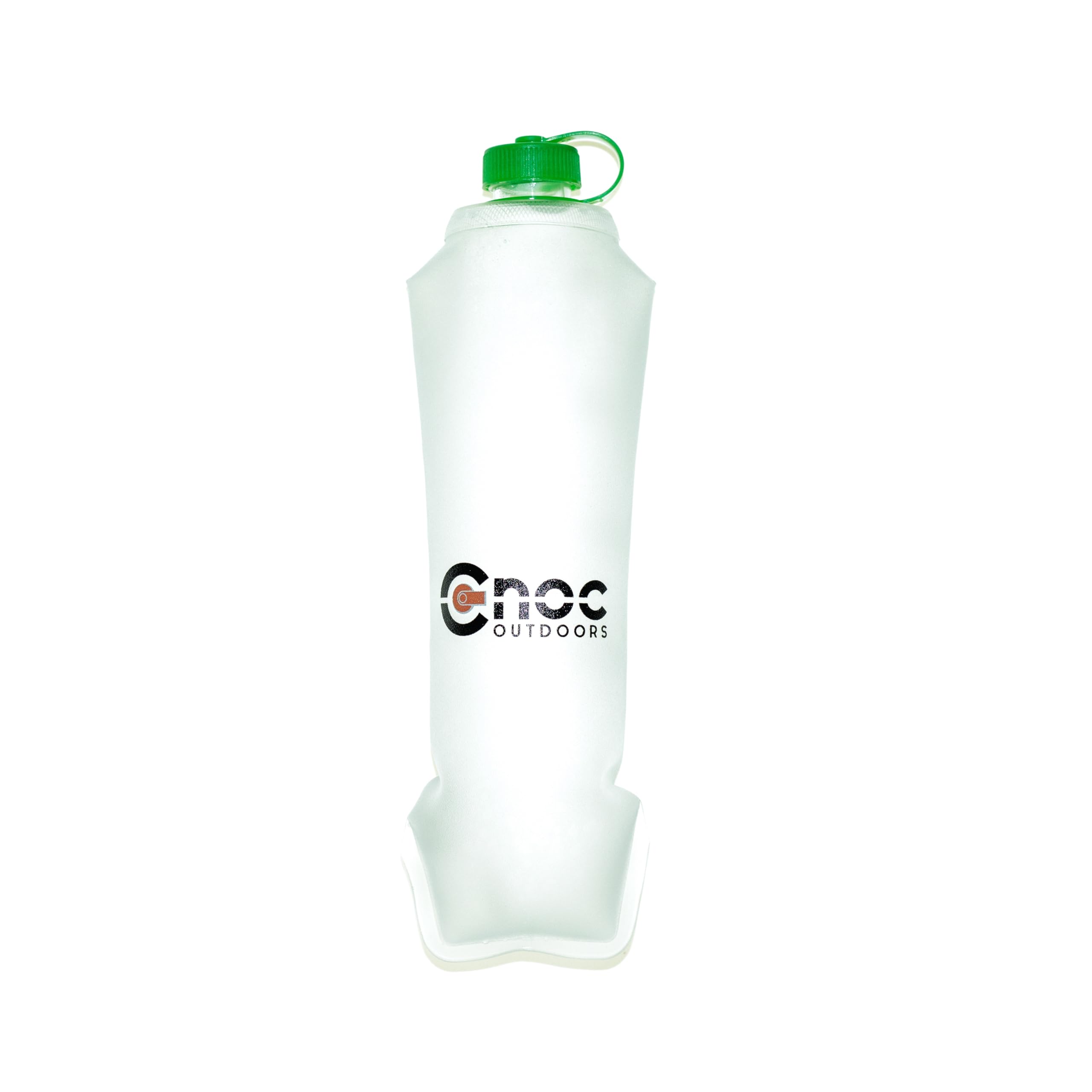
A durable, reusable HDPE take on the classic Smartwater bottle, built to thread straight onto your Sawyer Squeeze or BeFree.
Overview
The ThruBottle is CNOC’s answer to a problem every thru-hiker has quietly complained about: the disposable Smartwater bottle is the best water container in backpacking, but it’s still a single-use bottle you’re supposed to feel bad about reusing for 800 miles. CNOC took the exact shape and thread pattern that made Smartwater bottles a trail staple and rebuilt it in food-grade HDPE, meant to survive a full thru-hike instead of a week. It’s aimed squarely at ultralight backpackers and filter users who want the Smartwater form factor without the guilt — or the eventual bottle failure.
Key Specs
| Spec | Value |
|---|---|
| Weight | 90 g (3.2 oz) |
| Capacity | 1 liter |
| Thread size | 28mm (Sawyer/HydroBlu/LifeStraw compatible) |
| Material | HDPE (BPA/BPS/BPF-free) |
| Temperature rating | -58°F to 175°F (-50°C to 80°C) |
| Cap | Tethered, with pull lanyard |
| Features | Exterior fluid ounce/liter markings |

Build your Gear Closet
View all of your gear in one place, create packing lists and hit the trail with confidence. Available on iOS, Android and the web.
Get StartedPerformance
The core pitch of the ThruBottle is simple: it’s shaped and threaded almost identically to a Smartwater bottle, so it drops into the same use case without any adjustment. It shares the same thin shape and 1 liter capacity as a Smartwater bottle, and it’s compatible with Sawyer water filters and other bottles with a 28mm thread. That means if your current filter setup revolves around threading a Sawyer Squeeze onto a soda bottle, the ThruBottle slots right in with zero changes to your routine — it works flawlessly with water filters like the Sawyer Squeeze and Platypus Quickdraw, no adapters needed.
Where it separates from a disposable bottle is durability and daily-use ergonomics. CNOC added a couple of small but genuinely useful touches: a tethered cap, pull lanyard, and exterior fluid markings. The tethered cap in particular solves a real annoyance — anyone who’s fumbled a loose Smartwater cap into a creek while filtering knows why that matters. One reviewer who put two ThruBottles through Vermont’s Long Trail filtered from one bottle to the other 71 times over two weeks, and yes, they counted — that’s a solid stress test for a bottle that’s supposed to replace something disposable, and both held up.
The material swap from PET to HDPE brings real trade-offs worth understanding before you buy. HDPE is thicker and more rigid than the thin PET used in a Smartwater bottle, which is why a one-liter Smartwater weighs about 1.2 ounces while the ThruBottle comes in around 3 ounces — a roughly 2-ounce weight penalty for going reusable. That extra plastic also makes the bottle noticeably stiffer to squeeze than a fresh Smartwater bottle. It’s a real complaint on the original ThruBottle design, where one buyer summed it up as “They are ok. The plastic is too hard to squeeze.” CNOC has since revised the design — the current version marketed as the “ThruBottle 1000” is described as lighter and more squeezable than the original, and the specs listed here (90g) match that updated model rather than the stiffer V1. If squeeze-ability for gravity or push-style filtering is your top priority, this is the one detail to confirm on the current listing before you buy, since older stock of the V1 is still floating around some retailers.
On temperature and material safety, HDPE gives it a wide working range and a cleaner health profile than PET, which is prone to degrading and leaching under repeated sun exposure and heat — a real issue for anyone who’s kept a Smartwater bottle strapped to the outside of a pack for a full season. The ThruBottle is rated from -58°F to 175°F, comfortably covering everything from desert car camping to alpine starts.
One durability note worth flagging: reviewers consistently point out that none of the ThruBottle’s nice extras — tethered cap, markings, lanyard — will save you if it falls out of a side pocket on a scramble. While all of these features are nice-to-have, none of them will prevent you from losing the bottle if it falls out of your backpack, but if you can avoid losing it, it’s an excellent alternative to a Smartwater bottle. That’s less a product flaw than a reminder that this is still a $15-20 bottle, not a $2 one — losing it stings more.
Pros & Cons
Pros
- Direct drop-in replacement for Smartwater bottles — same shape, same 28mm thread, no adapters needed
- Genuinely durable HDPE construction meant to survive a full thru-hike, not a week
- Tethered cap and pull lanyard fix two of the most annoying disposable-bottle habits
- Wide temperature range and BPA/BPS/BPF-free material for long-term reuse
- Exterior volume markings are handy for dosing electrolytes or measuring cook water
Cons
- About 2 oz heavier than a disposable Smartwater bottle — real weight for gram-counters
- HDPE is noticeably stiffer to squeeze than thin PET, especially on the original design
- Costs meaningfully more than a $3-5 Smartwater bottle, and losing it hurts more
- No insulation, color options, or handle — it’s deliberately barebones
Who Should Buy This
The ThruBottle makes the most sense for thru-hikers and long-distance backpackers who already run a Sawyer Squeeze or similar 28mm filter and are tired of disposable Smartwater bottles cracking, popping, or getting binned every resupply. It’s a good fit if you value the Smartwater form factor but want something that’ll actually last the whole trail and skip the sun-degradation concerns of thin PET. If you’re chasing every last gram on a short trip, or you strongly prefer an easily-squeezed soft flask for fast filtering, you may be better served by a dedicated soft flask or just cycling through cheap Smartwater bottles.
Verdict
The ThruBottle does exactly what it sets out to do: it takes the best water bottle shape in backpacking and makes it reusable without sacrificing filter compatibility. The 2-ounce weight penalty and stiffer squeeze are real trade-offs, but for hikers doing hundreds of filtering cycles on a long trail, the durability and small ergonomic wins add up. I’d call it a 7.5/10 — a smart upgrade for thru-hikers, but not essential if you’re happy replacing Smartwater bottles as you go.