Coghlan's Trowel Review
Coghlan's 55 g orange plastic trowel costs about $3–4 and digs fine cat holes in soft soil, but it's bulky and struggles in rock and roots.
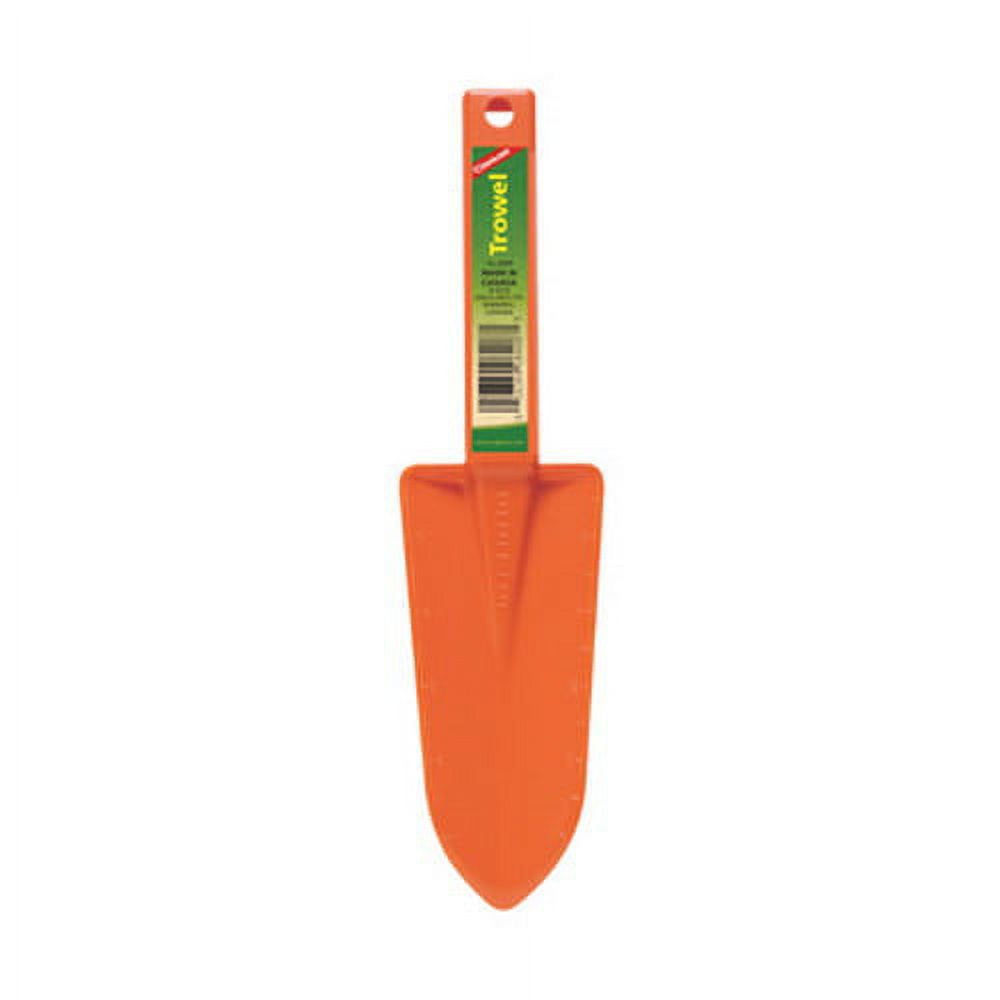
Overview
The Coghlan’s Trowel is the blaze-orange plastic digger that has ridden in backpacker side pockets since before most of today’s cottage-industry titanium alternatives existed. It’s built for one job, digging cat holes to Leave No Trace depth, and it costs roughly what a gas-station coffee does. The trade-off is plain: it’s cheap and hard to lose, but it’s bigger and weaker than the metal tools ultralight hikers tend to graduate to.
Key Specs
| Spec | Detail |
|---|---|
| Weight | 55 g (2 oz) |
| Material | ABS plastic (high-impact styrene) |
| Overall length | About 10.9 in (27.6 cm) |
| Blade | About 6 in long, 2.75 in wide at the base |
| Handle | About 5 in long, 0.75 in square, with a lanyard hole |
| Color | Orange |
| Made in | Canada |
| Warranty | 1-year limited (workmanship and materials) |
| Typical price | About $3–4 |

Would the Trowel earn its spot in your pack?
55 g · 1.9 ozAdd the Coghlan's Trowel to your Gear Closet and see exactly what it does to your base weight, then start packing for your next trip.
Free · No credit card · iOS, Android & web · Trusted by 3,000+ backpackers
Performance
Digging. In soft, rock-free soil, the Coghlan’s does what a trowel is supposed to do. Testers at 99Boulders timed it at 44 seconds to dig a 6-by-6-inch cat hole in soft ground, which they called average. They tied that time with a much lighter ultralight trowel. The weak point is the blade, which is mostly flat and doesn’t scoop much dirt per stab. That is why many users work it with a stabbing, twisting motion rather than a shoveling one. The long handle gives useful leverage, and Trailspace reviewers have favored it over a stick or a boot heel in rocky Colorado dirt. Over-the-counter “titanium” cat hole tools are often shorter and less comfortable to grip, a point one long-term owner made in comparing them.
Durability. Owner accounts are split in a revealing way. One Trailspace reviewer carried the same trowel for more than a decade of car camping and backpacking and reported no real plastic fatigue, until it snapped in half in very rocky ground. A long-time Backpacking Light forum member who started on the orange model in the late 1990s broke only one, on a frozen hillside, over about a decade of use. The pattern is consistent: the plastic holds up to ordinary dirt and abuse, but leaning on it as a pry bar in rock, roots or frozen ground is how it ends. Other testers note it flexes and fights back there, and that it lacks any serrated edge to saw through roots.
Weight and packing. At 55 g, it’s light for a tool you can dig with, but not light for the category. Titanium and aluminum cat hole tools run roughly 0.45 to 1 oz (13 to 28 g) and are far slimmer. Thru-hikers counting grams usually swap this out within a season. Because it is 11 inches long and thick through the handle, it also takes up more room than its weight suggests, which reviewers describe as bulky and awkward in a small pack. The lanyard hole in the handle allows it to hang from a pack exterior.
Visibility and value. The orange color is a small design triumph. Buyers on REI’s listing, which averages 4.2 out of 5 across 10 reviews, cite the bright color as the reason it’s hard to lose, along with the price. Dropped in a pile of leaves at a dawn stop, it’s still easy to see.
Pros & Cons
Pros
- Costs about $3–4
- 55 g, with a long handle that gives real leverage
- Blaze orange makes it easy to find after a bathroom stop
- Lanyard hole for hanging from a pack or wrist
- Holds up for years in ordinary soil
- Doubles as a camp trenching tool or garden trowel
Cons
- Bulky for a 2 oz tool; slimmer metal trowels pack smaller
- Flexes in rocky, rooty or frozen ground, and can snap
- Mostly flat blade moves dirt slowly
- Several times heavier than titanium or aluminum options
- No serrated edge for roots
Who Should Buy This
New backpackers, scout groups, weekend campers and anyone hiking in forgiving soil will get what they need here for the price of a candy bar. It also suits car campers who want a trowel that lives in the gear bin and doesn’t need babying. Thru-hikers and gram-counters, and anyone heading into the desert Southwest, alpine talus or frozen ground, should skip it and put the money toward an aluminum or titanium digger. The weight gap is only about 30 to 40 g, but the metal tools dig harder ground without a worry about the handle giving out.
Verdict
The Coghlan’s Trowel is a durable-enough, bright, nearly free way to follow Leave No Trace practice, and it earns its spot as the default starter tool. It isn’t the best digger and it isn’t the lightest, so ultralight hikers should look elsewhere once they’re serious about trimming grams.