Zenbivy Light Sheet Review
Zenbivy's Light Sheet is a hooded, down-insulated fitted sheet that ends quilt drafts, at the cost of a fiddly hook-and-loop attachment and a Zenbivy-only ecosystem.

Overview
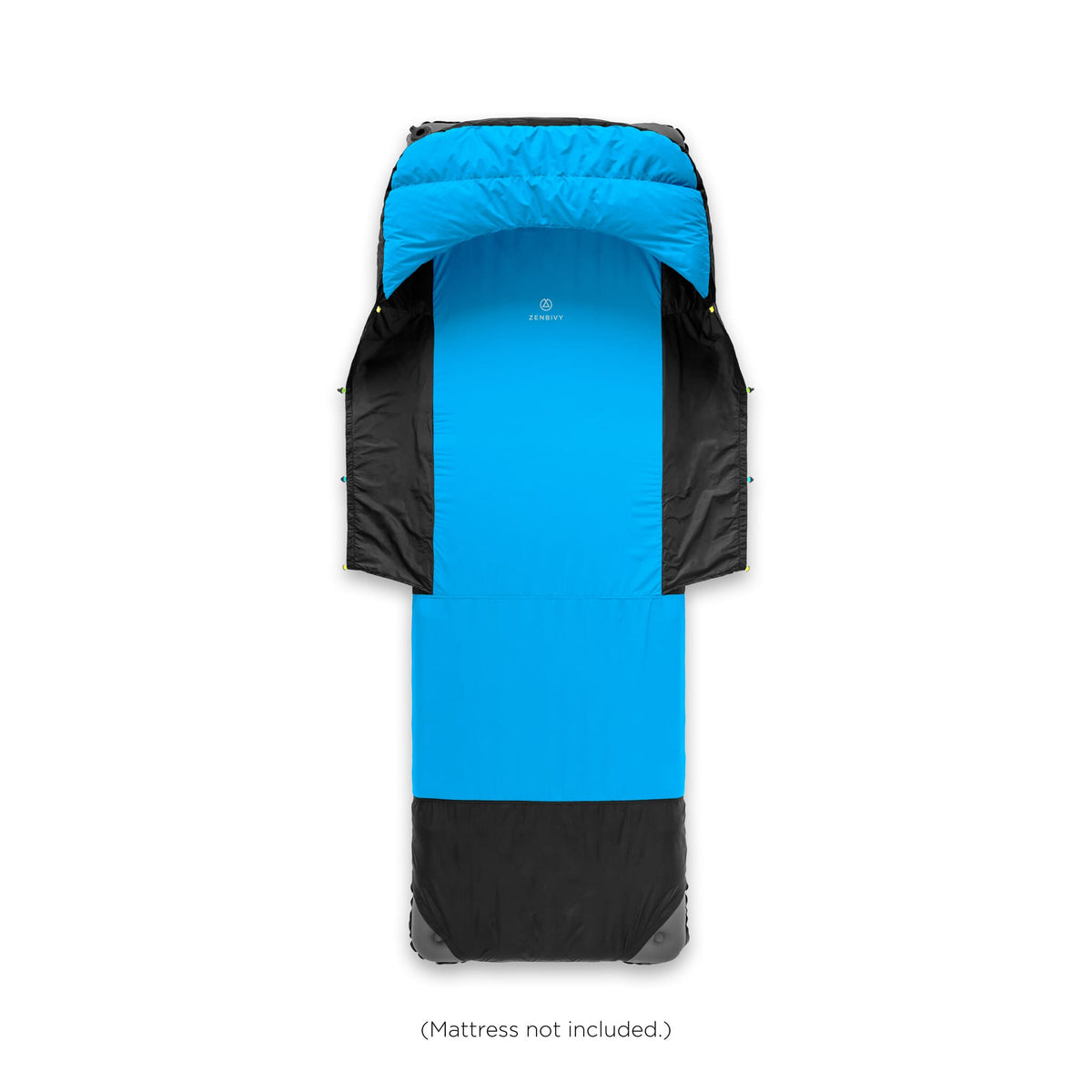
The Zenbivy Light Sheet is the bottom half of the company’s Light Bed system: a fitted sheet that stretches over a sleeping pad, with an attached down-insulated hood and side flaps that clip to a Zenbivy quilt. It is built for side sleepers, restless sleepers and anyone who has lost a night to a quilt that drifted off a shoulder. The trade-off is a hook-and-loop attachment that takes a few nights to master, and a commitment to Zenbivy’s quilt-and-sheet pairing.
Key Specs
| Spec | Detail |
|---|---|
| Weight | 250–261 g (8.8–9.2 oz) for the 25°F, 25” sheet; 292 g (10.3 oz) in the 30” width |
| Temperature limit / comfort | 25°F (-4°C) / 35°F (2°C) |
| Hood insulation | 800-fill HyperDRY™ water-resistant duck down, 53 g in the 25” sheet and 60 g in the 30” |
| Lining fabric | 25D Pongee in comfort zones |
| Shell fabric | 15D Nylon Taffeta in weight-saving zones |
| Widths | 25” and 30” |
| Pad fit | 25”: pads up to 26” x 78” x 4” thick; 30”: pads up to 31” x 80” x 4.5” thick |
| Attachment | Color-coded hooks on the sheet, loops on the quilt |
Versions compared
| Image | Version | Weight | vs. lightest |
|---|---|---|---|
| 25° | 250 g (8.8 oz) | lightest |
 | Standard 25°F Down / 25" | 261 g (9.2 oz) | +11 g |

Would the Light Sheet earn its spot in your pack?
250 g · 8.8 ozAdd the Zenbivy Light Sheet to your Gear Closet and see exactly what it does to your base weight, then start packing for your next trip.
Free · No credit card · iOS, Android & web · Trusted by 3,000+ backpackers
Performance
Draft control
The sheet’s job is to close the gap that quilt straps leave open, and owners say it does. Side panels rise from the sheet and guide the quilt’s edges into the hood, while the quilt overlaps behind them. The quilt stays tucked at the sides but isn’t fixed in place, so a sleeper can roll, pull it tight or kick a leg out without opening a channel for cold air. Reviewers who sleep on their sides or toss through the night single this out as the system’s strongest point, and note that conventional strap-down quilts often fail at it.
Warmth
The 25°F figure is a limit rating, not a comfort rating, and testers treat it that way. A Section Hiker reviewer was comfortable down to 35°F and wanted extra insulation below that, which matches the 35°F comfort rating. Cold sleepers should plan around that number. Warmer results are possible with a high-R-value pad: one tester used the 25° setup in the low 20s at Great Sand Dunes and stayed warm and dry through two nights, despite heavy tent condensation. Others report pushing it to just below freezing on a well-insulated pad. The sheet’s rating assumes the matching 25°F quilt, and the mid-range numbers also make it a workable base for pairing with other Zenbivy quilt temperatures.
The insulated hood
The hood is where the down lives, and it is noticeably warmer than the uninsulated version of the sheet. Users who sleep in a beanie report dropping it. Because the hood is part of the sheet and not the quilt, it stays put when the sleeper rolls over. It is deep enough to hold a small pillow, which keeps both the pillow and the head warmth where they started.
Fabric and feel
The 25D Pongee lining feels closer to a bedsheet than to the slick nylon of most ultralight bags and quilts. Owners who spend the night in constant contact with it, restless sleepers especially, count that softness as a real upgrade, and the weight cost is small.
Setup and attachment
The sheet stretches over the pad with cut-out corners, and a light strap and buckle cinches it underneath. Zenbivy designs it around its own mattresses but says it fits most rectangular and tapered pads. Owners report that the 25” size also works on a narrower 20” pad if the straps are cinched down. Color-coded clips make it easy to match quilt loops to sheet hooks, and the routine becomes automatic after a few nights. The small cord loops and hooks are sewn into a seam, and one long-term user saw no wear after dozens of nights.
The fiddle factor
This is the friction point. To save weight, the Light Bed uses four small hooks per side on the sheet, paired with four loops per side on the quilt, instead of zippers. The system is lighter, but it is harder to work by feel than a zipper. Daylight setup is easy. In the dark it sometimes calls for a headlamp, and cold or sleepy fingers make the small clips tougher still. Anyone getting up for a midnight bathroom trip will notice.
Choosing a Version
Both listed versions are the 25°F down sheet in the 25” width, so the choice between them is small. The 250 g listing and the 261 g Standard 25°F Down / 25” differ by about 11 g, a gap under half an ounce. Zenbivy’s current published weight for the 25” down sheet is 9.2 oz (261 g), and either one holds 53 g of down in the hood. The practical choice is width, not weight. The 25” suits standard 20-to-25-inch pads, and Zenbivy rates it for pads up to 26” x 78” and 4” thick. Hikers with wide or extra-thick pads need the 30” sheet, which weighs 292 g and fits pads up to 31” x 80” x 4.5”. For anyone who sleeps cold, the 10°F and -5°F sheets are heavier, with more hood fill, but that is a different product tier.
Pros & Cons
Pros
- Eliminates side drafts in a way quilt straps can’t match
- 25D Pongee lining is softer than typical ultralight nylon
- Insulated hood replaces a beanie for many sleepers and keeps the pillow in place
- Quilt is free to wrap snugly, so there is no mummy-bag constriction
- Fits most rectangular and tapered pads up to 4” thick
- Color-coded attachment points are intuitive after a trip or two
- Hooks and loops are sewn into a seam and have held up over dozens of nights
Cons
- Hook-and-loop attachment is harder to use in the dark or with cold hands than a zipper
- Designed to pair with Zenbivy quilts, so it commits buyers to the full system
- The full system is expensive, especially bought together
- The 25°F rating is a limit; cold sleepers should treat 35°F as the comfort floor
- The included storage sack is a loose mesh bag; a compression dry sack costs extra
Who Should Buy This
The Light Sheet suits backpackers and thru-hikers who find quilts drafty and sleeping bags claustrophobic, particularly side sleepers and anyone who rolls around. It also suits hikers who want one sheet that carries a three-season setup: venting by unclipping a few hooks and opening the footbox in warm weather, then cinching everything up when it cools. Warm, still sleepers who already make a strapped quilt work have little reason to add the sheet’s weight and complexity. Anyone who wants to use a non-Zenbivy quilt should also look elsewhere.
Verdict
The Light Sheet is the part that turns a Zenbivy quilt into a draft-free sleep system, and at 250–261 g it earns a place in a three-season pack. Side sleepers and restless sleepers get the most from it. The hook-and-loop attachment demands a few nights of practice, and the full system costs real money, but for people whose sleep suffers on trail it is among the more carefully engineered fixes available.