Cumulus Quilt Review
Cumulus's Polish-made open-footbox down quilt spans four versions, from a 380 g summer layer to a 666 g shoulder-season quilt. The 300 is the one to buy.
Overview
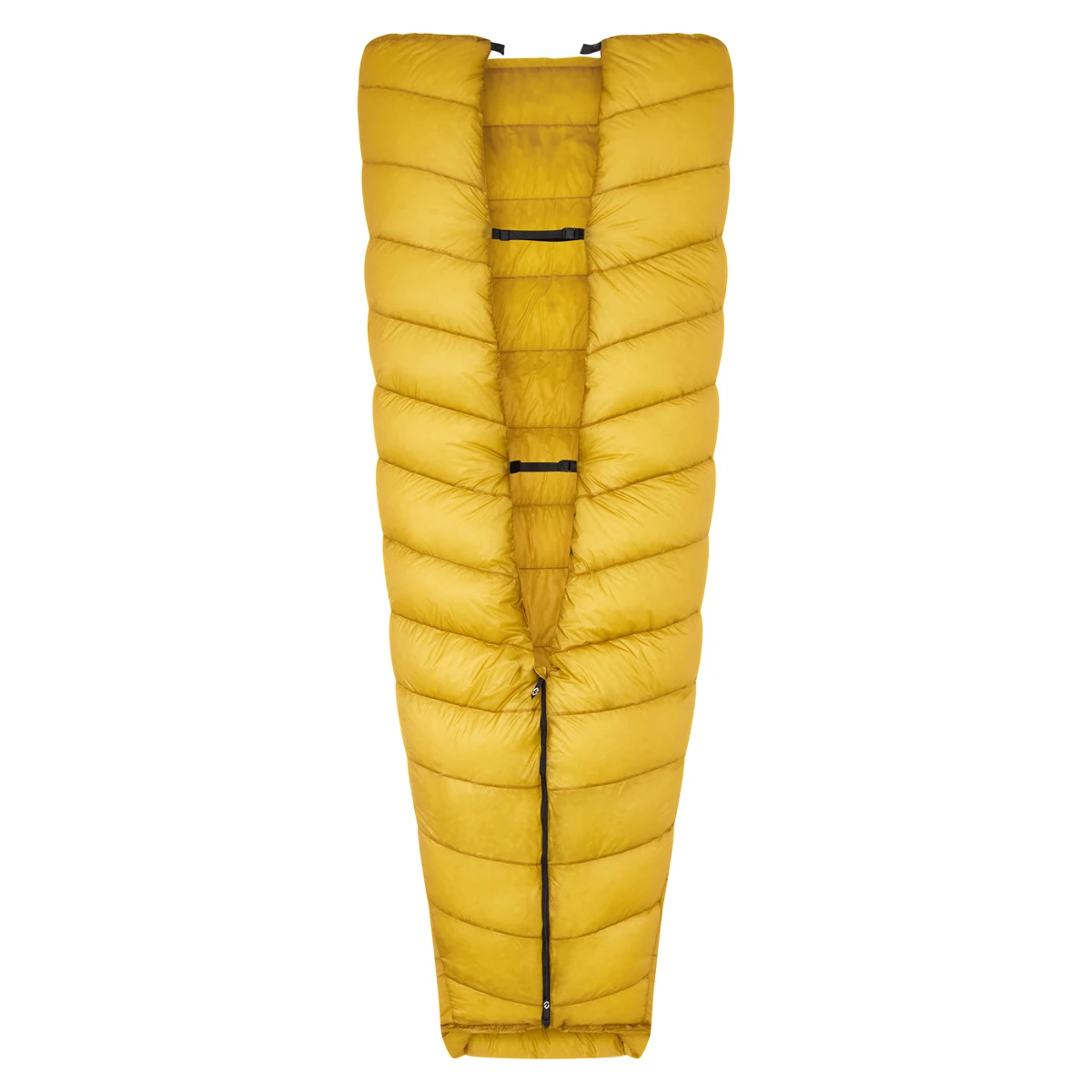
The Cumulus Quilt is a hoodless, Polish-made down quilt with a short zipper that turns the foot end into a closed box or opens it into a flat blanket. It comes in four versions, from the 380 g summer-weight 150 to the 665.6 g 350. The design suits pad-sleeping thru-hikers who don’t want to carry insulation they’d only crush flat. The price is a shell that needs careful handling and an overseas order. The 300 is the version most hikers will buy.
Key Specs
| Spec | Value |
|---|---|
| Weight | 380–666 g (13.4–23.5 oz) depending on version |
| Down fill weight | 150 g, 250 g, 300 g or 350 g depending on version |
| Fill power (300) | 900 FP Polish goose down |
| Comfort / limit (150) | 48°F (9°C) / 39°F (4°C) |
| Comfort / limit (250) | 39°F (4°C) / 32°F (0°C) |
| Comfort / limit (300) | 37°F (3°C) / 28°F (-2°C) |
| Comfort / limit (350) | 36°F (2°C) / 25°F (-4°C) |
| Shell and lining (300) | Toray® Airtastic, 19 g/m² |
| Shell and lining (350) | Pertex® Quantum, 29 g/m², 850 FP down |
| Baffles | H-shaped box baffles |
| Footbox | Open, short YKK zipper, opens flat |
| Standard length | 195 cm |
| Flat width | 130 cm at the shoulders, 100 cm at the feet |
| Origin | Poland |
Versions compared
| Image | Version | Weight | vs. lightest |
|---|---|---|---|
 | 150 | 380 g (13.4 oz) | lightest |
 | 250 | 480 g (16.9 oz) | +100 g |
| 300 | 496 g (17.5 oz) | +116 g |
 | 350 15 cm | 666 g (23.5 oz) | +286 g |

Build your Gear Closet
View all of your gear in one place, create packing lists and hit the trail with confidence. Available on iOS, Android and the web.
Get StartedPerformance
Warmth for the weight. The 300 shows what the design can do. It holds 10.6 oz of 900-fill down inside a 19 g/m² shell, and the whole quilt weighs about 495 g. Cumulus rates it at 37°F comfort and 28°F limit. One hands-on reviewer put its sweet spot at nights from roughly 2°C to 15°C, which fits the 3-season label. Buyers should pick a fill for the coldest night they expect, not the average one. The limit rating is a survive-the-night figure, not a comfort target for cold sleepers.
Baffles and drafts. The H-shaped box baffles run across the quilt and cut down on cold spots. Two elastic straps with buckles clip the quilt to a sleeping pad and close the gap where drafts usually get in. On the 300, the straps add 31 g and the stuff sack another 12 g. Quilts are still open at the back, so they run cooler at the edges than a closed bag with the same rating. Side sleepers who tuck the edges under tend to get the best results. A neck snap and an elastic drawcord along the top edge help seal the shoulders.
The zippered footbox. The 70 cm zipper closes the foot end on cold nights and opens it for venting when feet run hot. Opened fully, the quilt becomes a blanket. Owners of the 250 mostly use the partly open position for ventilation or to drape the quilt over their shoulders in camp. Hammock users who run the 350 as a top quilt make the same point about venting.
Packed size and shell. The 300 stuffs into a 3.5-liter sack, the 250 ships with a 3-liter sack, and the 150 packs to roughly 1.5 liters. That is small enough for a hip-belt pocket on a fastpacking trip. The 350 line packs to about 4 liters. Reviewers describe the Airtastic fabric as impossibly thin but well made, with even down distribution and neat seams. The thinness has a cost, because zippers, rough rock and dog claws can all damage it. Anyone who sleeps on gravel or in a shared shelter needs a groundsheet and some discipline.
Customization. Cumulus lets buyers adjust length, width, fill and fabric before the quilt ships. One reviewer reports that stepping the 300 up to 350 g of fill buys about 2°C of extra comfort. Tall, wide and cold-sleeping hikers who struggle with off-the-shelf American quilts get the most from this. Custom orders take longer to arrive, and buyers outside the EU should check import duties.
Choosing a Version
All four versions share the same pattern, baffle layout and zipped footbox. What changes is the amount of down, and with it the temperature range and the packed size. The 350 also changes the materials.
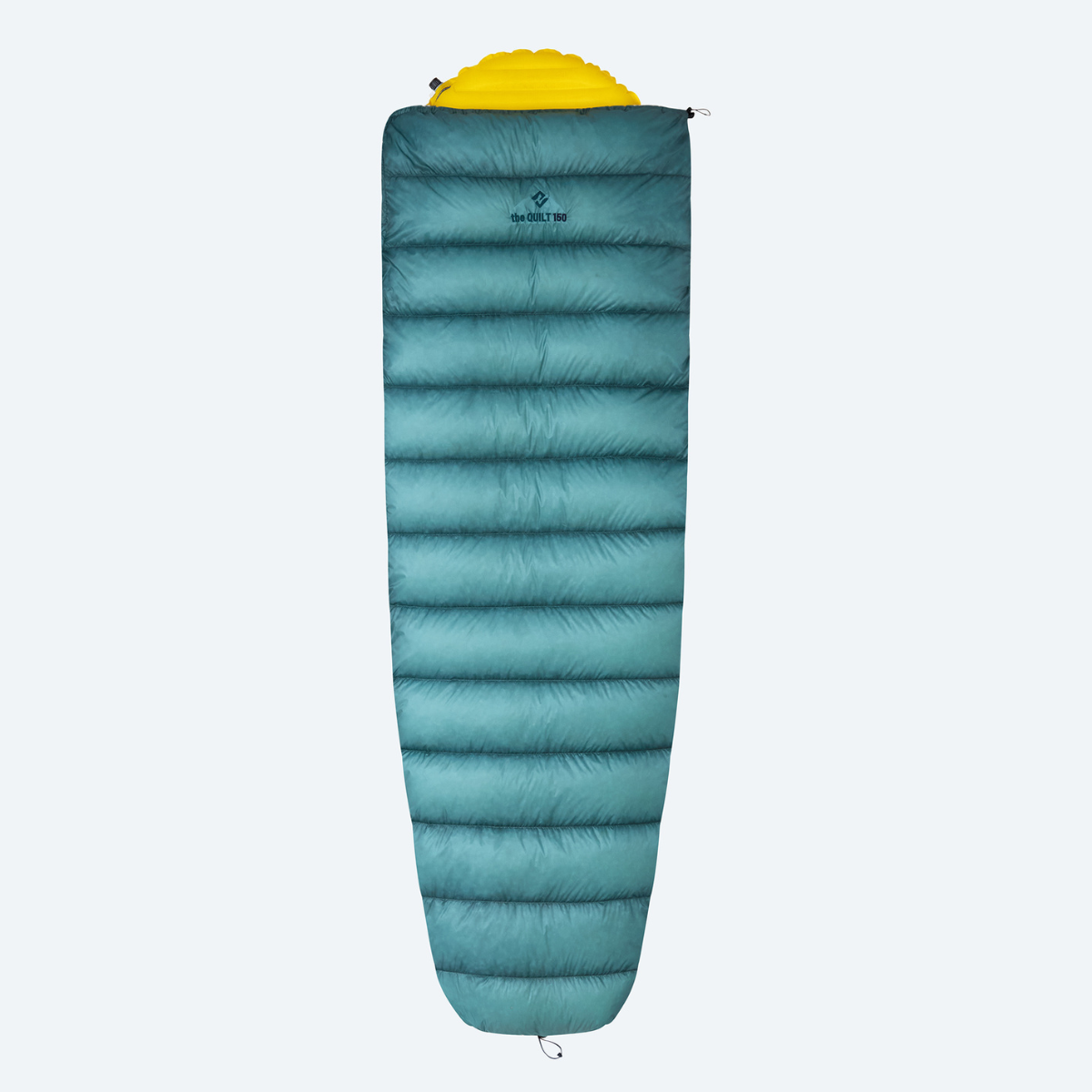
Quilt 150 (380 g). This is the warm-night quilt, with 5.3 oz of down, 48°F comfort and a 39°F limit. It suits desert and low-elevation summer hikes, bikepacking and fastpacking. It also works as an insert inside a heavier bag. Anyone expecting nights below the mid-40s°F should step up.
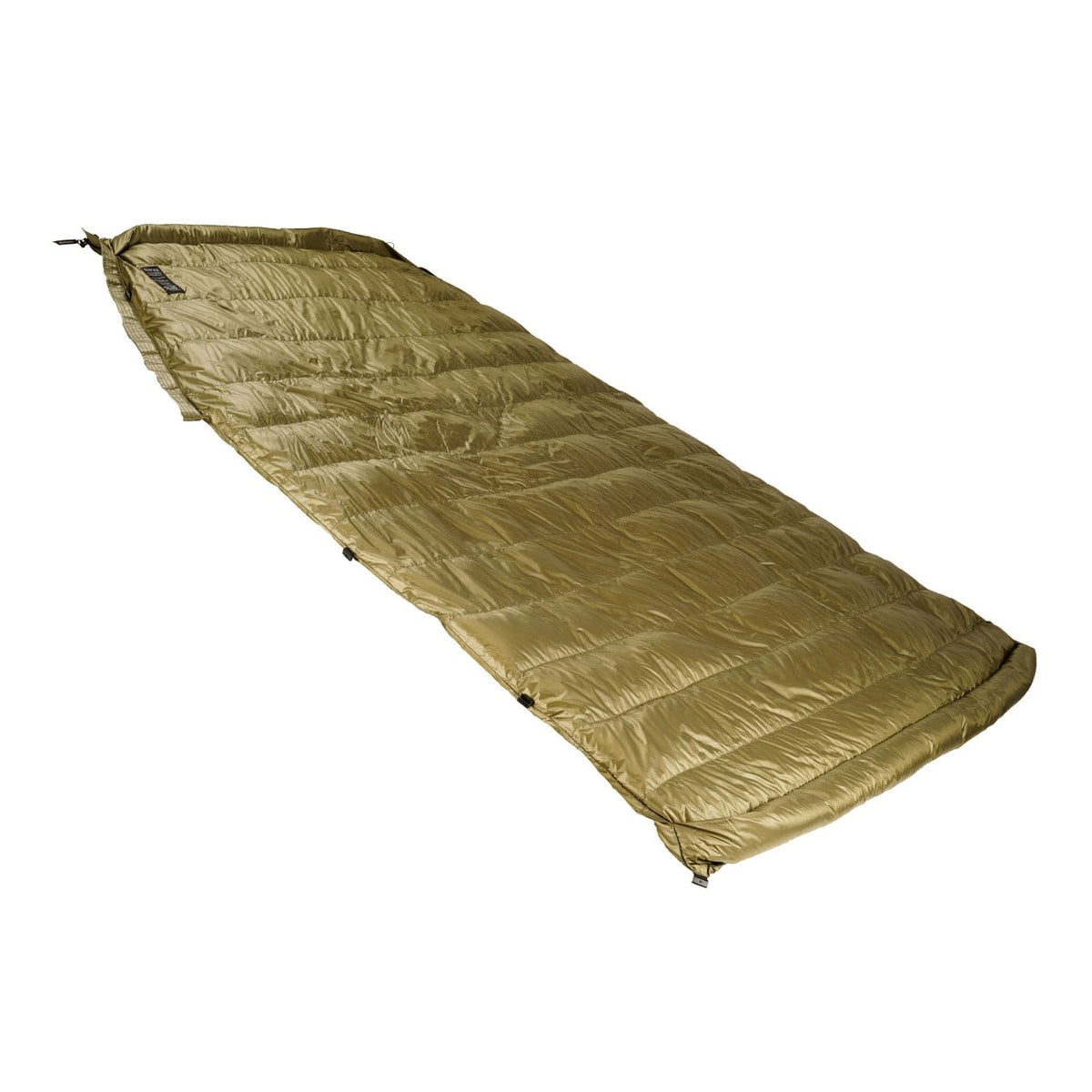
Quilt 250 (480 g). This covers spring and summer trips where nights fall to the low 40s°F. Its ratings are 39°F comfort and a 32°F limit, and owners report it holds up near freezing with a base layer and a hat. It weighs only 16 g less than the 300, so the extra warmth of the 300 costs almost nothing. Only hikers who never expect a cold snap have a reason to pick it.
Quilt 300 (496 g). This is the 3-season quilt, with 900-fill down, 37°F comfort and a 28°F limit. It suits thru-hikers who want one quilt for spring and fall shoulder weather across a long trail. It is also the version with the most room to be tuned through the custom-fill option.
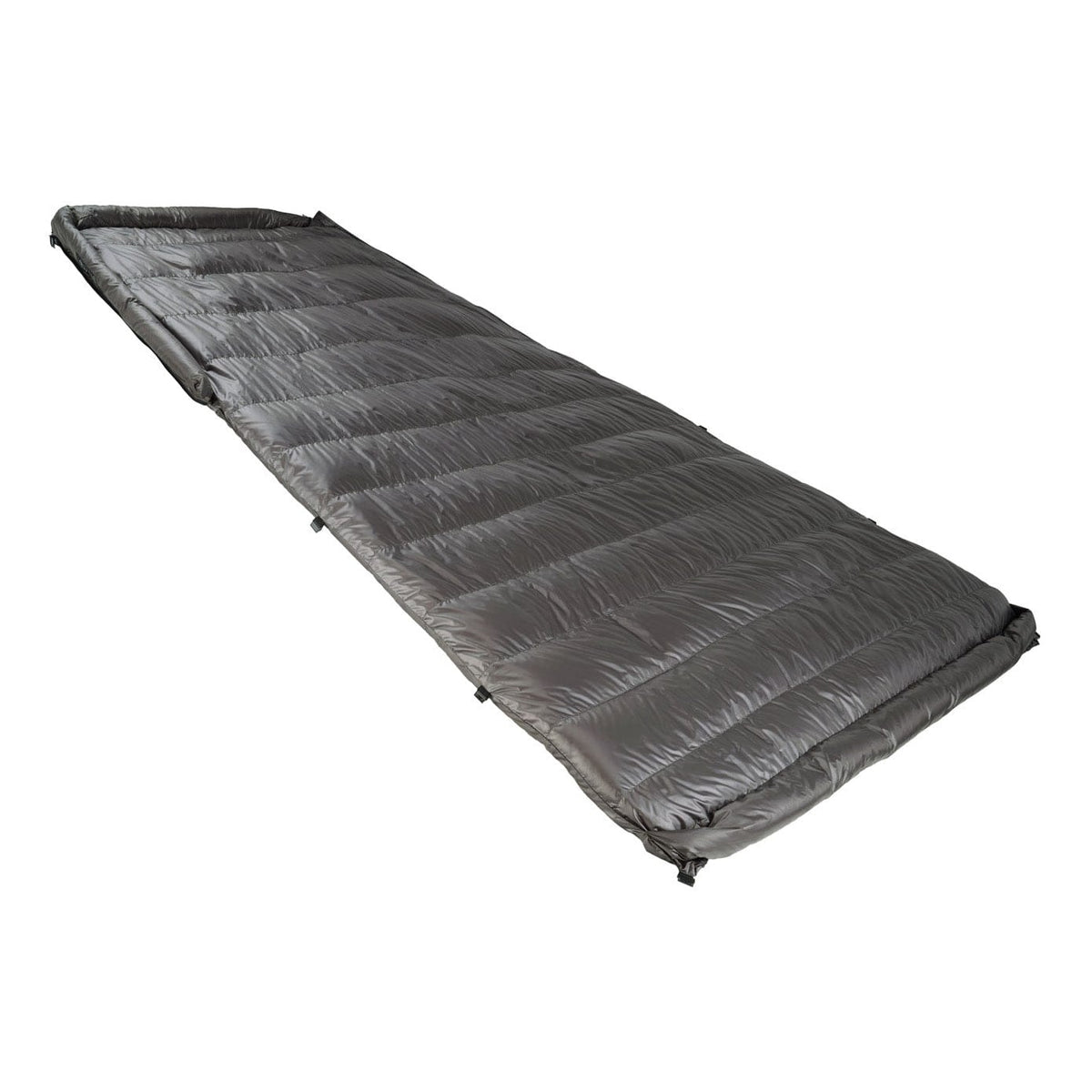
Quilt 350, 15 cm (665.6 g). This is the heavy-duty version. It is rated 2°C comfort and -4°C limit, which works out to roughly 1°C and 2°C better than the 300. It uses 850-fill down and 29 g/m² Pertex Quantum, a sturdier shell than the Airtastic on the 300. Both the fill and the fabric are less exotic than the 300’s, and it weighs about 170 g more. That makes it a sensible choice for colder sleepers, hammock campers and anyone who values a tougher shell over grams. Weight-focused thru-hikers who want more warmth will get a better result from a 300 with extra fill.
Pros & Cons
Pros
- The 300 delivers a 28°F limit at roughly 500 g.
- H-shaped baffles and a two-strap pad system cut down on cold spots and drafts.
- The zippered footbox gives real ventilation and a flat-blanket mode.
- Four fill weights cover roughly 48°F down to the mid-20s°F.
- Length, width, fill and fabric can all be customized.
- Neat seams, even down distribution and a small packed size.
Cons
- The 19 g/m² Airtastic shell is fragile.
- Poland-made, so customers outside the EU face import duties and long custom lead times.
- A 28°F limit is not a comfort margin for cold sleepers.
- The 250 is only 16 g lighter than the 300, which makes it a hard sell.
- The 350 is about 170 g heavier than the 300 for a small gain in rated warmth.
Who Should Buy This
Pad-sleeping thru-hikers and ultralight backpackers who already like quilts should start with the 300. It covers the widest range of conditions and carries the best down and fabric in the line. The 150 suits warm-weather trips where every gram counts, and the 350 suits cold sleepers who accept the weight. Anyone who wants a hood, camps regularly below freezing or needs a rugged shell for rough ground should look at a winter-rated bag or a quilt with a heavier fabric.
Verdict
The 300 is a very light, well-built 3-season quilt, and the customization options make it one of the better choices for hikers whose bodies don’t fit standard sizes. A delicate shell and the overseas ordering process keep it from being a no-brainer. The 150 is a good warm-weather specialist, the 350 is a niche pick for cold sleepers, and the 250 sits too close to the 300 in weight to make much of a case for itself.