Cumulus Lite Line Review
Cumulus's Polish-made 850 FP down mummy bags, the 495 g Lite Line 200 and 705 g Lite Line 400, cover warm summer nights through near-freezing shoulder-season camps.

Overview
The Lite Line is Cumulus’s spring-and-summer down mummy range: 850 FP Polish goose down, a 29 g/m² Pertex Quantum shell, a shark-fin footbox and a full-length two-way YKK zipper, sewn by hand in Poland. The 200 is a 495 g summer bag for warm nights. The 400 is a 705 g bag that Cumulus calls the top performer of the series. The trade-off is plain: neither bag has the weather margin of a dedicated cold-season bag, and both give up some abrasion resistance for their light shells.
Key Specs
| Spec | Detail |
|---|---|
| Weight | 495–705 g depending on version |
| Fill | 200–400 g of 850 FP Polish goose down (96/4 down-to-feather ratio) |
| Comfort / limit | 9 °C / 4 °C (200); 2 °C / −4 °C (400) |
| Shell and liner | Pertex Quantum, 29 g/m², DWR finish |
| Packed size | 19 x 15 cm (200); 25 x 17 cm, 5.7 L (400) |
| Shape | Mummy, trapezoidal baffles, shark-fin footbox, 3D hood |
| Zipper | Full-length 5 mm YKK, two self-locking sliders, anti-snag strip, down-filled draft tube |
| Extras | Internal mesh pocket, hang loops, storage sack, lifetime warranty |
Versions compared
| Image | Version | Weight | vs. lightest |
|---|---|---|---|
| 200 | 495 g (17.5 oz) | lightest |
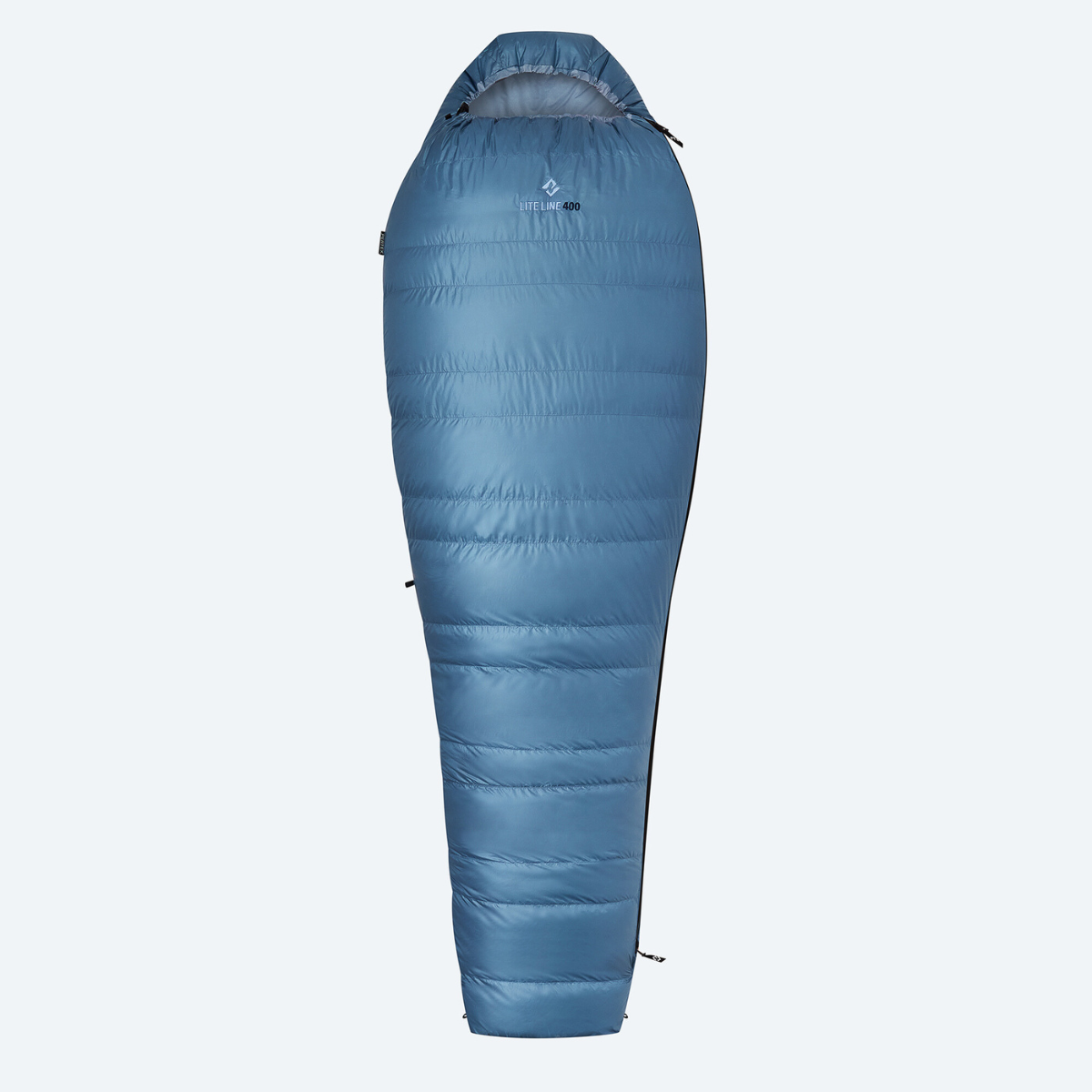 | 400 | 705 g (24.9 oz) | +210 g |

Build your Gear Closet
View all of your gear in one place, create packing lists and hit the trail with confidence. Available on iOS, Android and the web.
Get StartedPerformance
Warmth for the weight. Both bags use the same 850 FP down, so the difference in warmth comes from fill quantity. The 200 carries 200 g and is rated to 9 °C comfort. That makes it a bag for summer and mild early-autumn nights. Below roughly 10 °C, hikers need a down vest, base layers and dry socks to stay comfortable. Cumulus pitches it as a warm-weather piece, and retailers describe it the same way. The 400 doubles the fill and lowers the comfort rating to 2 °C. One reviewer who tested it found the −4 °C limit rating matched their own nights out.
Shell and construction. Pertex Quantum at 29 g/m² is about as light as downproof fabric gets while still handling ordinary trail use. It is windproof, has a DWR finish and resists feather penetration. It will not shrug off a bushwhack, and rough tent floors or hook-and-loop closures deserve some care. Cumulus fills the bags by hand, and one seamstress builds each bag from start to finish. Trapezoidal baffles and a differential cut let the down loft fully, and the 400 has 34 independently filled chambers. The brand backs the bags with a lifetime warranty.
Zipper and details. The zipper is the most thought-through feature. Both sliders self-lock and run along an anti-snag strip, which addresses the old problem of Pertex catching in the track. A down-filled tube blocks drafts along the zipper line. On a warm night, the bottom slider opens to vent the feet without exposing the torso. The 3D hood has two separate drawcords: one cinches the hood and one closes the neck. They are shaped differently, so they can be told apart by touch in the dark. A zippered mesh pocket inside holds a phone and a headlamp. Lite Line and Panyam bags share a zipper design, so two bags can be joined into a double if one has a left zip and the other a right zip.
Packed size and fit. The 200 packs to 19 x 15 cm, small enough to drop into a modest ultralight pack without stealing room from food. The 400 compresses to 25 x 17 cm (5.7 L), still compact for a bag rated near freezing. Owners of the 400 report that the footbox runs snug. Its 77 cm shoulders taper to 51 cm at the feet, so side sleepers who like to splay their knees will notice. Retailer scale checks put the 400 anywhere from about 684 g to 755 g depending on length and zipper side, so the 705 g claim is best read as a typical figure.
Choosing a Version
Lite Line 200 (495 g). This is the pick for summer hiking, warm-climate thru-hikes, hut trips and bikepacking, where the bag will mostly be a cover and pack space is tight. It also works as the lightweight half of a layered setup. It is not a shoulder-season bag.
Lite Line 400 (705 g). For 210 g more, comfort drops by 7 °C and the limit rating drops to −4 °C. That covers spring and autumn trips in the Alps, Scandinavia or the Rockies, where nights near freezing are normal. Cumulus markets it as a 2–3 season bag, and it lists for $339 on the US site. The 400 is available in standard and long lengths and with left or right zips, and a 183 cm hiker sits at the upper end of the standard length.
A buyer who expects frost on more than a few nights a year should choose the 400. The 200 only makes sense for someone who sleeps warm and camps in warm conditions.
Pros & Cons
Pros
- 495 g for a full mummy bag with a hood and a two-way zipper
- 850 FP down with a 96/4 ratio, from a maker that controls its own sourcing and sewing
- Zipper design that vents at the feet, blocks drafts and resists snagging
- Zippers are compatible with other Cumulus bags, so two bags can be combined
- Compact packed sizes, and lifetime warranty coverage
Cons
- The 200’s 9 °C comfort rating is strictly a summer one
- The 400 runs snug through the footbox and hips
- The 29 g/m² Pertex Quantum shell is not very abrasion-resistant
- Cumulus ships from Poland, so US buyers may face longer waits and import costs
Who Should Buy This
The 200 suits gram-counters doing summer sections, alpine hut-to-hut routes and bikepacking trips where nights stay above 10 °C. The 400 suits three-season hikers who want near-freezing capability at about 700 g. Side sleepers who want room to move, and anyone who regularly camps below −5 °C, should look at a quilt or a bag with a wider cut and more insulation.
Verdict
The Lite Line is a well-detailed pair of bags that give honest ratings at low weights. The 200 is a strong summer choice, and the 400 is the more versatile bag for most hikers, with a 7 °C wider comfort range for 210 g. Buy the version that matches the coldest night you expect.