Carinthia Sleeping Bag Cover Review
Carinthia's 1,000 g GORE-TEX Gas Permeable bivy is a German Army-issue bag cover built to be sealed shut, at a weight and price ultralighters will question.
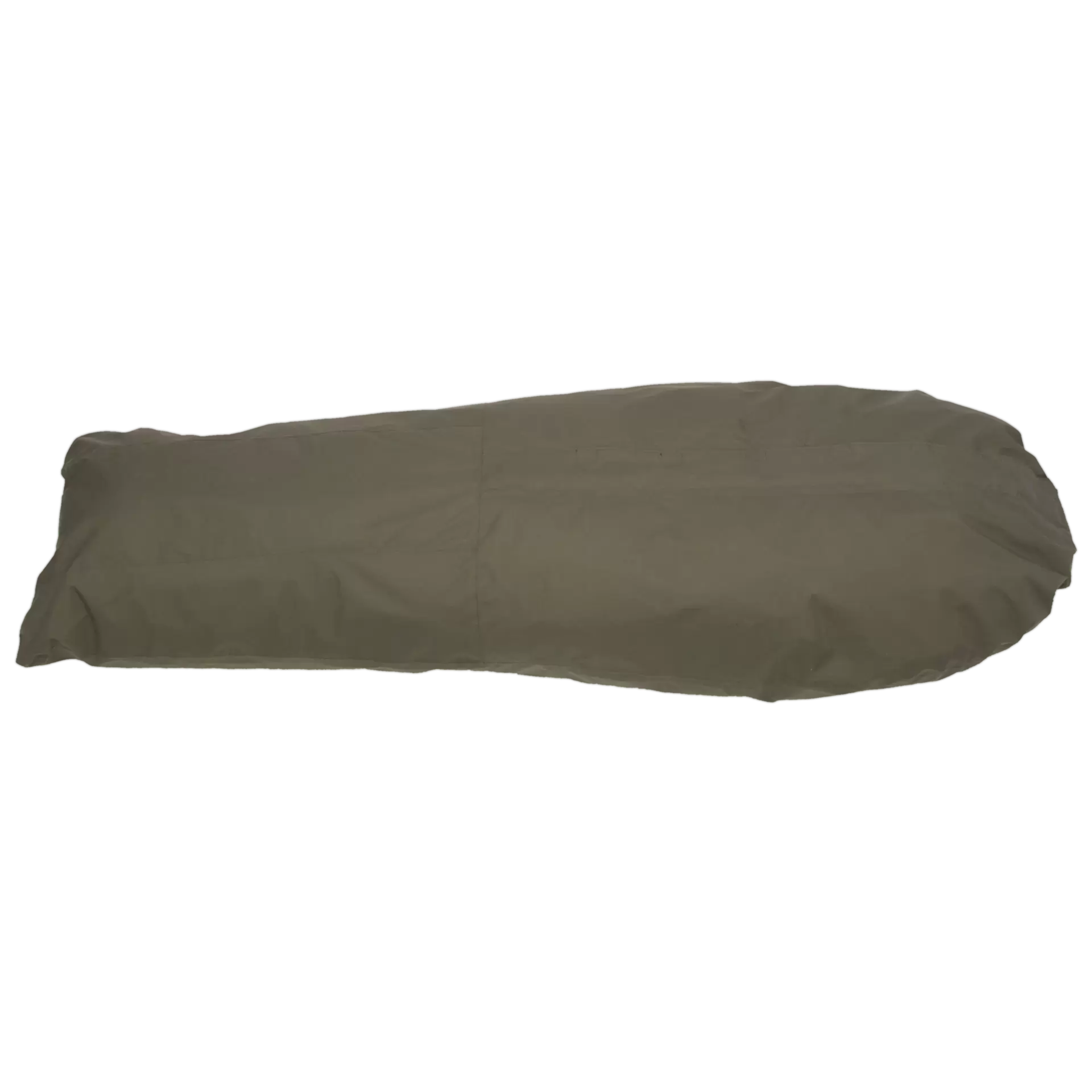
Overview
The Carinthia Sleeping Bag Cover is a bivy sack issued to the German Army. It is built from a three-layer GORE-TEX Gas Permeable laminate that lets oxygen and carbon dioxide pass through, so it can be zipped fully closed without suffocating the sleeper. It is sturdy, generously cut and very weatherproof. It also weighs 1,000 g and costs roughly €520, which puts it well outside the ultralight mainstream.
Key Specs
| Spec | Detail |
|---|---|
| Weight | 1,000 g |
| Outer fabric | 100% PA 6.6 (nylon) |
| Functional layer | ePTFE-based GORE-TEX Gas Permeable membrane |
| Inner fabric | 100% PA 6.6 (nylon) |
| Construction | Three-layer laminate |
| Water resistance | 10,000 mm |
| Dimensions | 245 x 100 x 72 cm |
| Packed size | 35 x 8 cm |
| Closure | Central zipper with double storm flap |
| Cut | Generous mummy |
| Item number | 89710 |
| List price | €519.90 (Carinthia) |

Would the Sleeping Bag Cover earn its spot in your pack?
1000 g · 35.3 ozAdd the Carinthia Sleeping Bag Cover to your Gear Closet and see exactly what it does to your base weight, then start packing for your next trip.
Free · No credit card · iOS, Android & web · Trusted by 3,000+ backpackers
Performance
Weather protection. The three-layer laminate is waterproof and windproof, rated to 10,000 mm. The center zipper is the usual weak point on a bivy, and Carinthia covers it with a double, purpose-designed storm flap. Retailers describe the closure as fully waterproof. A bag cover like this is meant to handle driving rain, spindrift and wet ground, not just a light shower.
Breathability and sealing up. The Gas Permeable laminate is the headline feature. Standard GORE-TEX is a clothing membrane, but this version is permeable to oxygen and CO₂ in the surrounding air. That means the bag can be closed completely, hood and all. Carinthia says air circulation through the fabric was tested under 1 m of snow. For winter campers and anyone expecting a night of sideways weather, that is a real safety margin and not a marketing line.
Warmth. A waterproof, windproof shell adds some warmth to any sleeping bag, and Carinthia pitches the cover as extra protection against cold, especially when closed. Retailers describe the gain as modest, a “tad” warmer. It also keeps down insulation clear of condensation and abuse.
Space and fit. The cut is deliberately oversized. Stockists note that it takes nearly any sleeping bag and leaves room at the foot end. Carinthia’s whole sleep-system line is sized for soldiers sleeping with gear, and owners on bushcraft forums say the same of its bags: roomy, with a big hood. For a backpacker, that means space for a pack liner, boots or a puffy jacket inside the cover. It also means more fabric than a solo hiker needs.
Weight and bulk. This is the sticking point. At 1,000 g, the cover is heavier than many complete ultralight shelter systems. Owners who have moved toward quilts and lightweight down gear describe the weight as the reason they would pass on Carinthia products. Even a fan on a bushcraft forum calls it heavy next to Snugpak’s special-forces bivy, while noting it is not heavy for a GORE-TEX military bivy. Carinthia’s own Expedition Cover, which adds a zip-in-zip system for attaching a sleeping bag, is listed at about 600 g. That makes the 1,000 g figure harder to justify on a weight-conscious trip. Packed, the cover is 35 x 8 cm, so bulk is manageable. Weight is the problem.
Durability and build. The face fabrics are both 100% PA 6.6 nylon, front and back, and the cover is made in Europe to NATO specification (NSN 8340-41-000-2532). Retailers frame it as a cover for demanding, abusive use, and not one built to save ounces. It can also be washed at 60°C if hand washing is not an option, which suits a piece of kit that sees mud and snow.
Price. At roughly €490–520 new, the cover costs more than most complete backpacking shelters. Used examples appear for far less, and surplus is where the value lies.
Pros & Cons
Pros
- Gas Permeable laminate can be fully closed without CO₂ or oxygen concerns, and was tested under 1 m of snow
- Waterproof and windproof at 10,000 mm, with a double storm flap over the zipper
- Roomy mummy cut fits any sleeping bag plus some gear
- Military-spec construction and made in Europe
- Packs to 35 x 8 cm
Cons
- 1,000 g is heavy for a bivy, and Carinthia’s own Expedition Cover is around 600 g
- Around €520 new
- Oversized cut adds weight and some dead space for solo hikers
- No hoop, pole or bug-netting system, so it is a sleeping bag cover and not a shelter
- Nothing in the design aims at weight savings
Who Should Buy This
This suits winter campers, military and reserve users, mountaineers and anyone who wants a storm-proof, fully closable cover for a sleeping bag and who counts durability above grams. It also makes sense for people who sleep out in rough conditions without a tent and want the sealed-in safety of a Gas Permeable membrane.
Thru-hikers and ultralight backpackers should look elsewhere. A kilogram buys a lot of shelter on a long trail, and lighter bivies and tarps are far cheaper. The Expedition Cover is the better Carinthia pick for anyone who wants the same membrane at less weight.
Verdict
The Carinthia Sleeping Bag Cover does its job well. It stays dry, blocks wind and can be sealed shut with a sound safety margin, which is exactly what it was issued for. But 1,000 g and a price near €520 make it a poor fit for the ultralight crowd. Buy it for cold, wet, abusive use, and pass if saving weight is the goal.