Zpacks Flat Groundsheet Review
A purpose-built DCF footprint for Zpacks tents. At 107.7g and fully waterproof, it's the most durable ultralight groundsheet option — but the price demands honest scrutiny.
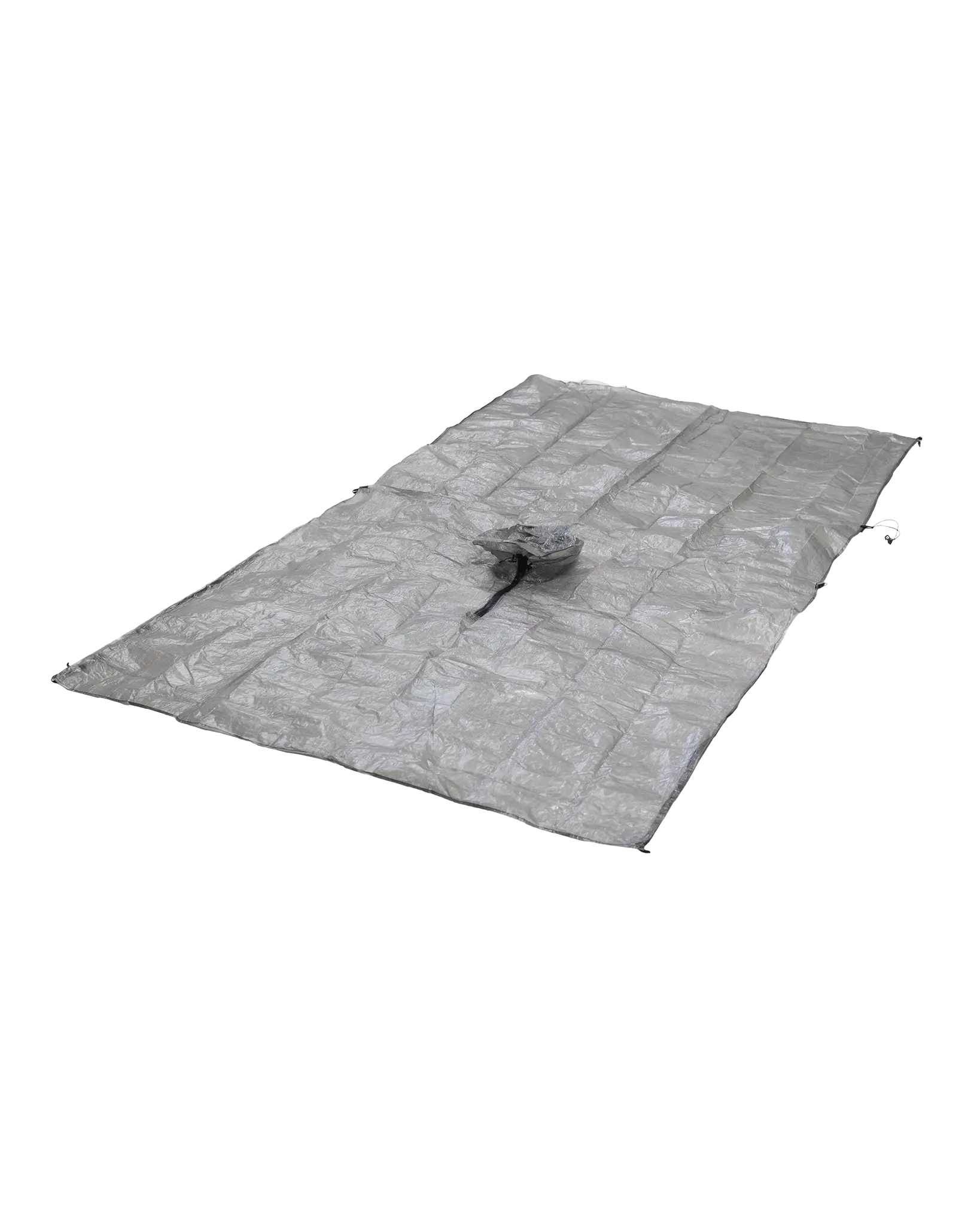
Overview
The Zpacks Flat Groundsheet is a tent-matched footprint cut from 1.0 oz/sqyd Dyneema® Composite Fabric (DCF) and designed specifically to protect the floors of Zpacks’ lineup of tents — the Plex Solo, Plexamid, Altaplex, Duplex, Triplex, and Offset Duo. It exists to shield a tent floor from unnecessary wear and tear and add longevity to the shelter. It sits at the premium end of the groundsheet spectrum: more durable and longer-lasting than polycro or Mylar, more packable than Tyvek, and built from the same DCF that Zpacks uses for its dry bags and tent floors. If you own a Zpacks tent and want a footprint that matches its lifespan, this is the obvious pairing — as long as you can stomach the price.
Key Specs
| Spec | Detail |
|---|---|
| Weight | 107.7 g (3.8 oz) — varies by size |
| Material | 1.0 oz/sqyd Dyneema® Composite Fabric (DCF) |
| Tensile Strength | 104 lb/in (911 N/5cm) |
| Puncture Strength | 3.5 lb (15.5 N) |
| Water Resistance | 20,000 mmH₂O |
| Available Sizes | Plex Solo/Plexamid, Altaplex, Duplex, Triplex, Offset Duo |
| Size Range (Weights) | 67 g (Plex Solo) → 121 g (Triplex) |
| Edges | Hemmed perimeter |
| Tie-Outs | Stake loops at corners and center of sides |
| Warranty | 2-year limited |
| Made in | USA |

Would the Flat Groundsheet earn its spot in your pack?
108 g · 3.8 ozAdd the Zpacks Flat Groundsheet to your Gear Closet and see exactly what it does to your base weight, then start packing for your next trip.
Free · No credit card · iOS, Android & web · Trusted by 3,000+ backpackers
Performance
Waterproofing
DCF is inherently waterproof — not coated, not DWR-treated, just structurally impermeable. DCF does not have any coating, water repellent, or potentially harmful chemicals added. That 20,000 mmH₂O rating is a hard ceiling most coated fabrics can only approach early in their lifespan before the DWR degrades. On the ground in a wet camp, this matters: the sheet won’t slowly wet out or wick moisture upward over time the way a DWR-coated nylon footprint will.
Durability vs. the Alternatives
This is where the DCF groundsheet makes its case. If you want to save as much weight as possible but still have a groundsheet/shelter footprint that’s more durable than polycryo or Mylar, the Zpacks Flat DCF groundsheet is worth considering. Polycro is lighter and dramatically cheaper, but it’s consumable — most thru-hikers replace it mid-trail or every season. The DCF sheet, by contrast, is built to last years of regular use.
DCF has very high tensile strength for its weight and does not stretch, and the 1.0 oz/sqyd grade has a thicker membrane giving it more abrasion resistance
than the lighter 0.75 oz/sqyd DCF used on some Zpacks shelter canopies. That thicker membrane is why Zpacks specifically uses this weight for floors and groundsheets rather than the lighter stuff.
The material is waterproof, reasonably puncture and abrasion resistant while still being very light, and DCF can be easily patched with repair tape in the event of a puncture.
Field repairability on a footprint is underrated — a small rock puncture doesn’t mean the sheet is done for.
Fit and Sizing
The groundsheets are sized to fit the indicated tents and are intentionally several inches narrower and shorter so that they don’t stick out past the bathtub floor and collect water.
This is a detail that matters in real camp conditions: a footprint that extends beyond the tent perimeter acts like a rain gutter, channeling water directly under you. Zpacks gets this right. Sizing runs from 67 g for the Plex Solo/Plexamid up to 121 g for the Triplex, with the shapes matched closely to each tent’s floor geometry.
Groundsheets for freestanding tents feature elastics with loops at the corners allowing for the groundsheet to be attached to the tent poles at the corners of the tent.
For non-freestanding Plex-style tents, the corner and midpoint stake loops let you pin the sheet independently or connect it to your shelter stakes with a bit of shock cord.
The stakeout loops at the corners can be used on their own or attached to the corner stakes of your shelter with ultralight shock cord to keep the groundsheet in place.
This keeps it from migrating underfoot in the night, which is a genuine quality-of-life improvement over an unsecured polycro sheet.
Weight Reality Check
The Duplex-size DCF groundsheet comes in at 88 g (3.1 oz). Zpacks also sells a Tyvek groundsheet, but it weighs 9.2 oz — almost as much as the tent itself. That puts the DCF sheet’s weight penalty into context: you’re not choosing between “light” and “heavy.” You’re choosing between a 2–4 oz premium footprint and a disposable polycro solution that weighs roughly the same but needs replacing. For weight-obsessed thru-hikers, the trade-off is real, but for anyone doing multi-season trip after trip on the same shelter, the DCF option starts making more sense.
Worth noting: a separate groundsheet is not required for Zpacks tents. The floor material is reasonably durable, and DCF gear can be easily patched in the field with repair tape. The groundsheet is available if you prefer to use one as a precaution. So this purchase is entirely optional — it’s insurance, not necessity.
Pros & Cons
Pros
- Inherently waterproof DCF with no coatings to wear out — 20,000 mmH₂O is elite for a groundsheet
- Sized precisely to match each tent model; undersized by design to prevent water pooling under the floor
- Stake loops at corners and side midpoints keep the sheet in place; freestanding tent versions clip directly to tent poles
- Patchable in the field with standard DCF repair tape — a true multi-year piece of kit
- No PFCs, PFAS, DWR, or flame retardants; chemical-free construction
- Made in the USA; backed by a two-year limited warranty
Cons
- Premium price for what is, functionally, a flat piece of fabric — Zpacks charges for the DCF material cost, and it shows
- Polycro achieves similar pack weight at a fraction of the cost; the DCF sheet’s value only compounds over many trips
- DCF can crinkle and make noise underfoot — not loud, but some sleepers notice it
- Sizing is locked to specific Zpacks tent models; it won’t fit a non-Zpacks shelter without modification
- No bathtub walls — if you camp in conditions with ground splash or pooling water, the bathtub groundsheet variant offers meaningfully better protection
Who Should Buy This
The Zpacks Flat Groundsheet is the right call for committed Zpacks tent owners who do enough trips per year that a disposable footprint becomes genuinely inconvenient, and who want the peace of mind that their DCF tent floor isn’t taking daily abrasion hits from rocky or gritty campsites. It’s also a solid pick for anyone who prefers a “buy once” philosophy over the polycro replacement cycle. If you own a Duplex and camp hard on abrasive terrain across multiple seasons, the math works out. If you’re a once-a-year backpacker, polycro or window wrap is the more sensible answer.
Verdict
The Zpacks Flat Groundsheet is a well-executed, no-nonsense piece of kit that does exactly what it claims: it protects your tent floor with the same material your tent is made from, fits precisely, stays put, and lasts. The honest reservation is the cost — you’re paying a significant DCF premium for a single-use-per-night accessory that Zpacks itself acknowledges isn’t strictly required. If you’re building out a long-term Zpacks shelter system and want every component to pull its weight for years rather than seasons, it earns a place in the kit. Rating: 7.5/10.