Six Moon Designs Lunar Solo Review
The Six Moon Designs Lunar Solo is a 740 g single-wall trekking pole tent with tall-hiker headroom and a modest price. Condensation is its main weakness.
Overview
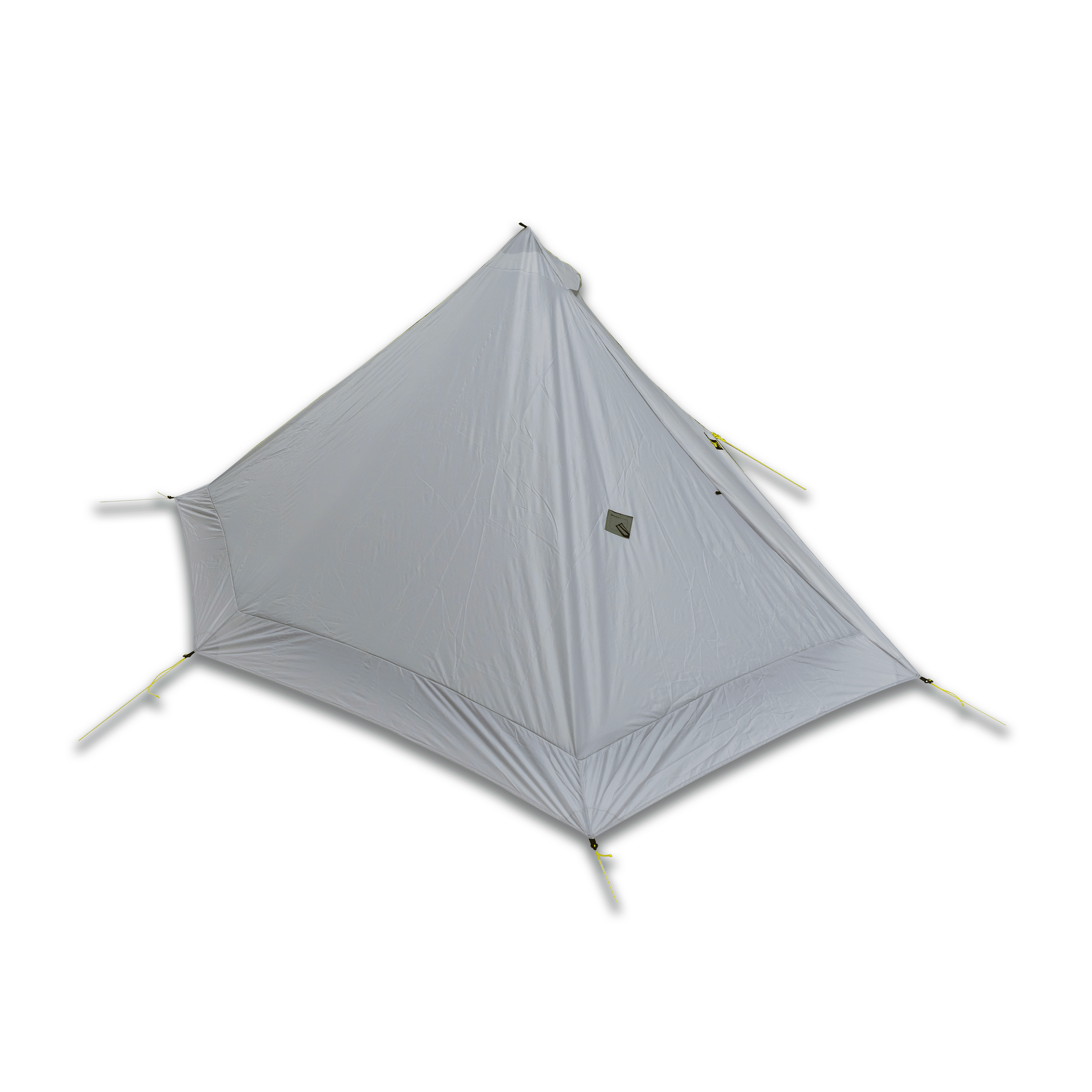
The Lunar Solo is Six Moon Designs’ flagship one-person shelter. It is a single-wall, hexagonal trekking pole tent with a floating floor, and it has been in the lineup since 2005. It weighs 740 g, costs well under what most cottage-industry competitors charge, and has more headroom and floor length than almost anything else in its weight class. The trade-off is the usual one for single-wall designs: it needs thoughtful site selection to keep condensation in check.
Key Specs
| Spec | Detail |
|---|---|
| Weight | 740 g (26 oz), excluding stakes |
| Capacity | 1 person |
| Type | Single-wall, non-freestanding, 3-season |
| Floor dimensions | 90 x 48 in |
| Floor area | 26 sq ft |
| Vestibule area | 8.5 sq ft |
| Peak height | 49 in |
| Canopy | 20D silicone-coated polyester |
| Floor | 40D silicone-coated polyester, 6 in bathtub |
| Netting | 20D no-see-um |
| Poles required | 1 trekking pole (125 cm minimum) or optional 49 in tent pole |
| Stakes | 6 minimum, 8 with side pullouts |
| Packed size | 28 x 10 cm |
| Doors | 1 side-entry mesh door |
| List price | $260 |

Build your Gear Closet
View all of your gear in one place, create packing lists and hit the trail with confidence. Available on iOS, Android and the web.
Get StartedPerformance
Space. Roominess is the Lunar Solo’s calling card. At 90 inches long, the floor accommodates tall hikers without a sleeping bag footbox grazing the wall. One reviewer at 6’1” reports no issues with his bag touching the end of the tent in rain. A 6’6” customer says his face and feet stayed clear of the walls. The hexagonal footprint and 49-inch peak let most people sit upright to change clothes or sort gear. CleverHiker’s testers note that the layout leaves room for a pack and gear alongside the sleeper. The 8.5 sq ft vestibule is large enough for shoes and a pack, and for cooking out of the rain.
Weather. The low, six-sided profile spills wind from most directions. Treeline Review’s tester has used it over thousands of miles of rain, snow, high winds and desert, and reports it stable throughout. Section Hiker calls it easy to anchor in a stiff breeze, with extra guy-out points on the fly if conditions worsen. The 6-inch bathtub floor handles splash-back. One detail matters for new owners: the fabric is waterproof but the stitching is not, so the seams need sealing. Six Moon Designs offers that as an add-on, or buyers can do it themselves.
Condensation. This is where opinions split. Michael Lanza, reviewing for The Big Outside, found condensation a real problem and judged the tent best suited to drier climates. CleverHiker’s reviewer, who has logged thousands of miles on multiple thru-hikes in hers, found the ventilation effective. The tent has an all-mesh door wall and a band of mesh around the perimeter, shielded by a low awning. Section Hiker’s experience is that condensation stays manageable with good campsite selection and the vestibule partly open overnight. In practice, it behaves like most single-wall shelters: fine on breezy, well-drained ground, damp in a humid, windless hollow.
Pitching. The tent uses one trekking pole set to about 49 inches and tilted slightly outward, so the pole must extend to at least 125 cm. Setup is quick once learned, but owners say getting a taut pitch takes practice. Six Moon Designs recommends a ground cloth to protect the floating floor, and the pitch needs six stakes, or eight to use the side pullouts. Hikers who don’t carry trekking poles can buy a 49-inch folding pole from Six Moon Designs, though Lanza notes most buyers choose this kind of tent precisely to avoid carrying a dedicated pole.
Weight and pack size. At 740 g, the Lunar Solo is not the lightest single-wall tent available. Owners still point out that it weighs less than many freestanding two-person tents and packs down to roughly 28 x 10 cm. Cuben and Dyneema shelters weigh less, but they typically cost far more. In the current lineup, the Lunar Solo’s price-to-space ratio is hard to beat.
Pros & Cons
Pros
- Floor length and headroom that suit tall hikers
- 740 g with a 28 x 10 cm packed size
- Low hexagonal profile handles wind, rain and light snow
- Large vestibule and 6 in bathtub floor
- Price well below Dyneema competitors
- Backpacker Editors’ Choice winner in 2019
- Optional 49 in pole for hikers who don’t use trekking poles
Cons
- Single-wall design collects condensation in humid, still conditions
- Seams are not factory-sealed by default
- Needs a trekking pole of at least 125 cm
- One door and one vestibule
- Getting a taut pitch takes practice
- Heavier than some single-wall competitors
Who Should Buy This
The Lunar Solo suits solo thru-hikers and long-distance backpackers who want real space without a cottage-industry price. It particularly suits tall hikers and anyone who likes to wait out a rainstorm sitting upright. It also suits those who bring trekking poles and are willing to learn a pitch. Buyers who regularly camp in humid, windless forests should consider a double-wall shelter. Hikers who want the lightest possible weight at any cost should look at a Dyneema shelter or a smaller tarp tent. Anyone who wants a freestanding, set-it-up-anywhere tent should look elsewhere too.
Verdict
The Lunar Solo has stayed in Six Moon Designs’ lineup for two decades, and the reasons are clear: it has plenty of space, handles weather well, and costs far less than most competitors. Condensation and the learning curve on pitching are the main drawbacks, and both are manageable with practice. For most solo three-season hikers, it is one of the best-value ultralight shelters available.