Robens Arrow Head Review
The Robens Arrow Head is a 1.8 kg side-entry solo tunnel tent that trades grams for durability, storm stability and a low price.
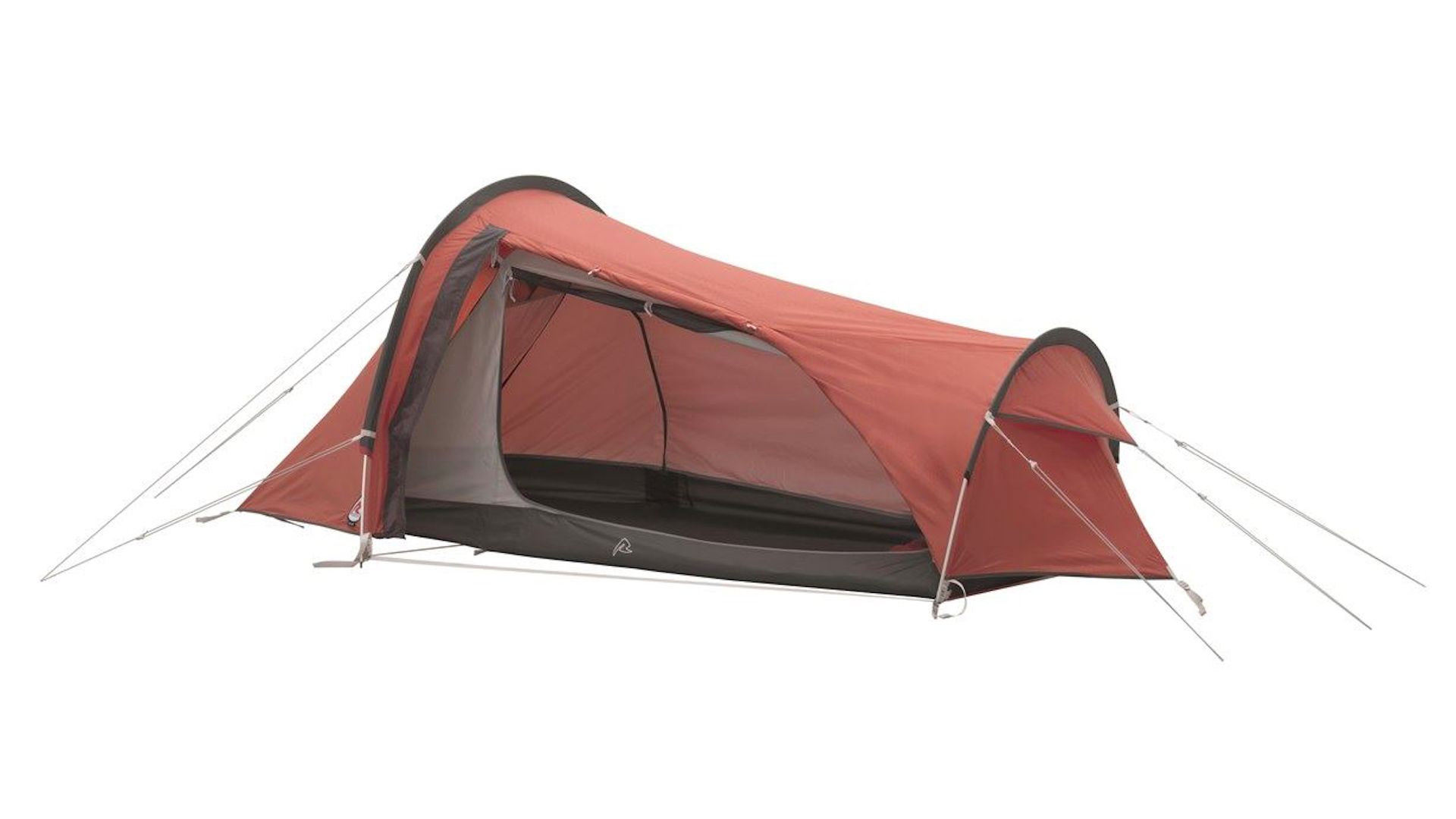
Overview
The Arrow Head is a side-entry, double-wall, one-person tunnel tent from Robens’ entry-level Route range, built for three-season backpacking. It’s a tent for hikers who want a sturdy, weather-tight shelter without paying cottage-industry prices. The catch is weight: at 1.8 kg it sits well above the ultralight benchmark for a solo shelter.
Key Specs
| Spec | Detail |
|---|---|
| Type | Double-wall sloping tunnel tent, side entry |
| Sleeps | 1 |
| Seasons | 3 |
| Weight | 1,800 g |
| Packed size | 38 x 15 cm |
| Flysheet | HydroTex Core 75D polyester, 190T, fire retardant |
| Hydrostatic head (fly) | 3,000 mm |
| Inner tent | 68D breathable polyester, 190T |
| Groundsheet | 75D polyester taffeta, 185T, 6,000 mm |
| Poles | Alloy #7001 T6, 8.0 mm, anodised |
| Length | 270 cm |
| Sleeping area | Roughly 220 x 80 cm; interior height about 85 cm at the head, 55 cm at the foot |

Would the Arrow Head earn its spot in your pack?
1800 g · 63.5 ozAdd the Robens Arrow Head to your Gear Closet and see exactly what it does to your base weight, then start packing for your next trip.
Free · No credit card · iOS, Android & web · Trusted by 3,000+ backpackers
Performance
Weather protection. The Arrow Head’s reputation rests on how it handles foul weather. The 75D polyester fly is heavy-duty by solo-tent standards, and the seams are taped and heat-sealed. Owners describe holding up through all-night rain, and one UK buyer reported a Dartmoor night of lashing rain and gusts of around 50 knots in which the tent stayed put and the interior stayed dry. German customer reviews on Bergfreunde repeatedly list “stormproof” and “sealed seams” among the tent’s strengths. Robens claims it can withstand gusts of 165 km/h. That figure is the brand’s, not an independent measurement. The low, sloping profile sheds wind well, and multiple guy-out points cover shifting wind directions.
Pitching. The fixed pole sleeves, closed at one end, make threading the alloy poles straightforward, though first-timers have reported feeding them through the wrong way around. It can be pitched outer-first or all-in-one. Several owners suggest clipping the inner to the fly at home and packing the two together, which makes a wet-weather pitch quick and keeps the inner dry. The fly can also serve as a standalone shelter, a useful option in warm, wet conditions. One Bergfreunde reviewer found setup complicated, but most describe a pitch of around five to ten minutes on the first attempt, shorter with practice. The tent is not freestanding, so it needs solid staking.
Pegs. The supplied pegs are very light and go in without a mallet. Testers note they can struggle in strong wind or soft ground, and one reviewer recommends carrying extra pegs for exposed sites. Angling the stakes helps, and the small hooks on the pegs grip guylines a little poorly until they are angled correctly.
Space and comfort. This is where the trade-offs show. The side entry is a real advantage over end-door tunnels, since there’s no crawling in over your own feet, and it opens a wide view when pitched side-on to a lake or valley. Inside, a 45 L pack and boots fit under cover, and a 6-footer can lie down comfortably. Taller hikers, however, find sitting upright difficult, and head clearance is a recurring complaint among European buyers. The porch is small, and Advnture’s tester flagged both headroom and vestibule space as limits. This is a shelter for sleeping and sheltering, not for waiting out a three-day storm in comfort.
Ventilation. Vents at each end of the fly promote airflow, and owners report little condensation. A mesh inner door keeps bugs out, and the inner doors can be stowed in dedicated pockets.
Weight and pack size. At 1,800 g the Arrow Head is, in Advnture’s words, fractionally on the heavy side next to the solo tents in its best-of guide. Outdoor reviewers still call it viable for budget backpackers because it stays under 2 kg and packs down to 38 x 15 cm, small enough to disappear into a pack. Hikers chasing a sub-1 kg base-weight shelter should look elsewhere; the Arrow Head is closer to the classic trekking tent than the modern ultralight one.
Pros & Cons
Pros
- Robust 75D fly and taped seams handle sustained rain and wind
- Side entry avoids the crawl-in feel of end-door tunnels
- Packs to 38 x 15 cm
- Pitches outer-first or all-in-one, and the fly can be used alone
- Aluminium poles are sturdy and pre-bent
- Low price compared with lightweight competitors
Cons
- 1.8 kg is heavy for a one-person three-season shelter
- Limited headroom; tall users struggle to sit upright
- Small porch
- Not freestanding
- Stock pegs are light and may need replacing for exposed camps
Who Should Buy This
The Arrow Head suits budget-minded backpackers in wet, windy climates, especially UK and European walkers who need a dependable tent and don’t count every gram. It also works for first-time solo campers and bikepackers who want something durable and quick to pitch. Gram-counters, thru-hikers with sub-10-lb base weights, and anyone who wants room to sit up and cook out of the weather should look at lighter, roomier shelters.
Verdict
The Arrow Head is a tough, storm-capable, affordable solo tent, and it’s honest about being a trekking tent rather than an ultralight one. Buy it if value and weather protection matter more than weight. Skip it if your pack weight is already pared to the bone.