NEMO Aurora 2P Review
The NEMO Aurora 2P is a roomy, freestanding two-door tent with a footprint included, but at 2,126 g it's a comfort pick, not an ultralight one.
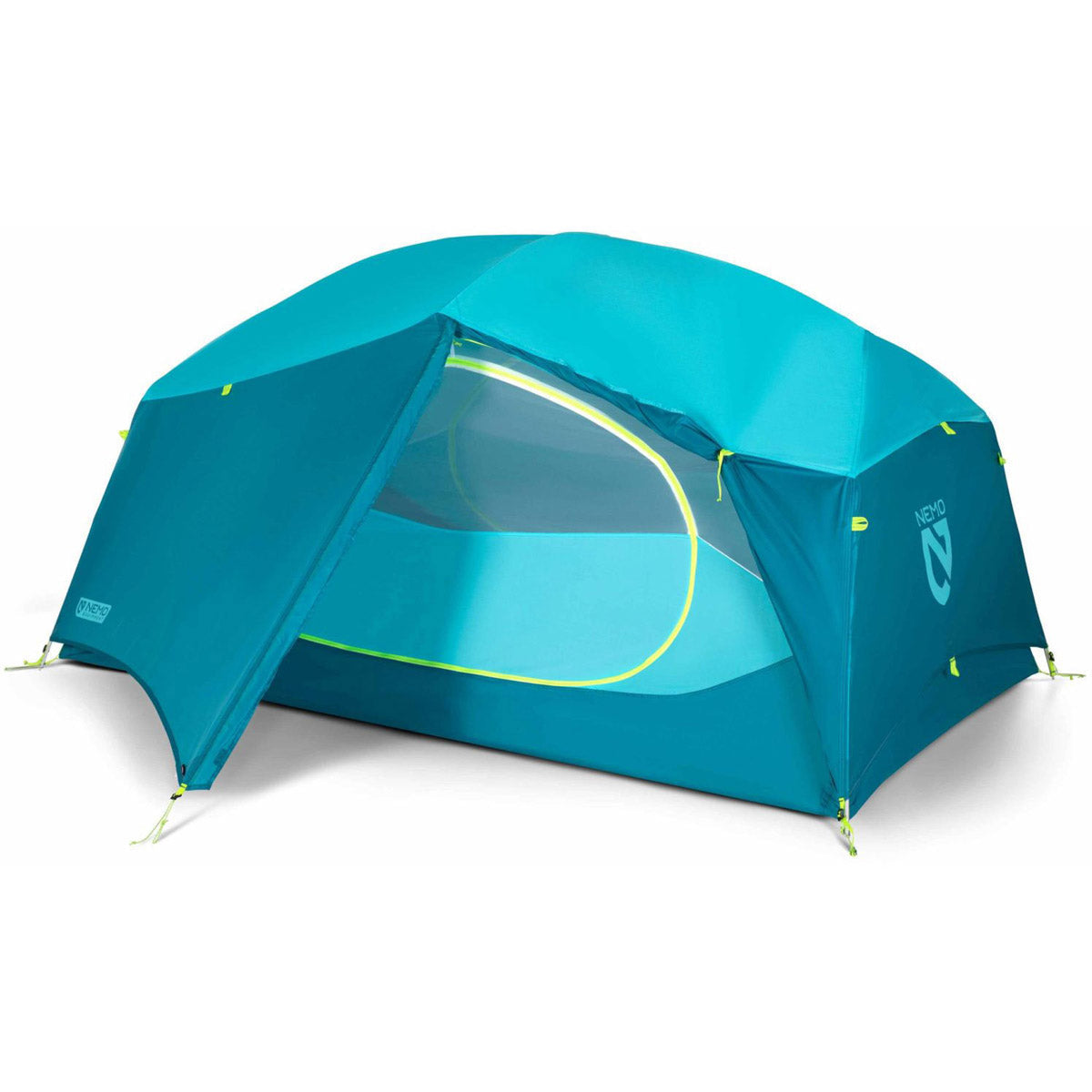
Overview
The NEMO Aurora 2P is a freestanding, two-door, two-vestibule tent built around one idea: standing room for people who would rather not live in a nylon wedge. Near-vertical walls and a 44-inch peak give it the volume of a larger shelter, and a matching footprint comes in the box. The price of all that livability is weight. At 2,126 g, it belongs in a weekend-trip or car-camping pack, not a thru-hiker’s.
Key Specs
| Spec | Value |
|---|---|
| Weight | 2,126 g |
| Capacity | 2-person |
| Seasons | 3-season |
| Peak height | 44 in |
| Floor area | 31.8 sq ft |
| Vestibule area | 9.2 + 9.2 sq ft (two vestibules) |
| Packed size | 23 in x 7 in diameter |
| Poles | Hubbed aluminum |
| Footprint | Included |
| Doors | Two |

Would the Aurora earn its spot in your pack?
2126 g · 75.0 ozAdd the NEMO Aurora to your Gear Closet and see exactly what it does to your base weight, then start packing for your next trip.
Free · No credit card · iOS, Android & web · Trusted by 3,000+ backpackers
Performance
Livability. This is where the Aurora earns its place. Reviewers who have spent time inside it single out the headroom, and not just at the center pole: the volume carries toward the head end, where most tents taper into a squeeze. Sitting up, changing clothes and rearranging gear without elbowing a tentmate are all realistic. Owners describe it as comfortable for one person with room to spare, and workable but snug for two, as with any 2P. A 31.8-square-foot floor is generous for the class, and the overhead spreader bar, interior mesh pockets and light-diffusing pockets for a headlamp add the sort of small comforts that matter on a rainy evening.
Vestibules and doors. Two doors mean no climbing over a sleeping partner at 2 a.m., and two 9.2-square-foot vestibules give each person a private gear garage with space left for cooking in a drizzle. The one recurring complaint is hardware: each door runs on a single zipper, which owners find slower and fussier than the double-zipper doors on pricier NEMO models. One reviewer who tested several NEMO tents found the Aurora’s zippers easier to run than the others but a bit louder.
Weather. The fly is 68D polyester with a polyurethane coating, a sturdy fabric that suits the Aurora’s more rugged, campground-friendly character. Owners report dry nights in heavy rain, and one Reddit user logged 45 nights in a single summer with the tent still looking new. The tall, boxy shape does catch more wind than a low dome, and the flatter end walls are the weak point if a storm blows in. Staking out the vestibules helps. As a 3-season tent, it is a poor match for cold shoulder-season nights; a snowboarder who camps near the mountains found that the same airy volume that makes the tent feel spacious also makes it slow to warm up. In summer the trade reverses: big mesh panels, rolled-back doors and fly vents make it a good hot-weather tent.
Setup. Hubbed aluminum poles and a freestanding design make pitching a one-person job. Some owners accustomed to NEMO’s Jake’s Foot system found the first pitch a bit less intuitive and wanted the instructions. Stakes are the other soft spot: the included ones are ordinary bent-metal pegs, and a reviewer said he would swap them out immediately.
Weight and packing. Adventure Alan, a reviewer who does recommend the tent, put trail weight at just over four and a half pounds and said that is heavier than they like to carry and not a dedicated backpacking recommendation. The 23 x 7-inch packed size is not small. NEMO’s Divvy dual-stage stuff sack lets two hikers split the load: shared between partners, each person carries roughly 1,060 g, which is more tolerable than it sounds. The tent’s overall value is a point in its favor. Reviewers have generally priced it at roughly $250–$300 with the footprint included, and the Aurora has held a 4.3-star average across 38 REI reviews, with 88 percent of reviewers recommending it.
Pros & Cons
Pros
- Near-vertical walls and 44-inch peak give true sit-up room, including at the head end
- Two doors and two 9.2 sq ft vestibules for independent entry and gear storage
- Footprint included, saving roughly the cost of an add-on
- Freestanding and simple to pitch solo
- Durable 68D fly; owners report long, trouble-free use
- Divvy stuff sack splits the load between two hikers
- Strong features for the price: gear pockets, light pockets, vents, dog-liner compatibility
Cons
- 2,126 g is heavy for a backpacking tent, and far from ultralight
- Bulky 23 x 7 in packed size
- Single zipper per door is slower and clumsier than a double-zip setup
- Tall, boxy profile is less wind-friendly than a low dome
- Cool in cold weather; best suited to warm nights
- Basic stakes are worth replacing
Who Should Buy This
The Aurora suits weekend backpackers, first-tent buyers, canoe and car campers, and couples or hikers with a dog who care more about room than grams. It is a sensible step up from a bargain big-box tent, with better construction and a longer list of features. Thru-hikers, gram-counters and anyone planning cold-weather use should look elsewhere: a freestanding shelter under 1,500 g or a trekking-pole tent will cut the load by a pound or more, and a four-season design is the answer for real cold. Hikers who want more refinement and a bit more space and can spend about $30 more might also look at the REI Co-op Half Dome SL 2+, which one reviewer called a clear upgrade.
Verdict
The Aurora 2P is a well-made, genuinely roomy tent at a fair price, and it does the front-country and short-trip job better than almost anything near $300. It simply isn’t built for distance, and its weight and bulk rule it out for ultralight use.