Naturehike VIK Review
Naturehike's VIK is a budget single-wall solo tent at 1,060 g with a double-Y pole layout and two vestibules, but it's best kept to short, drier trips.
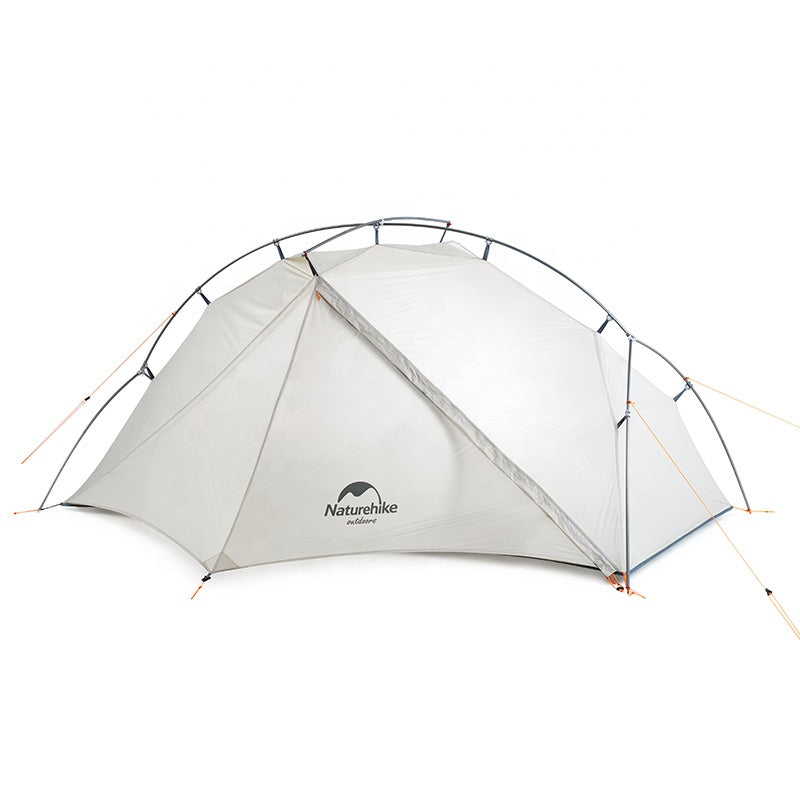
Overview
The Naturehike VIK is a single-wall, semi-freestanding solo tent built around a double-Y pole structure. It has two ceiling vents and two vestibules, and it weighs 1,060 g before accessories. It sells for a fraction of what cottage-brand shelters cost. The trade-off is the one every single-wall tent makes: moisture management. The VIK handles rain well, but condensation inside is the price of the low weight and low cost.
Key Specs
| Spec | Detail |
|---|---|
| Weight | 1,060 g (1,370 g with footprint, stakes and guylines) |
| Packed size | 46 × 16 cm |
| Wall type | Single-wall |
| Design | Semi-freestanding, double-Y poles |
| Capacity | 1 person |
| Seasons | Listed as 4-season (commonly used as 3-season) |
| Fly fabric | 15D silicone-coated nylon, 2,000 mm |
| Floor fabric | 200D silicone-coated nylon, 4,000 mm |
| Poles | 7071 aluminum alloy |
| Dimensions (cm) | 200 × 210 × 95 |
| Doors / vestibules | 1 door / 2 vestibules |
| Model | NH18W001-K |

Would the VIK Series Ultralight Backpacking Tent earn its spot in your pack?
1060 g · 37.4 ozAdd the Naturehike VIK Series Ultralight Backpacking Tent to your Gear Closet and see exactly what it does to your base weight, then start packing for your next trip.
Free · No credit card · iOS, Android & web · Trusted by 3,000+ backpackers
Performance
Weight and packability. At 1,060 g (about 2.3 lb), the VIK sits in the light-but-not-featherweight band for a solo shelter. The tent body is cheap to carry. The footprint, nine stakes and nine guylines add roughly 310 g, which brings the full kit to 1,370 g. Anyone who leaves the footprint home gets close to the headline number. The 46 × 16 cm packed size fits in a pack’s side pocket or on a bikepacking handlebar roll.
Pitching. The double-Y pole layout is the tent’s main selling point. Reviewers who have pitched it describe a fast setup that suits thru-hikers and cyclists who break camp every morning. The structure is semi-freestanding, so the vestibules and guylines still need stakes to reach full shape and tension.
Space. Vertical sidewalls give more headroom and interior volume than most tents of this weight. Cycloscope lists the interior at about 210 cm long, 85 cm wide and 95 cm high. That is enough for a regular-width pad. One owner on r/Ultralight reports fitting himself and a 50 lb dog. Reviewers also note that anyone over 6 ft may end up with feet against the wall. In a single-wall tent, that is where condensation soaks a sleeping bag. The two vestibules give a solo hiker a place for a pack on one side and boots or a stove on the other. Reviewers call the storage surprisingly generous.
Weather and condensation. The 15D silicone-coated fly is rated to 2,000 mm. The 200D floor is rated to 4,000 mm. Testers say the combination handles heavy rain properly for a single-wall design. One long-term owner on r/Ultralight reports five years of three-season use with a groundsheet. The tent is listed as four-season, but reviewers treat it as a spring-to-fall shelter. Cycloscope puts its comfortable limit at around 6–7°C (45°F). Condensation is the recurring complaint. Reviewers say the ceiling vents help. Cracking the door open while leaving the mesh closed helps more, though less in cold, damp air. Mom Goes Camping’s reviewer calls it a good fit for overnighters and bikepacking, and suggests a double-wall tent for multi-night trips. The two ceiling vents and two vestibules are the only ventilation tools the design offers, and in humid forest or alpine mornings they won’t keep the walls dry.
Build quality. The pole material and fabrics are what the price implies. The aluminum frame holds shape, and owners report it surviving years of use. This is a 15D fly with a 200D floor, so a footprint is worth the weight on rocky or rooty sites. The footprint is included.
Pros & Cons
Pros
- 1,060 g body weight and a 46 × 16 cm packed size
- Quick pitch with a double-Y pole structure
- Vertical walls give real headroom for a solo tent
- Two vestibules for gear and two ceiling vents
- Footprint, stakes and guylines included
- Owners report multi-year durability at a budget price
Cons
- Single-wall design means condensation on cool, humid nights
- Semi-freestanding, so it needs stakes for full pitch
- Tall sleepers risk contact with the walls
- One door only
- “4-season” label is generous; reviewers use it as a 3-season tent
- Full kit with footprint and accessories is 1,370 g
Who Should Buy This
The VIK suits weekend backpackers, bikepackers and budget-minded newcomers to lighter gear. It also suits hikers in dry or breezy regions who want roomy interior volume without a cottage-brand price. Thru-hikers who move camp daily will like the fast pitch. Anyone planning long stretches of wet, humid or cold weather should look at a double-wall tent. The same goes for sleepers over 6 ft and for hikers who want a two-door layout.
Verdict
The VIK is a roomy, quick-pitching solo shelter at a price that undercuts most competitors. It pays for that with the usual single-wall condensation problem. It is a sound pick for dry-season overnighters and short trips, and a poor one for multi-night wet weather.