Naturehike Mongar 2-Person Ultralight Backpacking Tent Review
Packstack is reader-supported. When you buy through links on our site, we may earn an affiliate commission. This does not affect the independence or objectivity of our reviews.
A balanced review of the Naturehike Mongar 2 tent — a budget-friendly, freestanding 3-season shelter that punches above its price but falls short of true ultralight credentials.
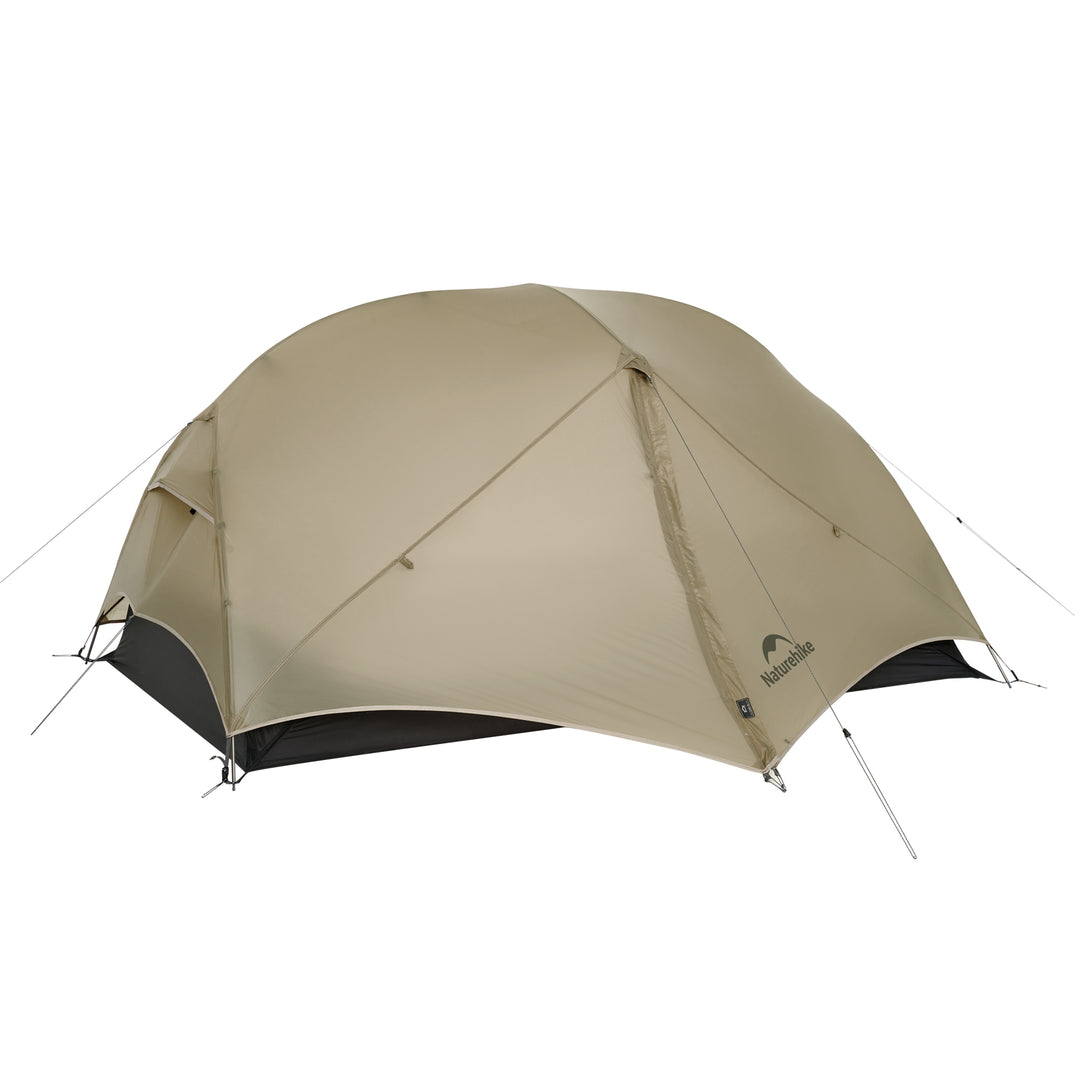
Overview
The Naturehike Mongar 2 is a freestanding, double-wall, 3-season tent aimed squarely at two-person teams who want a livable shelter without spending MSR Hubba Hubba money. It’s designed for hikers and backpackers who want lightweight portability without compromising interior comfort and reliable weather protection. At 2,100g for the full kit — including a footprint most competitors charge extra for — it occupies an interesting spot: not truly ultralight, but genuinely competitive for what you’re getting at the price.
Key Specs
| Spec | Detail |
|---|---|
| Capacity | 2-person |
| Seasons | 3-season |
| Total Weight (full kit) | 2,100g / 4.63 lbs |
| Tent-Only Weight | 1,800g / 3.97 lbs |
| Fly Material | 20D rip-stop nylon |
| Waterproof Rating (fly) | 3,000mm+ |
| Waterproof Rating (floor) | 3,000mm+ |
| Pole Material | 7001 aluminum alloy |
| Packed Size | ~55 x 15 cm / 21.7 x 5.9 in |
| Doors / Vestibules | 2 / 2 |
| Interior Dimensions | 210 x 135 cm / 82.7 x 53.1 in |
| Includes | Tent, footprint, pegs/stakes, stuff sack |
Would the Mongar 2-Person Ultralight Backpacking Tent earn its spot in your pack?
2100 g · 74.1 ozAdd the Naturehike Mongar 2-Person Ultralight Backpacking Tent to your gear closet and see exactly what it does to your base weight — then build your next packing list around it. Free, in about two minutes.
Free · No credit card · iOS & Android · Trusted by 3,000+ backpackers
Performance
Setup
This tent sets up fast — genuinely fast. On a first-time pitch, one reviewer had it up single-handedly in just over 4 minutes. The process is intuitive: peg out the four corners of the footprint, pop the ends of the double-Y-frame poles into the footprint eyelets, clip the inner to the poles, then drape the fly over and clip it via a buckle system to tapes at the corners. The symmetrical design means there’s no fussing over which end is which. That said, it’s technically an inner-pitch-first tent, which means pitching in inclement weather requires at least one door of the fly to be open, so the inner could still get wet.
Weather Protection
The 3,000mm waterproof rating holds up in practice. Its 3,000mm waterproof rating protects against heavy rain, and the double-layer design and sealed seams keep water out. Multiple users report taking it on fairly rainy trips with waterproofing holding up well. In testing across frigid, high-wind, and rainy conditions, the Mongar provided a safe haven from the elements, whether it was a light morning dew or icy winds.
One honest caveat on cold-weather use: the airy nature of the tent and lack of solid side walls means the Mongar does not hold much heat — on very cold nights below 0°C, the temperature inside the tent will not be much different from outside. This is a function of the heavily meshed inner, which is great for warm-weather ventilation but is not a thermal asset. Plan your sleep system accordingly.
Interior Space and Headroom
This is where the Mongar genuinely shines. It has impressive headroom — thanks to the centre spreader pole, the inside is more rectangular than dome-shaped, with 80% of the ceiling above 80cm in height. That translates to real sit-up-and-change-layers comfort, not just a number on a spec sheet. Inside is quite roomy, especially lengthwise — though users over about 183cm may find it a squeeze.
The dual vestibules are surprisingly roomy and leave ample space for backpacks.
Specifically,
a 75-litre pack just fits under one half of the vestibule, leaving the other half open for entry/exit or sheltered cooking — a layout made possible by the centre spreader pole pushing the fly edge further out than the inner tent’s base.
Ventilation and Condensation
The news is mixed here. The lightweight mesh inner and air vents on the fly work together to provide a well-ventilated space, and in cold weather with two bodies inside, condensation has been a non-issue for some users. However, the side vents really don’t make any difference on a stuffy night — a consistent complaint across multiple long-term owners. In high humidity, the mesh inner helps, but if you’re hoping the vents will bail you out in a hot, damp environment, manage your expectations.
Build Quality
The clips that hold the fly to the mesh inner are sturdy, and all seams appear well sealed with sound stitching.
The 7001 aluminum alloy poles feel solid.
The aluminum clips that hold the poles in place seem well built — they’re not going to break on you anytime soon.
Built-in gear lofts provide convenient storage for small items
, and
reflective material on the outside is thoughtfully placed, making it easy to locate the tent in low light.
The one consistent hardware weak point: the included pegs are pretty flimsy, but lightweight — most users replace them after they bend. Budget for a set of shepherd’s hook or V-stake titanium pegs before your first trip.
Weight Honesty
At 2,100g for the full kit, the Mongar is light for the space it provides — but calling it “ultralight” is a stretch by the standards of the r/Ultralight crowd. Split between two hikers, it adds roughly 1kg to each person’s base weight, which is reasonable. Solo carriers, though, will feel every gram of that 4.6-pound hit.
Pros & Cons
Pros
- Very fast, intuitive setup — symmetrical design, no wrong end
- Genuinely impressive headroom and livable interior for a 2-person tent
- 3,000mm waterproofing performs in real rain, not just spec sheets
- Footprint included in the box — unusual and appreciated at this price point
- Freestanding; works on tent platforms and rocky ground
- Can be pitched fly-only for emergency rain shelter, or inner-only on hot nights
- Reflective guylines and attachment points
Cons
- At 2,100g full kit, “ultralight” is generous — significantly heavier than tarp or non-freestanding alternatives
- Inner-pitch-first design means the inner can get wet in a surprise downpour during setup
- Mesh-heavy inner offers almost no thermal insulation on sub-freezing nights
- Side vents are largely ineffective in humid or hot conditions
- Included stakes are weak; plan to replace them immediately
- Taller hikers (6ft+) will find 210cm of interior length tight
Who Should Buy This
The Mongar 2 is a strong buy for backpacking duos who want a freestanding tent that sets up in minutes, has genuine headroom and vestibule space, and doesn’t require selling gear to afford. It consistently sells for between $99 and $143 depending on the color — which is hard to argue with given what you get. It’s also a solid pick for solo backpackers who prioritize comfort over pack weight, and for anyone who camps on platforms or rocky surfaces where non-freestanding designs are a hassle. If you’re a gram-counter chasing sub-1kg shelters, look at the Zpacks Duplex or a DCF tarp setup instead — this tent isn’t competing there.
Verdict
The Naturehike Mongar 2 is not a revolution — it’s a well-executed, budget-priced shelter with a proven layout that delivers on the things that matter most: real weather protection, above-average headroom, and a setup fast enough that you won’t dread pitching it at the end of a long day. The weak stakes and so-so ventilation are real drawbacks, and the weight prevents it from competing with true ultralight shelters. But at its price, with a footprint in the box, it represents genuine value. Rating: 7.5/10.