Naturehike Mongar Review
The Naturehike Mongar is a freestanding, double-wall 2-person tent with Hubba Hubba-style headroom at a budget price. It weighs 1.8–2.1 kg, so it isn't ultralight.
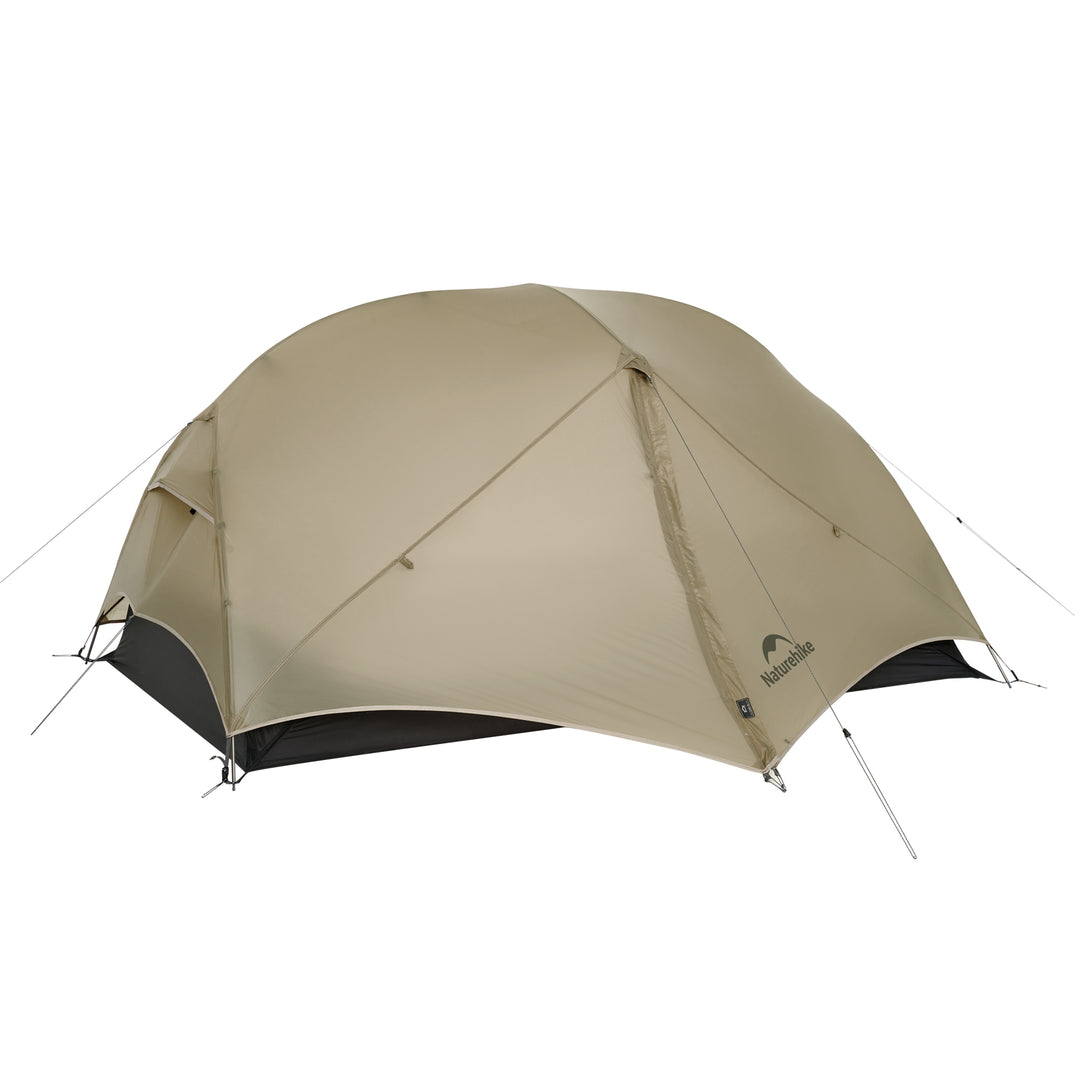
Overview
The Naturehike Mongar is a freestanding, double-wall, 3-season tent for two people who want a Hubba Hubba-style layout without the Hubba Hubba invoice. A Y-frame pole set and a centre spreader give it near-vertical walls, and it has two doors, two vestibules and a footprint in the box. The trade-off is weight. At 1,810 to 2,100 g depending on version and what goes on the scale, it is light for the space but not ultralight by thru-hiker standards.
Key Specs
| Spec | Detail |
|---|---|
| Capacity | 2-person |
| Seasons | 3-season |
| Weight | 1,810–2,100 g depending on version (tent only: about 1,800 g) |
| Fly fabric | 20D rip-stop nylon |
| Waterproof rating | 3,000 mm+ fly and floor |
| Inner | B3 mesh |
| Poles | 7001 aluminum alloy, Y-frame with centre spreader |
| Packed size | About 55 x 15 cm (19.6 x 5.9 in) |
| Interior | 210 x 135 cm floor, about 105 cm peak height |
| Doors / vestibules | 2 / 2 |
| Included | Tent, footprint, pegs, stuff sack |
Versions compared
| Image | Version | Weight | vs. lightest |
|---|---|---|---|
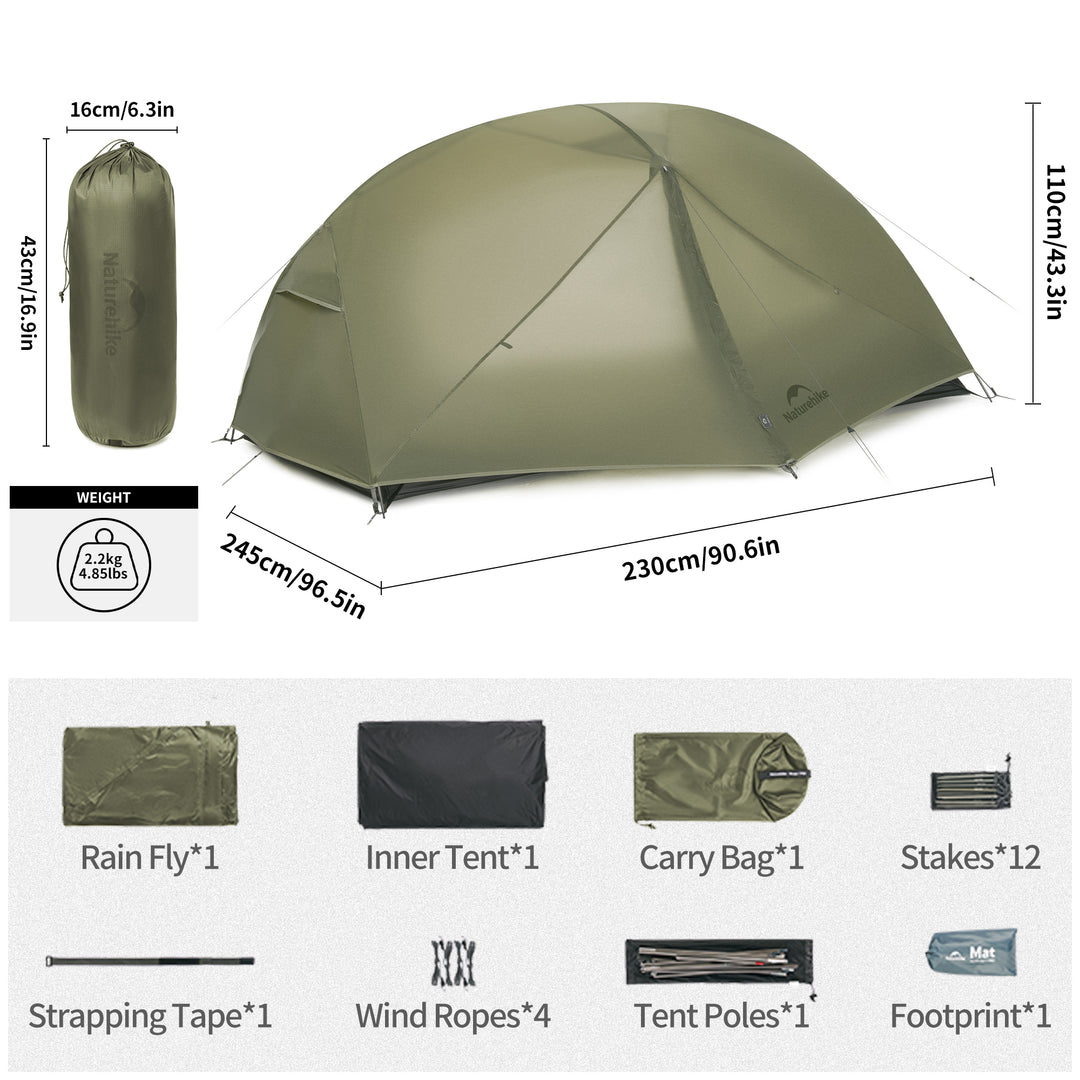 | 1810 g 2P | 1810 g (63.8 oz) | lightest |
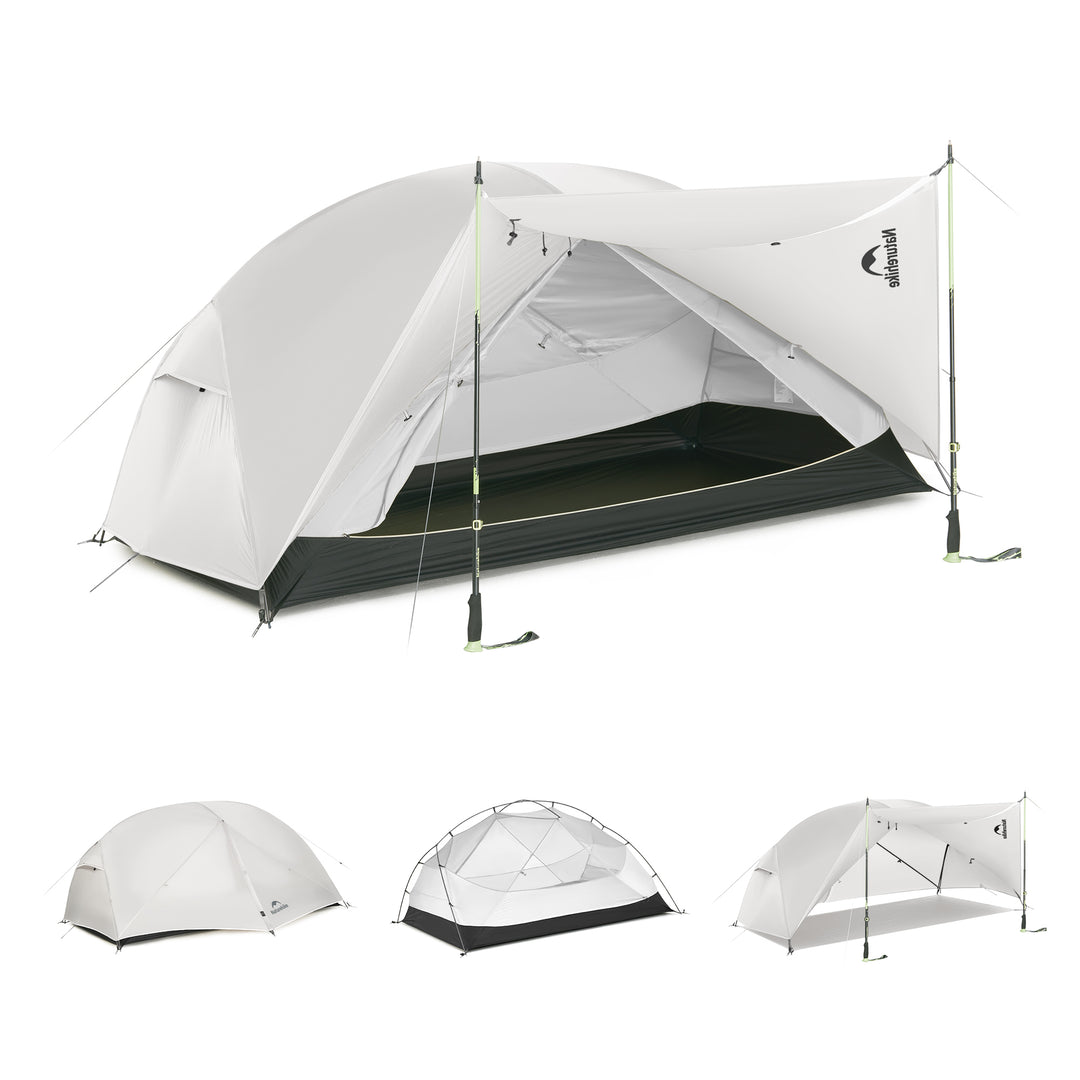 | 1900 g 2P | 1900 g (67.0 oz) | +90 g |
| 2100 g | 2100 g (74.1 oz) | +290 g |

Build your Gear Closet
View all of your gear in one place, create packing lists and hit the trail with confidence. Available on iOS, Android and the web.
Get StartedPerformance
Setup. The Mongar is built to be pitched without thought. Stake out the footprint corners, seat the double-Y pole ends in their eyelets, clip the inner to the frame, then throw the fly over and buckle it down. Both ends are identical, so there is no wrong way round. One reviewer had it up alone in a little over four minutes on a first attempt. The poles flex smoothly into place without being forced. Because the inner pitches first, a downpour pitch means leaving a fly door open, and the inner can get damp. One owner who pitched it fly-first in the rain called it easy.
Weather. Owners report multi-day rainy trips without leaks, and one tester describes a six-hour mountain deluge where water beaded and ran off the fly. Seams are taped and the stitching is even. The mesh-heavy inner that keeps the tent airy in July also gives it little heat retention. On nights below freezing, the air inside is not much warmer than the air outside. This is a spring-through-autumn shelter, and Reddit users who rate it highly consistently add that it is not a four-season tent.
Space. This is the Mongar’s strongest argument. The spreader pole squares off the ceiling, so the interior reads as a box, not a dome. Sitting up and changing layers is easy. The 210 x 135 cm floor is a true rectangle, about the width of a standard double bed. Two people fit with two pads, and gear goes in the vestibules, not inside. Mesh pockets at the head and foot and a loft net handle small items. Hikers over roughly 183 cm (6 ft) will find the length tight. A 75-liter pack fits under one half of a vestibule, leaving the other half free for getting in and out or cooking under cover.
Ventilation. Results are mixed. The mesh inner breathes well, and with two bodies inside in cold weather, many owners find condensation manageable. The two fly vents are another matter. Long-term owners say they do little on a muggy night, so don’t count on them in hot, humid camps. Rolling back the vestibules does more.
Build. Testers rate the finish well for a budget brand, with consistent stitching, sturdy fly clips and cleanly finished poles. The 20D floor feels thin to some owners, which is why the included footprint matters on rough ground. Reflective guylines and tabs help in finding the tent at night. The one repeat complaint is the stock pegs, which are light but bend easily. Most owners swap in V-stakes or shepherd’s-hook pegs before the first trip.
Weight in context. One owner who weighed a Mongar 2 against the advertised 2.2 kg all-in figure got 2.157 kg with footprint and pegs, and 2.031 kg without the pegs. That undercut his go-to Wild Country Zephyros 2 once the Zephyros’s footprint was added, 2.209 kg without pegs. A South African review that itemized the components put the fly at 592 g, the inner at 556 g, the poles at 568 g, the pegs at 90 g and the footprint at 120 g. Split between two people, the tent adds roughly 1 kg to each pack. For a solo hiker, more than 4 lb is a lot to carry.
Choosing a Version
All three listings share the same design: Y-frame poles with a centre spreader, a 210 x 135 cm floor, dual doors and dual vestibules. What changes is the number on the scale, and with it what rides in the stuff sack.
- 1,810 g 2P: The lightest listing, in line with Naturehike’s long-running figure for the 20D tent excluding stakes. It suits hikers who count grams and will carry their own lighter pegs. Plan around this weight only if the stock stakes stay home.
- 1,900 g 2P: The middle listing, 90 g heavier. It sits close to the independently weighed trail weight of the tent with a few accessories, and works as a realistic planning number for a lightly trimmed kit.
- 2,100 g: The full set with footprint, pegs and stuff sack, 290 g more than the lightest version. It is the honest figure for a stock tent on the trail, and the better choice if the footprint will protect the thin floor on rocky or abrasive ground.
Split between two hikers, the whole spread amounts to about 145 g each. Pick on what will actually be carried, not on the listing. At any of these weights, the Mongar is a comfort pick that happens to be reasonably light. Gram-counters who want less should look at Naturehike’s own Mongar UL, with a 15D fly and a listed minimum weight of 1.53 kg.
Pros & Cons
Pros
- Fast, symmetrical pitch with no wrong end
- Headroom and a rectangular floor that feel larger than most 2-person tents
- 3,000 mm+ fly and floor that hold up in sustained rain
- Footprint included, which many competitors sell separately
- Freestanding, so it works on platforms, sand and rock
- Inner-only pitch for stargazing or hot nights
- Two doors and two roomy vestibules, so neither sleeper climbs over the other
Cons
- Not ultralight: 1.8–2.1 kg is heavy for gram-counters
- Inner pitches first, so it can get wet in a downpour
- Mesh-heavy inner offers little warmth below freezing
- Fly vents do little in humid or hot weather
- Stock pegs bend and should be replaced
- Tight in length for anyone over about 183 cm
Who Should Buy This
Two hikers who want a freestanding tent that goes up in minutes, with real sitting-up room and vestibule space, and who don’t want to spend $400 or more, will get the most from it. It also suits solo hikers who value comfort over grams, and anyone who regularly pitches on platforms or rocky ground. Thru-hikers chasing a sub-1 kg shelter should look at a trekking-pole tent or a cuben-fiber tarp setup. Cold-weather campers should look at a tent with solid inner walls.
Verdict
The Mongar is a well-executed budget shelter that does the basics right. It keeps rain out, sets up in minutes and gives two people more room than its weight suggests. The weak pegs and underperforming vents are real flaws, and the weight rules it out for serious ultralight use. For a duo that values comfort and price, it is an easy recommendation.