MSR Hubba Hubba NX 2-Person Backpacking Tent Review
Packstack is reader-supported. When you buy through links on our site, we may earn an affiliate commission. This does not affect the independence or objectivity of our reviews.
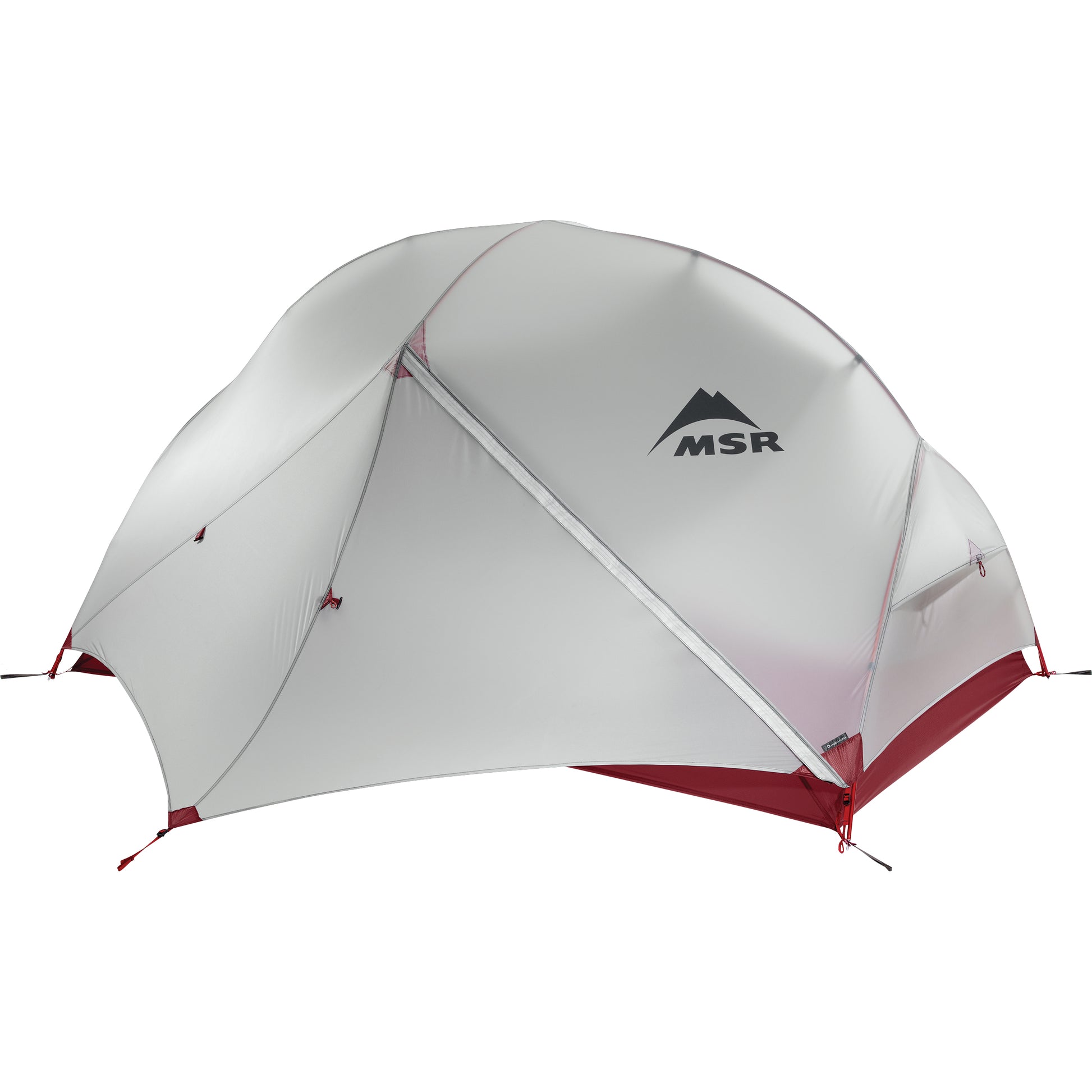
The MSR Hubba Hubba NX 2P is a freestanding 3-season tent that trades a few ounces for exceptional livability, a non-tapered floor, and bomber durability.
Overview
The MSR Hubba Hubba NX is a freestanding, double-wall, 3-season shelter built around a single hub-and-pole system that prioritizes livability and ease of use. It’s been one of the default recommendations in the “midweight but capable” 2-person tent category for over a decade, and the NX generation tightened up weight and materials without sacrificing the generous interior that made the original a bestseller. If you want a tent where two people can actually sit up comfortably, eat dinner, and not feel like they’re sharing a coffin, this is a serious contender — with some real trade-offs to consider.
Key Specs
| Spec | Value |
|---|---|
| Season Rating | 3-season |
| Capacity | 2-person |
| Minimum Weight | 1,540 g (3 lb 7 oz) |
| Packaged Weight | 1,730 g (3 lb 13 oz) |
| Packed Size | 18 × 6 in (46 × 15 cm) |
| Floor Area | 29 sq ft |
| Peak Height | 39 in (99 cm) |
| Vestibule Area | 17.5 sq ft total (8.75 sq ft per side) |
| Fly Material | 20D ripstop nylon, 1,200mm rated |
| Floor Material | 20D–30D ripstop nylon, 3,000mm rated |
| Poles | Easton Syclone composite hub system |
| Doors | 2 (one per side) |
| MSRP | ~$480–$550 |
Would the Hubba Hubba NX 2-Person Backpacking Tent earn its spot in your pack?
1540 g · 54.3 ozAdd the MSR Hubba Hubba NX 2-Person Backpacking Tent to your gear closet and see exactly what it does to your base weight — then build your next packing list around it. Free, in about two minutes.
Free · No credit card · iOS & Android · Trusted by 3,000+ backpackers
Performance
Livability and Space
This is where the Hubba Hubba NX earns its reputation. By the standards of a small backpacking tent, the headroom is generous. On paper the 39-inch peak height is on par with several competitors, but unlike some of the more sloped alternatives, the Hubba Hubba’s square-ish symmetrical shape means that more of the inside has decent headroom. The practical upshot: a 6-foot-tall person can sit straight up and shuffle about comfortably.
The floor geometry matters more than most reviews acknowledge. The pole architecture creates symmetrical, abundant headspace throughout the tent and the 50-inch width extends throughout — not tapering from head to foot as with some models — giving a sense of more elbow room. That non-tapered floor is a genuine differentiator if you’re someone who uses wide sleeping pads like a Therm-a-Rest NeoAir XTherm Max. Elbow room may be on the tight side inside, but there’s loads of space for gear storage and cooking in the porches — especially given that you have one apiece.
Setup
The hubbed Easton Syclone poles assemble quickly and intuitively, making the freestanding Hubba Hubba fast and easy to pitch — a nice feature when setting up camp in the rain.
MSR color-coded the fly and tent so it’s essentially impossible to incorrectly position the fly. The corners of one side have red straps on both the fly and tent while the opposite side is grey.
With two people, you’re looking at two minutes or less once you’ve done it a few times.
One legitimate gripe: the tent pitches inner-first. If you’re putting it up in the rain, this will obviously result in a wet inner. It’s not a dealbreaker in most 3-season conditions, but it’s a workflow you need to plan around in a downpour.
Also worth noting: the Hubba Hubba is technically freestanding, but really requires stakes to be set up well. On a clear night with no chance of rain, you might not worry about it — but if there’s any chance of rain, you wouldn’t want to trust it unstaked.
Weather Protection
The Hubba Hubba has been tested in the California High Sierras, Colorado Rockies, Texas desert, and the Pacific Northwest. In rainy weather it keeps users dry. The StayDry doors do prevent dripping when open — but only in light, vertical rain.
The tent’s steep walls and rainfly configuration create a drip line that prevents rain from entering the interior when entering and exiting.
Wind performance is the Hubba Hubba’s most polarizing characteristic. In terms of wind protection, the tent works reasonably well, particularly if pitched in the correct orientation. It’s reasonably aerodynamic and can cope with medium-level winds, but it has quite tall, steep-sided walls which can catch the full brunt of wind. Multiple reviewers confirm the poles flex noticeably in strong gusts. One reviewer saw the Hubba Hubba’s poles bend a bit in winds that probably exceeded 30 mph, though the tent never suffered damage or bent enough to compromise function. The consensus is that this is a 3-season tent in the truest sense — capable in typical backcountry conditions, but not where you want to be in sustained gale-force wind.
There’s also a known seam-leaking issue on earlier NX versions. By April 2020, MSR addressed the seam seal issue. Tents purchased after that point should arrive properly sealed and not leak. If you’re buying used, it’s worth inspecting — or just proactively seam-sealing the fly as insurance.
Ventilation
The two opposing doors and a retractable, high rainfly vent permit excellent ventilation. Even on calm nights in the 30s, condensation was not observed during testing.
That’s a strong result for a fully enclosed double-wall tent.
With multiple kickstand ventilation points, a largely mesh canopy, and a two-door design, internal humidity rarely builds up. On extra hot days, the ability to create a cross breeze is genuinely valuable.
Packability and Weight
At 1,540g minimum weight, the Hubba Hubba NX sits in the middle of the 2-person tent field — not ultralight, not heavy. For comparison, the Big Agnes Copper Spur HV UL2 comes in roughly 200–250g lighter. When split between two hikers, the per-person carry drops to around 850g including the fly, inner, and poles — comfortable territory. For fast-and-light travel, the tent body can be left behind, and a minimalist shelter constructed using a footprint (sold separately), poles, and rainfly — a useful option to shave significant weight when the weather forecast is cooperative.
Durability
The 20D floor and rainfly are thin, but in the ultralight world, they’re reasonably tough. The floor is thicker and more substantial than what you get with the popular Big Agnes Copper Spur HV UL2, and extended testing has produced zero issues with tears or excessive wear.
Some long-term users report fly seam delamination after several years of heavy use, and a subset of reviews mention pole issues — though those reports appear more concentrated in earlier production batches.
Some will want to add a footprint, which costs an additional ~$57 and adds 8 ounces in weight.
Pros & Cons
Pros
- Non-tapered rectangular floor maximizes usable space for two people and gear
- Two independent doors and vestibules — each person gets their own entry and storage porch
- Excellent ventilation system; condensation is rarely a problem
- Fast, intuitive setup with color-coded, hub-and-pole system
- Freestanding — repositionable before staking
- Rainfly-only pitch option (with footprint) cuts significant weight for fair-weather nights
- Strong real-world weather performance in typical 3-season conditions
Cons
- Inner-first pitch means the inner gets wet in a rainstorm if you’re not quick
- Tall sidewall profile catches wind; poles flex visibly in gusts above 30 mph
- Lighter competitors (Copper Spur HV UL2, Nemo Dragonfly Osmo 2P) exist at the same floor area
- Fly grommets at pole corners are fussier than buckles would be, especially with cold or wet hands
- Footprint sold separately at ~$57 — an expense on an already premium-priced tent
- Included stakes are mediocre; plan on swapping in MSR Groundhog or similar
- Historical seam leaking on pre-2020 units (appears resolved on current production)
Who Should Buy This
The Hubba Hubba NX is the right call for 2-person teams who genuinely spend time inside their tent — weekend warriors doing shoulder-season trips, couples who want separate entry points without negotiation, or anyone who wants a proven, freestanding shelter they don’t have to baby. While there are lighter competitors, the MSR Hubba Hubba 2-person strikes a nice balance between livability and modest weight for three-season backpackers who prefer more elbow room in their shelter — and promises a longer life than some lighter tents. It’s less ideal for committed weight-weenies, open-weather thru-hikers carrying solo, or anyone frequently camping in exposed, high-wind terrain.
Verdict
The Hubba Hubba NX has outlasted countless trend cycles in the backpacking tent market because it does the fundamentals well: it’s genuinely livable for two, sets up fast, and keeps you dry through typical 3-season conditions. The weight penalty over the lightest competition is real — roughly half a pound — but the non-tapered floor and dual-vestibule design make the trade worth it for most partner trips. MSR’s legendary backpacking tent is more competitive than ever with a hard-to-beat balance of weight, space, and durability. If you’re solo or chasing gram savings above all else, look elsewhere — but as a do-everything partner shelter, it’s earned its reputation. 7.5/10.