MSR FreeLite 3 Review
A deep dive into MSR's ultralight 3-person backpacking tent, weighing real-world livability and ventilation against its thin fabrics and price.
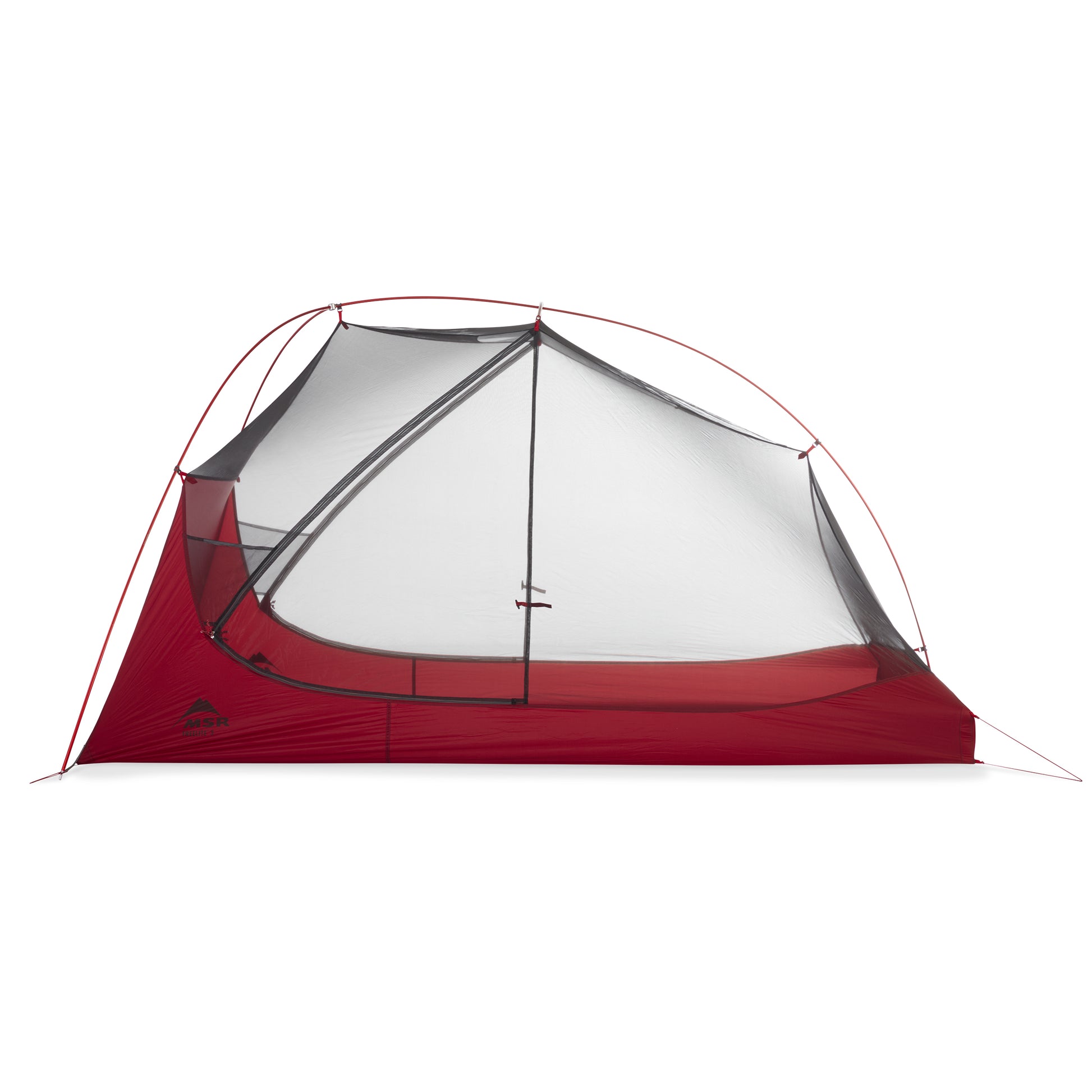
Overview
The FreeLite 3 is MSR’s ultralight take on a group backpacking tent — a semi-freestanding, three-season shelter built for hikers who want to split a tent among three people without anyone’s share of the weight feeling punishing. It’s aimed at thru-hikers, weekend groups, and couples who want extra elbow room, not at anyone chasing four-season durability or bombproof storm protection.
Key Specs
| Spec | Value |
|---|---|
| Trail weight | 1,070 g (2 lb 6 oz) |
| Capacity | 3 person |
| Seasons | 3-season |
| Floor area | 38.5 sq ft |
| Peak headroom | 43 in |
| Vestibule area | 14 sq ft (2 vestibules) |
| Doors | 2 |
| Poles | DAC NFL aluminum |
| Floor fabric | 15D ripstop nylon, DuraShield (PU + DWR) |
| Canopy fabric | 10D polyester micromesh |
| Fly fabric | 15D ripstop nylon, DuraShield (PU + silicone) |
| Setup | Semi-freestanding |
| Packed size | 18 in length |
| Included | Tent body, rainfly, poles, 8 Needle stakes, guy lines, stuff sack, instructions |

Build your Gear Closet
View all of your gear in one place, create packing lists and hit the trail with confidence. Available on iOS, Android and the web.
Get StartedPerformance
Space and livability. On paper, 38.5 square feet for three people sounds tight, and in practice it is — this is a “shoulder to shoulder” tent, not a lounge. One reviewer testing it with three adults noted inside, sleeping conditions will be shoulder to shoulder, although the space-to-weight ratio is what testers loved about the Freelite. Field Mag’s testers found the floor works well for three sleeping pads with just the floor fits three sleeping pads perfectly with maybe an inch to spare, though they also flagged that the walls do slant slightly in to form the dome, so if you are traveling with three, try your best to snag the middle sleeping spot. That taper is the trade-off for the true rectangular floor and 43-inch peak height — you get usable headroom in the center, but the person on the wall side loses some shoulder space to mesh brushing against their face.
Where the FreeLite consistently earns praise is ventilation. Multiple independent testers, in different climates, reported the same thing: the gap between the micromesh body and the fly does its job. Bikepacking.com ran it through rain, near-freezing temperatures in coastal British Columbia, and milder weather in Idaho and never had any condensation issues. Field Mag’s team, worried about three people’s breath fogging things up on cold nights, found with three people breathing through very cold nights, they could have run into real discomfort with poor ventilation and heavy condensation, but the tent has the perfect distance between the mesh canopy and the rainfly, so it wasn’t an issue. Not every user got off that easy — one longer-term owner noted their first trip was in surprisingly cold weather, and they woke up dry but there was condensation on the fly, though their camping companion’s tent had the same problem — a reminder that condensation is as much about weather and campsite choice as tent design.
Weather resistance. In storms, the reviews are largely reassuring for a tent this light. Backpacker’s testers ran it through a post-hurricane deluge in Georgia and reported a surplus of groundwater and consistent rain the last night on the trail, yet the tent provided a dry refuge from above and below — no rain got in, the tent bottom was bone dry, and there was no condensation buildup despite having to close the fly door. Wind performance also checked out in that same test, with guylines that held taut in 20-mile-per-hour winds. Gear Institute’s tester attributed some of that stability to the shape itself, noting the Freelite has a relatively low profile, which helps it combat gusty conditions, and the same sloped walls that hindered shoulder room help here since the shape of the profile is just as important as its height when it comes to shedding strong wind.
Setup. Being semi-freestanding, you can’t just pop this up on rock or hard-packed sand and call it done — the head end floats free, but the foot end and vestibules need stakes to take proper shape. As Backpacker put it, the tent is semi-freestanding, meaning it will need to be staked out properly to achieve its full pitch, so be sure to bring the appropriate stakes for the terrain. Most testers found the actual process quick once you know the routine — Gear Institute clocked a first-time solo setup at six minutes — though the hubbed pole system does have a learning curve. One long-term owner running an older version noted the asymmetry took some getting used to on the first pitch, since the tent is asymmetrical and after you lay it down you still have to remember to swing the T piece and put the tent up.
Durability. This is the category where the FreeLite draws the most mixed feedback, and it’s the classic ultralight trade-off: the 15D floor and fly and 10D mesh save weight but demand more careful handling than a heavier backpacking tent. Backpacker’s reviewers were explicit about this, writing that the fly is made of 15-denier ripstop nylon, which is effective in its weather proofing but needs careful handling to avoid tearing or puncturing. That caution is borne out by at least one unhappy buyer who reported having to replace the tent in terms of design and portability, but less than impressed with its durability, having to replace it after one use due to a tear in the mesh door panel. That’s an outlier in the reviews I found, but it’s worth flagging since thin mesh doors are a known weak point on ultralight tents generally — a stray fingernail or a dog’s paw can do real damage. On the flip side, longer-term owners report it holding up fine with reasonable care, and MSR backs the tent with its standard repair-focused warranty program.
Pros & Cons
Pros
- Genuinely light for a 3-person tent — under 2.5 lbs trail weight with 38.5 sq ft of floor
- Excellent, consistently-praised ventilation even in humid or condensation-prone conditions
- True rectangular floor and 43-inch headroom make the interior feel less cramped than the footprint suggests
- Two doors and two vestibules (14 sq ft combined) mean no one has to crawl over a tent-mate
- Held up well in wind and heavy rain across multiple independent field tests
Cons
- Shoulder room narrows toward the walls due to the tapered dome shape — the middle sleeper gets the best deal
- 15D fly/floor and 10D mesh require more careful handling than heavier tents; at least one buyer reported an early mesh tear
- Semi-freestanding design still needs a proper stake-out on hard or uneven ground
- Included stakes are on the flimsy side for rocky terrain
- At ~$480 MSRP, it’s priced at the premium end for a 3-person shelter
Who Should Buy This
This tent makes the most sense for a trio of hikers — or a couple wanting extra room to spread out — who prioritize a light shared load and good airflow over palatial interior space or bombproof burliness. If you’re doing high-mileage days where every ounce in the group’s shared gear matters, splitting the FreeLite 3’s sub-2.5-lb weight three ways is hard to beat. If you’re car camping, expecting rough rocky pitches every night, or you’ve got a habit of being rough on gear, a heavier, burlier tent will serve you better long-term.
Verdict
The FreeLite 3 delivers on its core promise: a genuinely light three-person tent with standout ventilation and enough headroom that it doesn’t feel like a coffin once you’re inside. The trade-offs are the usual ultralight ones — thin fabrics that reward careful handling, and a tapered shape that puts the outer sleepers closer to the mesh than they might like. For groups who backpack seriously and treat their gear accordingly, it’s a smart buy; for casual or hard-on-gear campers, the durability margin is thinner than you might want. I’d put it at a 7.5/10 — a strong, well-reviewed shelter with a couple of well-documented compromises.