Kelty Circuit 2 Review
The Kelty Circuit 2 is a budget-friendly, freestanding 3-season dome tent aimed at beginner backpackers and casual campers who want reliable shelter without a steep price tag.
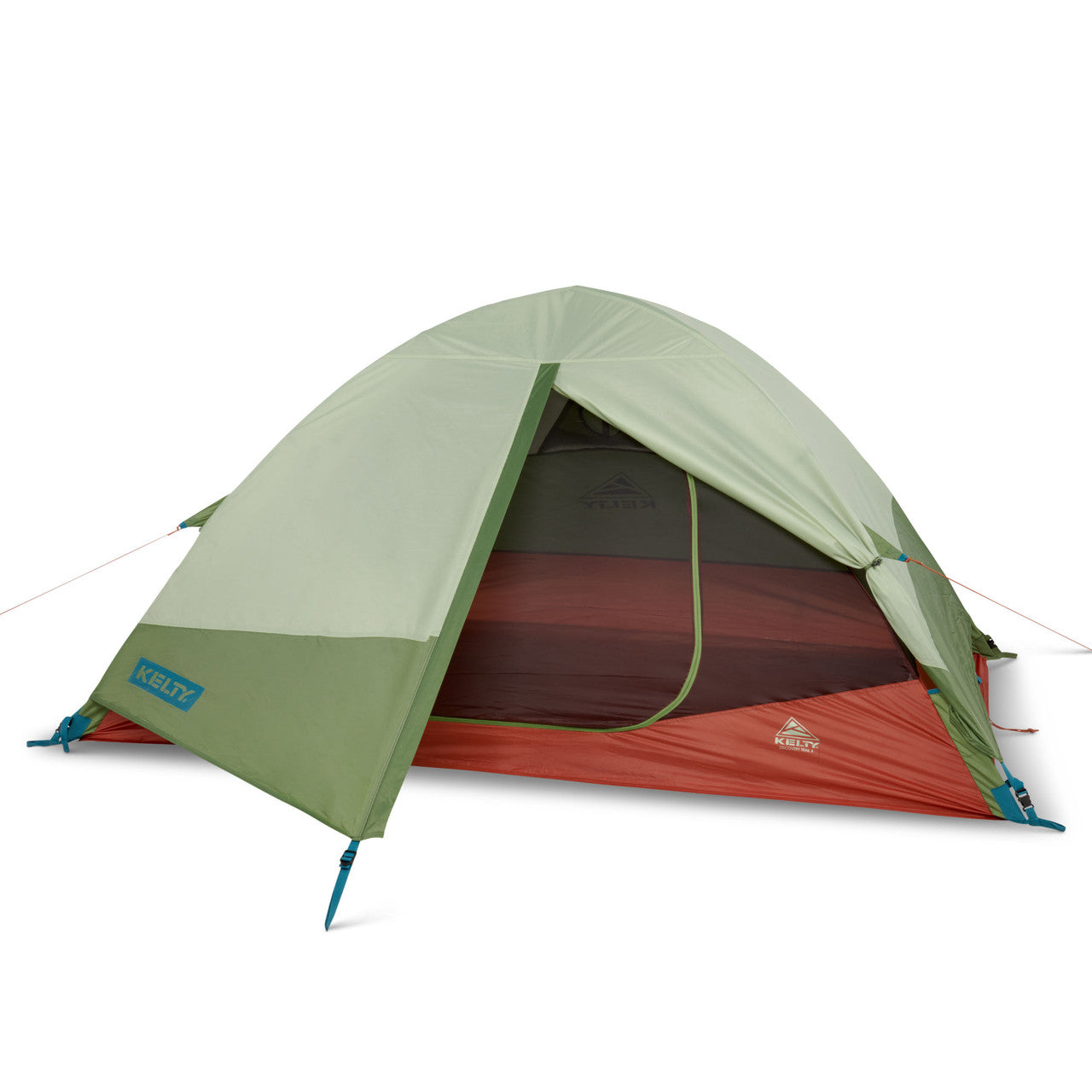
Overview
The Kelty Circuit 2 is a freestanding, 3-season dome tent marketed to entry-level backpackers and car campers who want a straightforward, weatherproof shelter at a budget price. It’s an excellent travel partner for backpacking trips, built for 3 seasons with a rainfly, taped seams, and a fly vent for airflow on humid nights. With a trail weight of 4 lbs 2 oz (1,871 g), this tent sits squarely in the budget-backpacking category — lighter than most car-camping shelters, but noticeably heavier than modern ultralight alternatives.
Key Specs
| Spec | Value |
|---|---|
| Trail Weight | 4 lbs 2 oz (1,871 g) |
| Packaged Weight | 4 lbs 12 oz (2,155 g) |
| Packed Size | 8 × 25 in |
| Capacity | 2-person |
| Seasons | 3-season |
| Floor Area | 33 sq ft |
| Vestibule Area | 4.5 sq ft |
| Peak Height | 42 in |
| Number of Doors | 1 |
| Number of Poles | 2 |
| Pole Material | 7000-series aluminum |
| Pole Diameter | 9 mm |

Would the Circuit 2 earn its spot in your pack?
1871 g · 66.0 ozAdd the Kelty Circuit 2 to your Gear Closet and see exactly what it does to your base weight, then start packing for your next trip.
Free · No credit card · iOS, Android & web · Trusted by 3,000+ backpackers
Performance
Weather Protection
Built for the elements, the Circuit 2 includes a rainfly and taped seams, plus the fly features a vent to increase airflow on humid nights.
Taped seams are a meaningful baseline for keeping water out, and the fly vent is a smart inclusion — condensation management is one of the trickiest variables in a dome design, especially when two people are breathing in a sealed space all night.
That said, the single fly vent is doing a lot of heavy lifting here. With only one door and no mesh-canopy-only pitch option for warm nights, managing moisture inside gets tricky in shoulder-season humidity. If you’re backpacking in the desert Southwest, this probably won’t be an issue. If you’re in the Pacific Northwest in late September, budget some mental energy for condensation wipe-downs in the morning.
Interior Space & Livability
The 33 sq ft floor measures 88 × 54 inches, which is genuinely spacious for a 2-person backpacking tent — wider than many comparable shelters in this price range. Two standard-width sleeping pads fit comfortably side by side, and there’s actual room to maneuver. At 42 inches peak height, you can sit up straight near the center, which makes dressing in the morning far less of a yoga exercise.
The vestibule, however, is where the math gets painful: 4.5 sq ft. That’s enough for a pair of boots and maybe a water bottle. Interior pockets and a gear loft offer convenience for accessories and essentials, which means your packs are likely sleeping inside with you, not outside under cover. For a solo hiker doing a shakedown trip, that’s manageable. For two adults with full overnight loads, you’re making compromises.
Setup
A lightweight, freestanding dome design allows for quick, easy setup once you arrive at your destination, and color-coded poles make it even easier.
Two-pole dome tents are about as beginner-friendly as it gets — thread the poles through, clip the canopy on, stake the corners, toss on the fly. Most people can nail it solo in under 10 minutes on the first try, and under 5 once it’s familiar. They are easy to set up solo and don’t break the bank.
The 9 mm 7000-series aluminum poles are a legitimately good spec for a budget tent. The 7000 alloy is stronger and stiffer than the 6000-series used in cheaper shelters, and 9 mm diameter keeps flex minimal in moderate wind. These won’t snap on you in a typical 3-season storm.
Wind & Storm Performance
A freestanding dome sheds wind reasonably well given the low-profile geometry. The freestanding dome design allows for quick, easy set-up, and the tent includes guylines and stakes — use them in anything above a light breeze. The included stakes are worth swapping out for aluminum V-stakes if you’re heading into anything serious; the stock hardware from budget Kelty tents is functional but not confidence-inspiring on its own.
Weight in Context
At 4 lbs 2 oz trail weight, the Circuit 2 is backpackable but not ultralight. To put that in perspective, it’s roughly 2 lbs heavier than an MSR Hubba Hubba NX 2 and over 3 lbs heavier than a Big Agnes Copper Spur HV UL2. You can survive in a Kelty 2P for years with a spouse, but when you upgrade to something like a Big Agnes Copper Spur HV UL3, there’s no going back. That’s an honest summary of this tier of tent: perfectly functional, just not optimized for the long haul.
If you’re splitting the load with a partner, the math gets better — each person carries a bit over 2 lbs. That’s workable, especially for shorter trips.
Pros & Cons
Pros
- Roomy 33 sq ft floor — one of the better floor areas at this price point
- Freestanding dome with color-coded poles makes setup fast and genuinely foolproof
- 7000-series aluminum poles are a quality choice that punches above budget expectations
- Fly vent aids condensation management — a thoughtful inclusion
- Taped seams provide solid weather protection out of the box
- Gear loft and interior pockets help offset the tiny vestibule
- Comes with guylines and stakes included
Cons
- 4.5 sq ft vestibule is too small for two people’s packs — both are likely coming inside
- Single door means one person always has to climb over the other
- 4 lbs 2 oz trail weight is heavy if you’re packing miles; lighter options exist at a modest price premium
- At 8 × 25 inches packed, it’s a long cylinder that can be awkward to fit in a smaller pack
- No mesh-only pitch option mentioned — limits warm-weather ventilation flexibility
- Condensation management, while aided by the fly vent, still requires attention in humid conditions
Who Should Buy This
The Circuit 2 is best suited for the occasional backpacker or new hiker who wants a reliable, weatherproof tent without spending serious money. If you’re doing a few weekend trips per year on well-established trails, this tent will get you through them dry and comfortable. It also works well as a first tent for someone who isn’t sure yet how seriously they’ll take backpacking — many hikers have had great luck with Kelty backpacking tents, and you can usually find sales for less than $100 for the 2–3 person ones. If you’re planning a thru-hike or logging 50+ nights per year, the weight and single-door layout will start to grate, and you’ll be eyeing an upgrade fairly quickly.
Verdict
The Kelty Circuit 2 delivers exactly what it promises: a freestanding, 3-season shelter that’s easy to pitch and stays dry in honest backpacking weather. The 33 sq ft floor is a genuine strength, and the 7000-series poles are a better spec than you’d expect at this price. But the 4.5 sq ft vestibule is a real limitation for two-person use, the single door adds friction, and the 4-lb-plus weight means serious backpackers will outgrow it quickly. It earns its place as a solid entry-level tent — just go in knowing what you’re getting.