Hilleberg Kaitum 3 GT Review
Hilleberg's Kaitum 3 GT is a roomy, storm-ready 3-person tunnel tent at 3.4 kg minimum weight, built for long trips where space and strength matter more than grams.
Overview
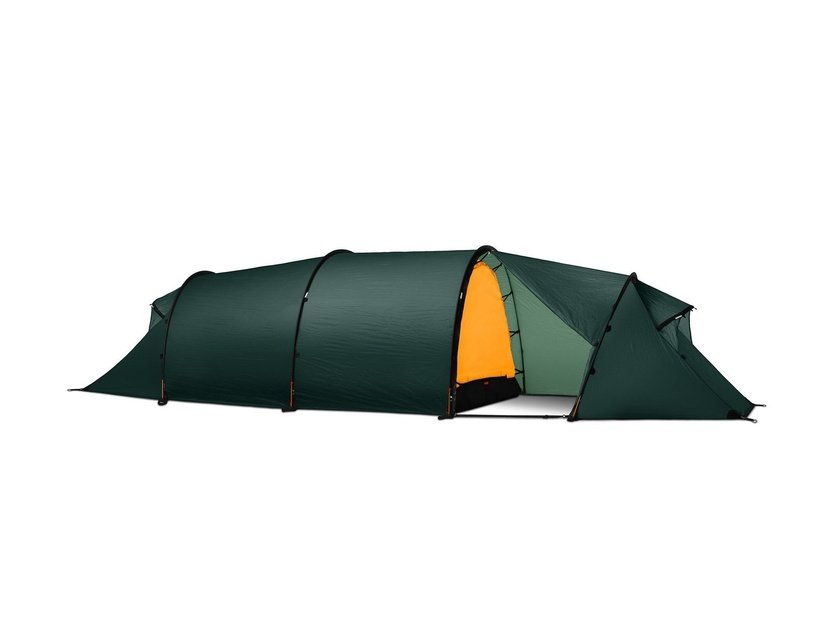
The Kaitum 3 GT is Hilleberg’s lightest-weight take on a true three-person, four-season tunnel tent. It has a door at each end, a standard vestibule on one side and an extended GT vestibule on the other. It is built for hikers, cyclists and winter campers who want space to sit up, cook and wait out weather. The trade-off is a footprint of more than five metres end to end and a weight that no ultralight purist will call light.
Key Specs
| Spec | Detail |
|---|---|
| Weight | 3,400 g minimum weight; 4,100 g packed weight |
| Capacity | 3 persons |
| Inner dimensions | 220 x 185 x 105 cm |
| Outer fabric | Kerlon 1200 (triple-siliconized 30D ripstop nylon) |
| Poles | 9 mm aluminium (DAC), 2 x 285 cm + 2 x 328 cm |
| Pegs | 22 x V-Peg |
| Design | Tunnel, two doors, two vestibules (one extended GT) |
| Label | Red Label (lightest four-season line) |
| Origin | Estonia |

Would the Kaitum 3 GT earn its spot in your pack?
3400 g · 119.9 ozAdd the Hilleberg The Tentmaker Kaitum 3 GT to your Gear Closet and see exactly what it does to your base weight, then start packing for your next trip.
Free · No credit card · iOS, Android & web · Trusted by 3,000+ backpackers
Performance
Space. Room is the Kaitum 3 GT’s main selling point. The inner tent has near-vertical walls at both ends, so the headroom doesn’t taper into a coffin at the feet. Owners who bought the tent for that reason say the foot end is still tall enough to sit in. A 6’4” (194 cm) cycle tourer wrote that he could stretch out without touching the walls, and that his partner could lie across the width. Retailers describe it as roomy enough for two long hikers. One owner reported that four people can squeeze in when they have to.
Weather. Hilleberg places Red Label tents below its Black Label expedition line for fabric weight. The company still rates them for snow loads and high winds, and describes the Kaitum as a lighter sibling of the Keron series. The tent is meant for exposed terrain and above-treeline camping in all but the worst conditions. A group paddling an Alaskan river endured sustained 25 mph winds with higher gusts, rain and a morning of slush. One owner there said that, with the tent oriented into the wind, he never needed more than two guy lines. A European owner says four pegs hold it in bad weather. Hilleberg lists four pegs as the minimum pitch, with extra anchor points for more stability. The side and end guy ropes loop to a total of 18 guy points, and every line comes with a tensioner already fitted.
Ventilation and condensation. The inner tent breathes, the vents have adjustable snow-proof panels, and the front section of the extended vestibule can be rolled away for airflow. Cycle tourers who used it in Tierra del Fuego and on Exmoor report a good breeze with the inner vents open and the mosquito netting zipped. They add that with everything closed on a cold night, the condensation that plagues other tents doesn’t show up. Owners also say the vestibule works as a refuge: a spot to shed wet gear, store packs, cook and sit out a squall. The GT vestibule is large enough to keep all the gear out of the sleeping area.
Pitching. Continuous pole sleeves and linked inner and outer tents keep setup simple. Four colour-coded poles slide through sleeves without much fuss. Owners report solo pitches of about 10 to 15 minutes. A single person can do it on most surfaces, even with gloves on, but all that fabric becomes a sail in a gust. Cycle tourers say a second person lying on the poleless sections makes pitching and striking in strong wind much easier.
Weight and packed size. At 3.4 kg minimum and 4.1 kg packed, this tent is heavy against a solo or two-person trekking-pole shelter. Owners generally frame it per square metre, saying it weighs little for the space and strength. One buyer still called it a little heavy while rating it acceptable for long hikes. Bikepackers like the compact pack size, with the poles lashing onto the bike frame. A rafter who used it on a river trip suggested it is best suited to rafting and car camping because of its weight.
Quirks. The main vestibule zippers clang together on windy nights, and an owner suggested zipper covers or tape. Another owner found the guy-line system unfamiliar at first. The footprint is large and not an issue on gravel bars or treeless tundra, but it limits pitch choices in forested or crowded campsites. One owner on rocky ground added long permanent lines to the four main guy-outs so he could anchor with rocks or logs. A Finnish owner would like insect netting on the vestibule door and vents, and a door like the Nammatj 3 GT’s.
Pros & Cons
Pros
- Vertical walls at both ends, with full sitting height throughout
- Two doors and two vestibules, including an extended GT vestibule for cooking and storage
- Wind- and snow-ready in a lighter Red Label build
- Condensation control and ventilation options
- Quick, gloves-friendly pitch; can be held with as few as four pegs
- Packs compactly for its size
Cons
- 3.4 kg minimum weight is a lot for a two-person hiking trip
- Long footprint (5 m+) needs a large flat site
- Not a one-person pitch in strong wind
- Pole and peg count adds to carried weight versus trekking-pole shelters
- Premium price
Who Should Buy This
Buy this if you want a shelter for three on long trips, or you want a roomy two-person tent with serious gear storage. It suits winter camping, cycle touring, high-latitude trips and anyone for whom sitting upright and cooking under cover is worth carrying extra kilos. It also suits the tall, who often find a tapered floor claustrophobic.
Look elsewhere if your main goal is a low base weight for one or two people. The trekking-pole tarp and tent options that thru-hikers favor are far lighter. Hikers who camp mostly in dense, bug-heavy forest should also look at a smaller tent with netting on all doors.
Verdict
The Kaitum 3 GT is a strong, spacious shelter with generous ventilation options and pitching that stays manageable in poor weather. For a tent that sleeps three and shrugs off a storm, 3.4 kg is a fair price in grams. It isn’t a thru-hiker’s tent, but it is among the best choices for groups and winter trips.