Drop X-Mid 2P Tent Designed by Dan Durston Review
Packstack is reader-supported. When you buy through links on our site, we may earn an affiliate commission. This does not affect the independence or objectivity of our reviews.
The Drop X-Mid 2P is a trekking pole–supported double-wall shelter that delivers an exceptional livable space-to-weight ratio for two-person ultralight trips.
Overview
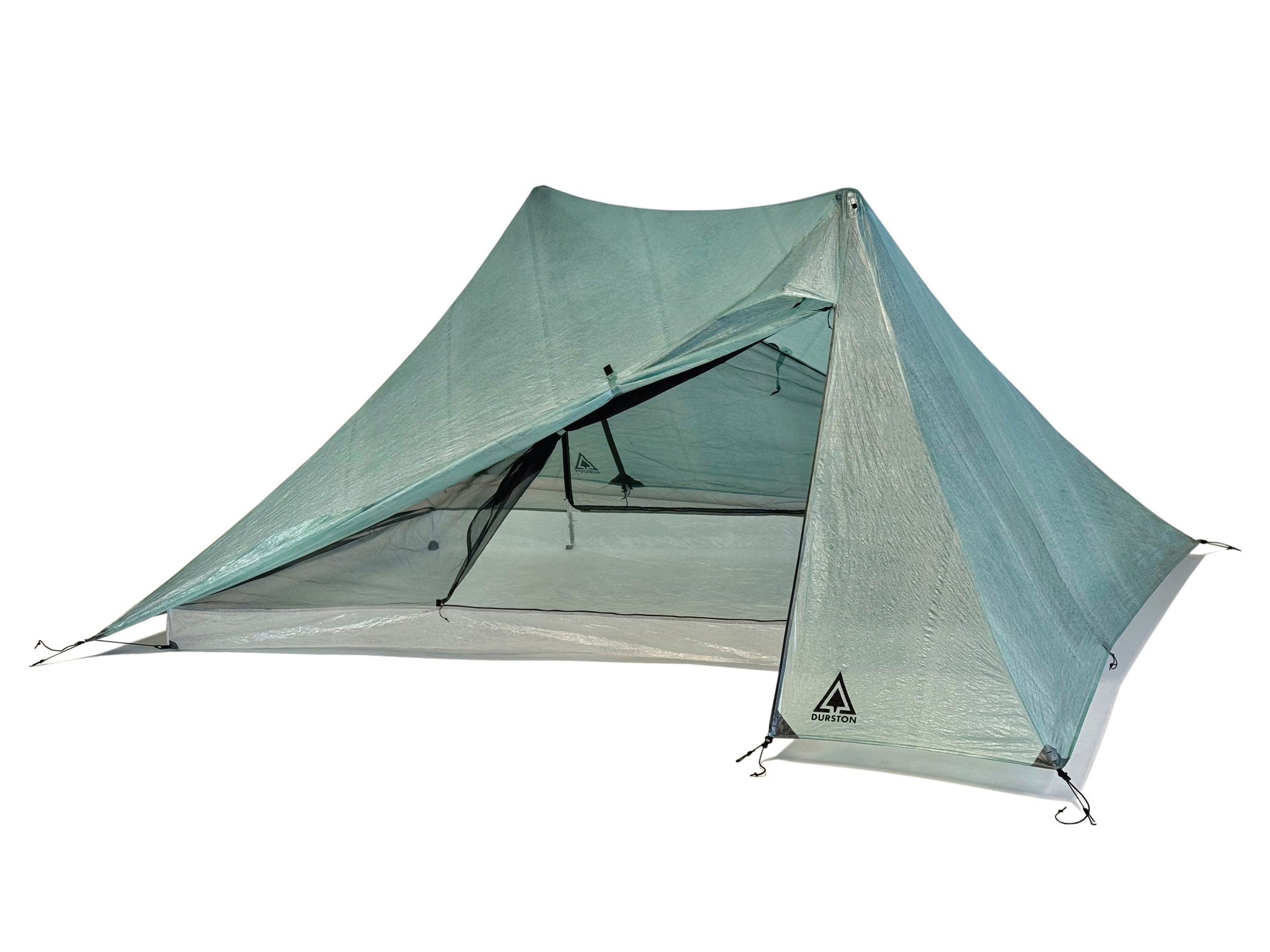
The Drop X-Mid 2P is a two-person, double-wall, trekking pole–supported tent designed by Canadian thru-hiker and ultralight advocate Dan Durston. It uses a patented rectangular-footprint geometry with two offset poles to carve out an exceptional amount of livable space for its weight — 32 sq ft of floor area and dual 12.5 sq ft vestibules — while keeping the pitch dead simple. This is a tent built for hikers who want a legitimate storm-capable shelter without crossing into gram-weenie territory or sacrificing the comfort of a real double wall.
Key Specs
| Spec | Value |
|---|---|
| Weight (with stakes & stuff sack) | 1090 g / 38.4 oz |
| Capacity | 2 person |
| Seasons | 3+ |
| Wall Type | Double wall |
| Floor Area | 32 sq ft |
| Vestibule Area | 25 sq ft (2× 12.5 sq ft) |
| Peak Height | 44 in |
| Floor Dimensions | 52 × 92 in |
| Setup | Trekking pole–supported (not included) |
| Stakes Required (min.) | 4 |
| Fly Fabric | Silpoly (siliconized polyester) |
| Fly Waterproofing | ~3,500 mm HH |
| Zippers | #5 YKK AquaGuard |
| Seams | Factory waterproofed (seam tape + proprietary tech) |
Would the X-Mid 2P Tent Designed by Dan Durston earn its spot in your pack?
1090 g · 38.4 ozAdd the Drop X-Mid 2P Tent Designed by Dan Durston to your gear closet and see exactly what it does to your base weight — then build your next packing list around it. Free, in about two minutes.
Free · No credit card · iOS & Android · Trusted by 3,000+ backpackers
Performance
Geometry: The Real Differentiator
Most two-pole shelters live and die by how annoying they are to pitch — poles awkwardly blocking doorways, weird hexagonal footprints that fight you when you’re trying to get all four corners taut. What clicked for me when I first set this one up was the benefit of the rectangular-shaped base — and in practice, that rectangular shape and the stability it provides is what really sets the X-Mid 2P apart from others in the dual-pole category. A rectangular shape tensions the perimeter, stabilizing the entire structure and allowing it to perform well in wind.
The offset pole design compounds this advantage. The combination of offset pole design and angled inner tent creates large, usable vestibules. In contrast to tents where the pole plants itself directly in front of the door, you step in without ducking around anything. That alone makes a meaningful difference at the end of a 20-mile day.
Setup
The rectangular shape allows the tent to be pitched with only four stakes.
Stake the four corners, drop your poles through the peak vents, and extend until taut — the fly geometry naturally limits pole height so there’s no measuring required.
You can pitch the fly first in the rain, allowing the inner to stay dry.
The inner connects via buckles at the peaks and clips at the corners, so it can be pre-clipped or attached after the fact depending on conditions.
Weather Protection
The tent sheds snow and rain well. The SilPoly fabric is less prone to absorbing water and stretching when wet than the nylon or SilNylon fabric used on most tents, which means less wall sag and less fiddling with tie-outs to re-tension the tent.
The fly carries a waterproof rating around 3,500 mm, and because seams are factory waterproofed, there’s no seam sealing homework before your first trip out.
Both the 2P and 1P were tested for ten days in some of the most remote regions of Alaska — encountering light snowfall and multiple days of heavy rain — and this tent stood up to the test, with the large livable area and good ventilation especially appreciated during a three-day stretch of near-freezing rain.
The one complaint noted in high wind was some side-wall deflection in strong gusts — not a structural issue, just the large fabric panels flexing inward a bit.
Deploying optional peak guylines and side panel guylines, plus the additional hem stake-out points, addresses this in serious conditions.
Condensation
This is where the double-wall design earns its weight penalty over single-wall competitors. Condensation is usually the Achilles heel of many trekking pole–supported tents, but the X-Mid 2P manages it well by being fully double-walled like a traditional dome tent, with excellent cross ventilation from large, fully adjustable doors on either side and large roof vents with kickstands to keep them open. Users sleeping inside the solid double-wall 2P version have reported staying bone dry inside, which tracks: the air gap between fly and inner does its job. Note that the mesh-inner version reviewed here ventilates well in three-season conditions; if you’re targeting cold, damp environments regularly, the Solid inner variant (woven fabric instead of mesh) is worth considering.
Interior Livability
At 6’4”, users report plenty of headroom both laying down and sitting up.
The 44-inch peak height is genuinely generous for a trekking pole shelter.
The sleeping area is asymmetric, so it’s a bit different on each side — but about 95% of X-Mid 2 owners sleep in the same direction without issue.
The floor length is very generous at 92 inches, so the lower corners are not something you occupy but rather extra space for gear storage.
Four interior peak pockets — including dual sidewall pockets and dual peak pockets — allow for storage and provide a convenient way to suspend a headlamp in the tent.
Magnetic toggles allow the fly doors to be closed easily with one hand
, which sounds like a small thing until you’re fumbling at 2 a.m. in the rain.
Hardware & Durability
More ultralight tents use lighter-duty #3 zippers, but zippers are the most common failure point on a tent — so the X-Mid uses more robust #5 YKK zippers.
Users who have run the original Drop version for several years on summer camping trips and elk hunts report no durability issues and no problems in good rain and wind.
One note on the included stakes: upgrading to aluminum Y-stakes or nail stakes is a worthwhile investment for rocky ground or high-wind camps.
Footprint
The rectangular footprint is larger than comparably light freestanding tents. This is an honest trade-off of the design. The footprint is normal for a nicely-sized 2P trekking pole tent, but would be larger than a relatively small 2P traditional tent — though providing a comfortable amount of space benefits you every night, whereas the larger footprint is only occasionally a minor inconvenience for site selection. Vestibules can be collapsed to fit the tent into small sites when needed.
Pros & Cons
Pros
- Exceptional space-to-weight ratio: 32 sq ft floor + 25 sq ft vestibule for 1090 g
- Rectangular footprint makes pitching far simpler than most dual-pole shelters
- Double-wall design keeps condensation off your gear and sleep system
- SilPoly fly doesn’t sag or absorb water — retains tension and dries fast
- Factory-waterproofed seams; ready to use out of the box, no seam sealing required
- #5 YKK AquaGuard zippers — durability rarely found at this weight
- Fly-first pitch keeps the inner dry during rainy setups
- Offset poles leave doorways completely unobstructed
- Magnetic door toggles are genuinely one-handed in the dark
Cons
- Requires trekking poles (or Durston Z-Flick poles purchased separately) — not bundled
- Larger footprint than comparably light freestanding shelters; site selection matters
- Side walls can deflect inward during intense wind gusts (not a structural failure, but noticeable)
- The standard stuff sack is snug; packing in the cold with gloves takes practice
- The Drop version predates iterative Durston Gear improvements (2025+ models use lighter 15D silpoly and have further hardware refinements)
- Asymmetric interior takes a trip or two to figure out optimal sleeping arrangement
Who Should Buy This
This tent is ideal for two-person ultralight and thru-hiking teams who already carry trekking poles and want serious storm protection without the weight of a conventional double-wall freestanding tent. It also works well for a solo hiker who values palatial space and is willing to carry a few extra ounces for real double-wall condensation control. If you’re coming from a cheap dome tent and want to step meaningfully into the ultralight space without giving up weather security, this is one of the clearest upgrade paths on the market. It’s less suited to base-campers or casual campers who prioritize freestanding convenience over weight, or anyone regularly camping on surfaces where staking is difficult.
Verdict
The Drop X-Mid 2P is one of the most well-considered trekking pole shelters available — the rectangular geometry solves real usability problems that plague most dual-pole designs, and the double-wall construction puts it in a different comfort category than single-wall DCF competitors at similar weights. If you’re comparing it to the current Durston Gear version sold direct, that line has been incrementally refined with lighter fabric and hardware improvements, but the fundamental design DNA here is the same and it remains a formidable shelter. At a 9/10, the only things holding it back from perfection are the site-selection demands of its footprint and its dependence on poles you need to supply yourself.