Big Agnes Copper Spur HV UL1 Review
Packstack is reader-supported. When you buy through links on our site, we may earn an affiliate commission. This does not affect the independence or objectivity of our reviews.
A livable, freestanding solo shelter that punches well above its weight class for interior space — but a premium price and zipper concerns deserve scrutiny.
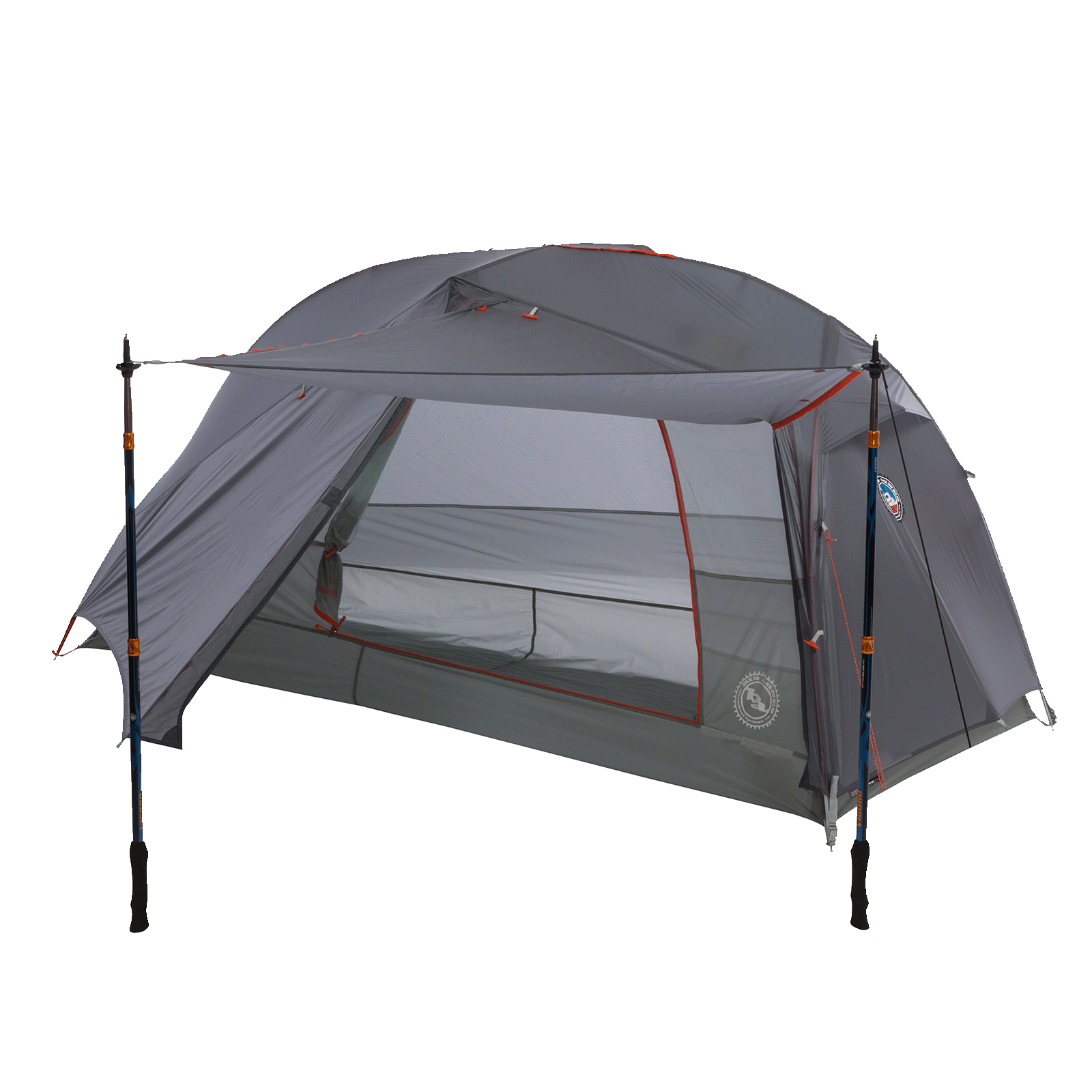
Overview
Since its launch in 2008, the award-winning Copper Spur has been Big Agnes’ most popular ultralight backpacking tent.
The HV UL1 is the single-person version of that lineage — a fully freestanding, double-wall, 3-season shelter built around a simple pitch and a high-volume interior that defies what you’d expect from a sub-1 kg trail weight. It’s aimed squarely at solo thru-hikers and weekend backpackers who want real livability without crossing the two-pound mark.
Key Specs
| Spec | Value |
|---|---|
| Trail Weight | 964 g / 2 lb 2 oz |
| Packed Weight | 1,080 g / 2 lb 6 oz |
| Fast Fly Weight | 737 g / 1 lb 10 oz |
| Packed Size | 17.5” × 5.5” (44 × 14 cm) |
| Floor Area | 20 ft² / 1.9 m² |
| Vestibule Area | 9 ft² / 0.8 m² |
| Peak Height | 38” / 97 cm |
| Seasons | 3-season |
| Capacity | 1-person |
| Pole System | DAC Featherlite NSL |
| Fly/Floor Fabric | HyperBead 15d nylon, 1,200mm PU coating |
| Waterproofing | Solvent-free PU taped seams |
Would the Copper Spur HV UL1 earn its spot in your pack?
964 g · 34.0 ozAdd the Big Agnes Copper Spur HV UL1 to your gear closet and see exactly what it does to your base weight — then build your next packing list around it. Free, in about two minutes.
Free · No credit card · iOS & Android · Trusted by 3,000+ backpackers
Performance
Interior Space & Livability
This is where the Copper Spur HV UL1 genuinely earns its reputation. The tent offers 20 square feet of floor area, and the near-vertical walls mean you get usable space closer to the edges rather than losing it to sloping fabric. At 38 inches of peak height, you can sit comfortably on your butt without feeling cramped — a meaningful detail when you’re pinned down by rain. Users over 6 feet tall consistently report enough length to spare. It’s one of the largest solo 3-season tents around, and it doesn’t suffer from the “coffin effect” that plagues most 1P shelters.
The organization inside is genuinely thoughtful. Traditional, media, and 3D bin pockets help organize your gear without cramping your sleep space or capacity to sit up inside. The oversized 3D bin pocket at the foot of the tent is large enough to hold an entire outer layer at the ready for midnight nature calls.
Setup
Big Agnes color-codes the poles and corner clips — the front hooks and tension cords are grey, the foot poles and clips are orange — which is convenient when setting up fast in the rain or in the dark.
The TipLok Tent Buckle at the corners combines the pegging point, pole fixing, fly attachment, and tensioning, making pitching faster and adding structural stability.
Most experienced users settle into a 5-minute pitch routine.
One caveat: this is an inner-pitch-first tent. Some hikers avoid inner-pitch designs over rain concerns, but the pitch goes fast enough that the inner is unlikely to get wet unless rain is truly torrential — and the fabrics dry quickly if it does.
Weather Protection
One user took the Copper Spur UL1 on a 5-day, 40+ mile trip from Mt. Hood to the Columbia River, where it rained continuously for 2.5 days — and the tent kept them completely dry with very little condensation even in elevated humidity.
The double-wall construction handles condensation much better than single-wall alternatives.
With a weather resistance score of 9/10 in independent testing, the tent performs well in typical 3-season storms, shedding rain effectively with the ripstop nylon rainfly and polyurethane coating.
That said, some users have flagged floor wetting under sustained, heavy downpours:
in a hard rain, patches of the floor can start to darken and become damp because water gathers underneath.
A footprint — sold separately — is a worthwhile hedge, and also enables the Fast Fly configuration at 737 g.
Ventilation
Hot sleepers take note: the UL1’s single-door design limits cross-ventilation. The 2P model can cross-ventilate with the fly on, whereas the UL1 has just one door. Big Agnes does include a Low Vent capability on the vestibule door and a high vent on the fly, combined with double sliders on the vestibule zippers for venting from the top or bottom — it helps, but it’s not a substitute for a second door in humid conditions.
Fabric & Durability
The current production runs use Big Agnes’ proprietary HyperBead fabric. Compared to traditional tent fabrics, it’s 6% lighter, 50–100% stronger, and 25% more waterproof — and is made without additionally added PFAS. That PFAS-free angle has drawn some skepticism on forums, with some users noting that anecdotes suggest the removal of PFAS may make the new material less effective at shedding water, though the data is still thin.
Zipper reliability is the tent’s most consistent weak point across years of user reports. The fragile rainfly zippers are a real weakness on an otherwise exceptional tent. Pulling too hard on the main rainfly zip is enough to break a zipper. Treat them gently, keep them clean, and carry a zipper pull or repair kit on longer trips.
Pros & Cons
Pros
- Genuinely livable interior for a sub-1 kg solo tent — near-vertical walls maximize every square foot
- 38” peak height; comfortable sit-up headroom even for taller hikers
- Fully freestanding (only the vestibule needs a stake)
- Intuitive, color-coded pole system; consistent 5-minute pitch once practiced
- Fast Fly option drops carry weight to 737 g when paired with the footprint
- Thoughtful storage: 3D bin pocket, ceiling loops, media pockets
- Awning-style vestibule door adds covered porch space and extra ventilation options
- Responsive warranty and repair service from Big Agnes
Cons
- Single door limits cross-ventilation; can run warm in humid climates
- Rainfly zippers require careful handling; multiple users report failures over time
- Floor can wet out in sustained hard rain without a footprint
- Inner-pitch-first design exposes the mesh body briefly during setup in rain
- Packed size (17.5” × 5.5”) is a touch bulky for frameless packs
- ~$500 price tag — steep for a solo shelter
- Footprint needed for Fast Fly and floor protection, sold separately
Who Should Buy This
This tent is ideal for solo ultralight backpackers who want maximum interior volume without carrying extra weight — the near-vertical walls and high-volume freestanding design make it especially good for taller hikers or anyone who feels claustrophobic in typical ultralight shelters.
It’s a strong fit for thru-hikers who endure extended weather and multi-day tent time, where headroom and organization matter as much as the number on the scale. If you frequently camp in bug country or foul weather and want the reliability of a freestanding double-wall design over a trekking-pole shelter, this is a proven choice. Hot-weather desert campers who prioritize airflow, or gram-obsessive ultralight hikers comfortable with a cuben-fiber tarp, will likely find better options elsewhere.
Verdict
The Copper Spur HV UL1 delivers on the hardest promise in ultralight gear: cutting weight without cutting livability. For the vast majority of backpackers who care about reducing pack weight but aren’t obsessed — and just want something that works well reliably — this is one of the best overall backpacking tent options currently available. The zipper fragility and single-door ventilation are genuine trade-offs you need to accept, and at ~$500 the value-per-dollar is not the strongest argument for it. But if you’ve ever spent a rest day hunched in a coffin-shaped 1P tent watching rain, you’ll understand exactly what you’re paying for.
Rating: 8.5/10