Big Agnes Copper Spur HV Review
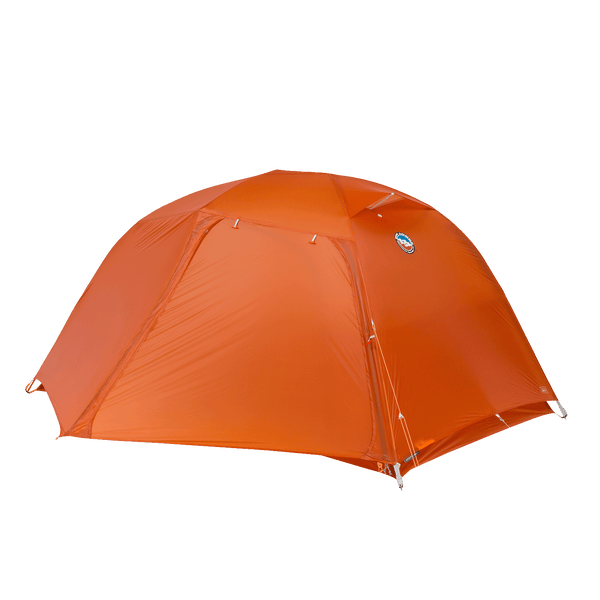
Big Agnes's freestanding, two-door Copper Spur HV trades a little weight and a lot of fabric thickness for the best livability in the ultralight tent class.
Overview
The Copper Spur has been the default ultralight freestanding tent on American long-distance trails since the series debuted in 2008. The HV version uses a high-volume hub and pre-bent pole sections to push the walls near-vertical, which gives it the interior of a much heavier tent. The trade-off is familiar: thin 15D and 20D fabrics, a mesh-heavy body that favors summer over shoulder season, and a price that starts around $450 for the solo model and reaches about $600 for the three-person.
Key Specs
| Spec | Value |
|---|---|
| Weight | 964–1,620 g depending on size (UL2: 1,417 g, 3 lb 2 oz) |
| Capacity | 1, 2 or 3 person |
| Seasons | 3-season |
| Floor area | 20 sq ft (UL1), 29 sq ft (UL2), 41 sq ft (UL3) |
| Floor dimensions (UL2) | 88 x 52/42 in, 40 in peak height |
| Vestibule area | 9 sq ft (UL1); 18 sq ft total on UL2 and UL3 (9 sq ft per side) |
| Doors | 1 (UL1); 2 (UL2, UL3) |
| Packed size | 6 x 19.5 in (UL2) |
| Waterproof rating | 1,200 mm fly and floor |
| Poles | DAC Featherlite NFL, NSL and pressfit |
| Fabric | Silicone-treated ultralight double ripstop mixed-denier nylon (fly and floor); solution-dyed ripstop grid |
| Stakes included | 8 |
Versions compared
| Image | Version | Weight | vs. lightest |
|---|---|---|---|
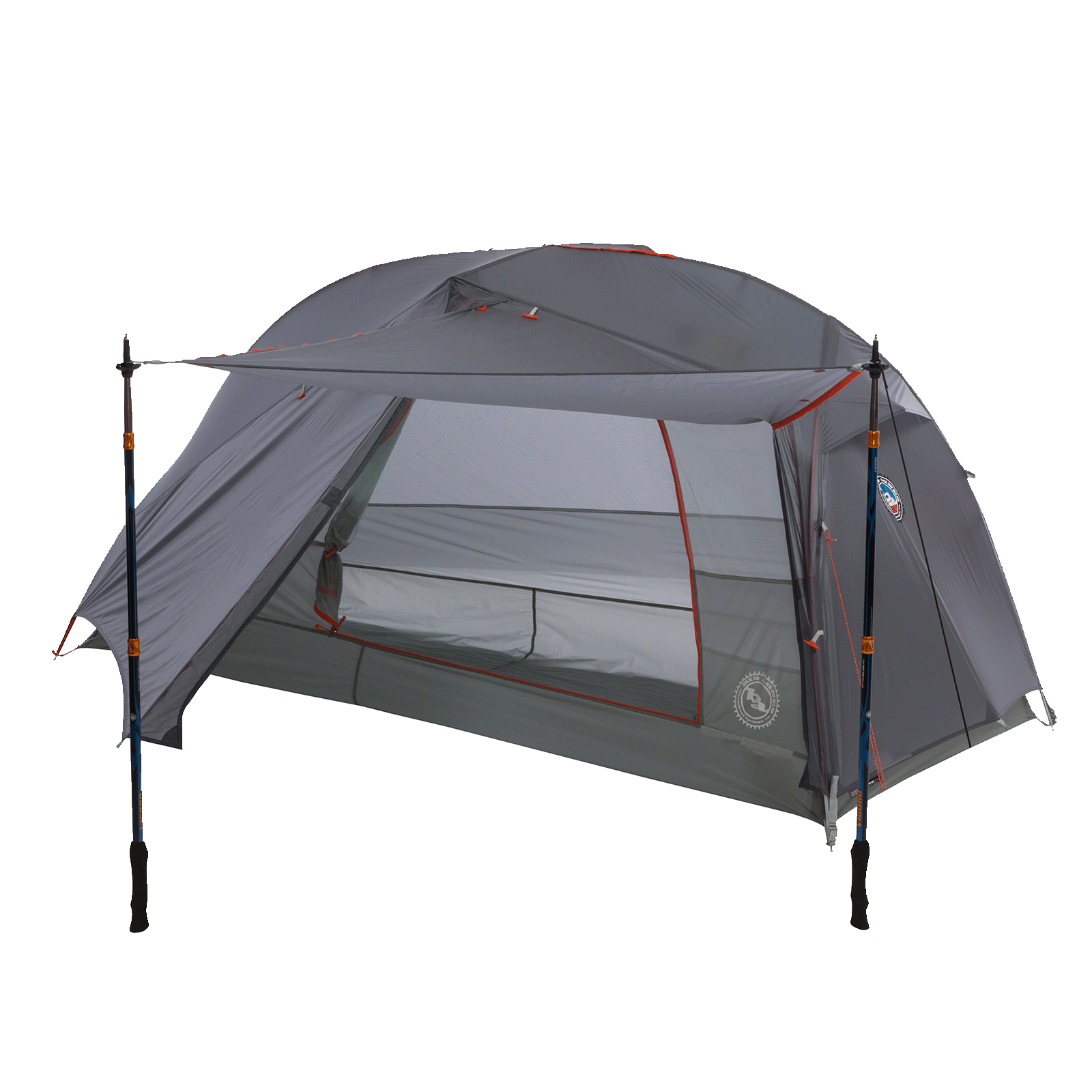 | UL1 | 964 g (34.0 oz) | lightest |
| UL2 | 1417 g (50.0 oz) | +453 g |
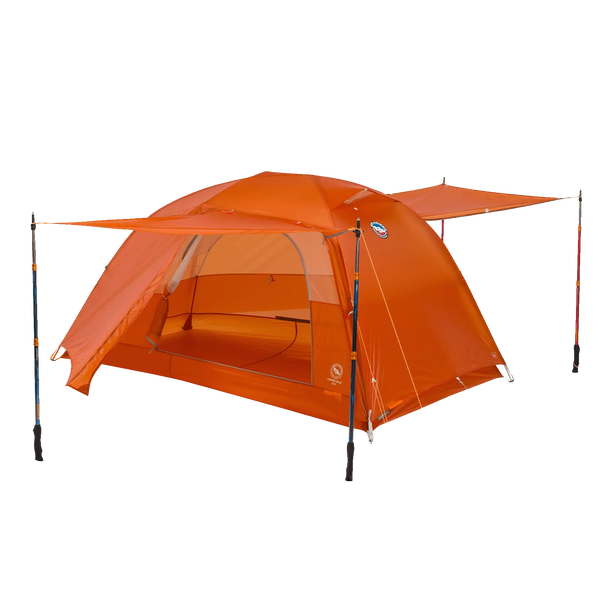 | UL3 | 1620 g (57.1 oz) | +656 g |

Build your Gear Closet
View all of your gear in one place, create packing lists and hit the trail with confidence. Available on iOS, Android and the web.
Get StartedPerformance
Weight and packability
The UL2’s 3 lb 2 oz puts it ahead of the NEMO Dagger OSMO 2P and MSR’s updated Hubba Hubba 2, which comes in at 3 lb 4 oz. It is heavier than the semi-freestanding Fly Creek HV UL2 (2 lb 4 oz), the Tiger Wall UL2 (2 lb 8 oz) and the NEMO Hornet (2 lb 6 oz), but those tents give up interior volume and are slower to pitch. For a fully freestanding double-wall tent with two doors, reviewers consider the weight penalty reasonable.
At 6 x 19.5 in packed, the UL2 is competitive. Hikers short on pack space can split the pole bag from the tent body, since the pre-bent, hubbed poles account for much of the bulk.
Livability
This is the reason the Copper Spur has its reputation. Near-vertical sidewalls and a large, flat roof make the interior nearly rectangular, and the freestanding frame keeps the body taut on rock or hardpan where stakes are useless. Pockets are well thought out: a device pocket with cord routing, standard mesh pockets and a 3D bin pocket that swallows a surprising amount of gear.
The UL2 floor tapers from 52 inches at the head to 42 at the foot. That fits two regular mummy pads, but wide rectangular pads can fill the floor so completely that the door zippers become awkward to work. Two big sleepers with wide pads should look at the UL2 Long, which holds a constant 54-inch width, or step up to the UL3.
Each side has its own door and vestibule, with double zippers that open one-handed so one sleeper can leave without climbing over the other. The vestibules are large enough to keep wet, muddy gear out of the sleeping area.
Weather
The tent keeps testers dry through ordinary storms and handles windy nights well once the guylines are tensioned. It isn’t a storm tent. The body is mostly mesh, which is excellent for ventilation and condensation in warm weather but lets cold air and wind-driven spray through in shoulder season or blizzard conditions. The fly vent has a prop bar for maximum airflow. Most owners treat it as a 2.5-season shelter in practice.
Pitching is inner-first, so the mesh body is exposed to rain until the fly is on. Adding the footprint enables a fast-fly pitch (fly, poles and footprint only), which is the better option on wet days and cuts weight too.
Setup and durability
Owners report pitching the tent in five minutes or less after watching a setup video once.
Durability is the limiting factor. The floor, fly and solid body panels use mixed 15D and 20D nylon, and the body mesh is 15D. Sharp gravel and sticks need to be avoided, and a footprint is sensible insurance. Some Reddit users report pole breakage under hard use, and PCT hikers have complained about zipper wear in dust. Big Agnes has a good reputation for warranty and repair service, often charging little more than shipping.
Choosing a Version
UL1 (964 g). A true solo tent: 88 x 38/28 in floor, 20 sq ft, 38 in peak height, one door and one 9 sq ft vestibule. It is the lightest of the four and packs to roughly 17.5 x 5.5 in. Pitched fly-only with the footprint, it drops to about 737 g. It suits solo hikers who want a freestanding double-wall tent without a big weight penalty, though the 28-inch foot is tight for bulky quilts or wide pads.
UL1 With Footprint (1,193 g). The same tent with the matching footprint, which protects the thin floor and enables the fast-fly pitch. Hikers who camp on rough ground or in frequent rain will find it the better buy. Weight-focused hikers who stick to clean sites can skip it.
UL2 (1,417 g). The core model. It has 29 sq ft of floor, 40 in of headroom, two doors and two vestibules. It works for a couple with regular-width mummy pads, and it is genuinely spacious for one person who wants room for gear or a dog.
UL3 (1,620 g). A 90 x 70/62 in floor, 41 sq ft and 43 in of peak height. Outdoor Gear Lab’s testers rated its space-to-weight ratio as the standout, and noted that it is a sensible choice for two people with wide pads or a dog. The vestibules stay at 18 sq ft total, which gets crowded with three people’s gear. Only 203 g heavier than the UL2, it is the answer for couples who find the UL2 floor too narrow.
Pros & Cons
Pros
- Near-vertical walls and 38–43 in of headroom give the best interior volume in the ultralight freestanding class
- Fully freestanding, with five-minute pitching on any surface
- Dual doors and dual vestibules on the UL2 and UL3 keep two sleepers from climbing over each other
- Mesh body and prop-bar fly vent control condensation well in warm weather
- Pockets, a 3D bin and cord routing are well designed
- Strong Big Agnes repair and warranty support
Cons
- The tapered UL2 floor is tight for two people on wide pads
- Thin 15D/20D fabrics demand careful site selection
- Inner-first pitch exposes the mesh body to rain unless the footprint is added
- Mesh-heavy body is cold in shoulder season and exposed alpine conditions
- Pricey, at roughly $450 to $600 depending on size
- Reports of pole breakage and zipper wear
Who Should Buy This
The Copper Spur suits the backpacker who wants a freestanding tent that is easy to pitch, comfortable during bad-weather waits, and light enough for long trail miles. Solo hikers will like the UL1 or UL2 for the space, and couples who sleep on regular mummy pads will be well served by the UL2. Those who need wider pads will do better with the UL3 or the Long. Hikers who are hard on gear, camp regularly below freezing or in exposed alpine terrain, or want the lightest possible pitch should look at a sturdier four-season design or a trekking-pole shelter.
Verdict
The Copper Spur HV earns its place as a trail staple by combining real livability, quick freestanding setup and competitive weight. Buy a footprint if rain is likely, and check the floor width against your pads before committing. For most three-season backpackers, it is the safe and comfortable choice.