3F UL Gear Lanshan 1 Review
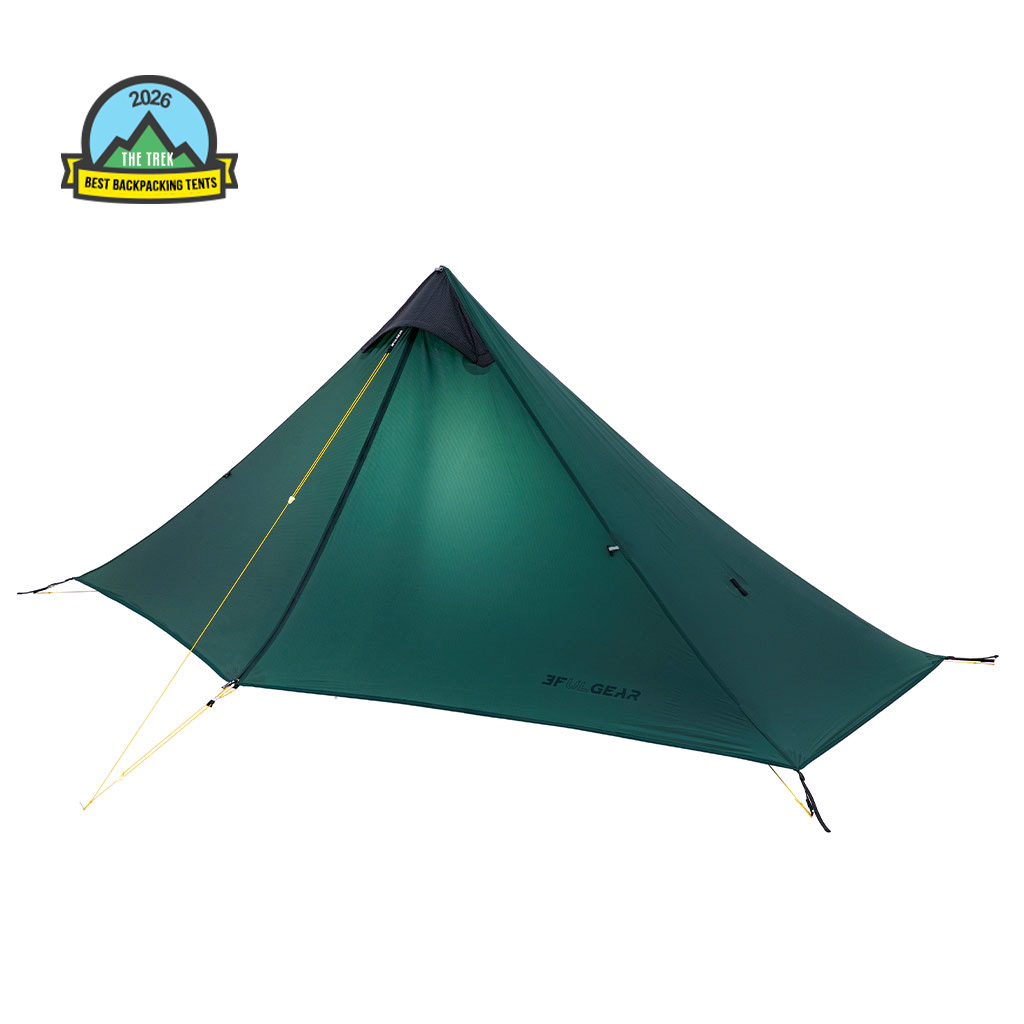
The Lanshan 1 is a sub-kilogram, 230 cm trekking pole tent at a budget price. It rewards hikers who will practice the pitch and seam-seal where needed.
Overview
The Lanshan 1 is a one-person trekking pole tent from Chinese maker 3F UL Gear. It has become the standard answer on r/Ultralight when someone asks for a first trekking pole shelter on a budget. It is long, light and cheap. The trade-off is a pitch that takes practice, thin fabric that needs careful site selection, and, on the lightest versions, seams you have to seal yourself.
Key Specs
| Spec | Detail |
|---|---|
| Capacity | 1 person |
| Season rating | 3/4 season (3-season mesh inner or 4-season solid-fabric inner) |
| Wall type | Double wall on the standard build; 1.5-layer hybrid on the 690 g and 666 g builds |
| Weight | 666–760 g, depending on version (tent only) |
| Fly fabric | 15D silicone-coated nylon (2021 and standard builds); 20D double-coated silnylon or silpoly (lightest builds) |
| Floor | 20D silicone-coated nylon |
| Inner length | 230 cm |
| Inner width | 80 cm at the foot to 100 cm at the head (standard); 90–110 cm (lightest builds) |
| Setup | Trekking pole (not included), semi-freestanding |
| Door | T-shaped zipper door on 2026 stock |
| Included | Stakes, guylines, stuff sacks, repair patches; footprint optional |
Versions compared
| Image | Version | Weight | vs. lightest |
|---|---|---|---|
 | 690 g Silpoly (2026 Version) | 666 g (23.5 oz) | lightest |
 | 690 g 3 Season | 690 g (24.3 oz) | +24 g |
| 760 g 2021 | 760 g (26.8 oz) | +94 g |

Build your Gear Closet
View all of your gear in one place, create packing lists and hit the trail with confidence. Available on iOS, Android and the web.
Get StartedPerformance
Weight and packability. The 760 g figure for the 2021 build splits into a 410 g fly and a 350 g inner. It does not include stakes, guylines or stuff sacks. Retailers list the complete 2026 package, with nine stakes and guylines, at about 930 g. Hikers who count a full shelter system should plan around that number. Even so, it undercuts far pricier tents. The packed bundle is roughly the size of a one-litre water bottle, according to UK reviewers.
Space. The 230 cm inner length is the tent’s quiet advantage. Reviewers say it fits solo hikers up to about 6’2” (188 cm) with room for a pack at the head. Backpacking Light forum posters were more cautious. They called 6’2” pushing it for someone on a thick pad in a lofty bag, but still a big improvement on the pre-2021 tent. The vestibule is large enough for a pack and boots. Owners describe the interior as cramped only when a storm forces the fly low and shut.
Weather. The pyramid-style pitch sheds wind and rain well. Owners who have used it through storms rate it as reliable for the weight, and the bathtub floor has kept ground moisture out on wet UK moorland. Silnylon sags when saturated, as the fabric always does, and the guylines can be re-tensioned from inside. The “4 season” label is generous. One Walkhighlands owner put it bluntly: it is not a four-season tent. They said snowfall, strong prolonged wind and winter condensation are all problems. Owners treat it as a three-season shelter that handles wind and some shoulder-season cold, with a good sleeping bag doing the real work.
Condensation. Most condensation complaints in the Lanshan family come from the single-wall Pro. A Reddit Pro owner recommends the double-wall Lanshan 1 for exactly that reason. The inner-and-fly design manages moisture better, but pitching the fly edge close to the ground to block wind cuts ventilation and brings condensation back. Leave a gap when the weather allows. Owners say what condensation does form is easy to wipe off.
Pitching. This is where the tent earns its mixed reviews. A pole height around 120 cm is recommended. A taut, symmetrical pitch takes a few attempts. One owner finds it hard to pitch on rocky ground, where stakes won’t bite, and calls the process fiddly even though they like the tent otherwise. It needs stakes or rocks. Practice in the backyard before the first trip.
Seam sealing and fabric care. The standard single-coated Lanshan 1 ships with seams sealed at the factory. The lightest 690 g and 666 g builds use fabric coated with silicone on both sides, and retailer listings say those seams cannot be machine-sealed. Buyers need a tube of silicone sealer and an afternoon. SectionHiker’s review of the Pro makes the same point about hand sealing before rainy use. On any version, a footprint helps protect the thin floor, and 15D–20D fabric rewards careful site selection.
Value. Owners have reported paying roughly $170 for the 1P. Reddit sentiment is about 75 percent positive, with price and weight as the most-cited reasons. Some owners moved up to the 2P after using this one. Comparisons to the Durston X-Mid 1 come up often. Hikers who upgraded say the Western tent is better finished, but few call the Lanshan a bad shelter.
Choosing a Version
2021 (760 g). This is the older double-wall build, with a 15D fly, a detachable inner, factory-sealed seams and the longer, wider 230 × 80/100 cm floor that arrived that year. It is the heaviest of the three. It is also the easiest to live with. It is the better choice for wet climates and for anyone who wants to skip the sealing job. Its 4-season inner adds roughly 15–20 g over the mesh inner, and most owners say they would rather have the 3-season inner.
690 g 3 Season. This is the silnylon build on the Pro platform. It is 70 g lighter than the 2021 tent. Its floor is slightly wider at the head, at 110 cm, and its height is about 125 cm. The price is a 1.5-layer construction, less ventilation margin in humid weather, and seams that have to be sealed by hand. It suits drier-climate hikers who are comfortable with a tarp-tent hybrid.
690 g Silpoly (2026 Version), 666 g. This is the lightest of the three. Silpoly absorbs less water than silnylon, so it should sag less when soaked. It also carries the 2026 updates: T-zip doors on all stock and metal hooks as standard. It costs more than the nylon builds. A UK retailer lists it at £165. Like the 690 g build, it needs hand-sealed seams and is best matched to hikers who prize every gram and have already pitched a trekking pole tent.
Pros & Cons
Pros
- 666–760 g tent weight depending on version, with the full 2026 package around 930 g
- 230 cm inner length fits taller hikers
- Roomy vestibule and a bathtub floor that stays dry in heavy rain
- Packs to about the size of a water bottle
- The standard double-wall build manages condensation better than the single-wall Pro
- Price far below comparable trekking pole tents
Cons
- The 690 g and 666 g builds need hand-sealed seams before rain
- Pitching is fiddly, particularly on rocky or uneven ground
- Not freestanding; needs trekking poles and good stake placement
- Thin fabric calls for a footprint and careful site choice
- Closing the fly low in a storm makes the interior tight and increases condensation
- “4 season” is optimistic for real winter use
Who Should Buy This
The Lanshan 1 suits solo hikers and bikepackers who already carry trekking poles and want a sub-kilogram tent at a price that makes ultralight camping accessible. Taller hikers get particular value from the long inner. Buyers in wet climates should take the 2021 double-wall build. Gram-counters who are happy to seal their own seams should take the silpoly. Anyone who wants a thirty-second pitch on any surface, who camps on rock more than soil, or who needs a shelter for sustained winter conditions should look at a pole-supported or purpose-built four-season tent.
Verdict
The Lanshan 1 delivers a long, light shelter that owners report holding up in real weather. It asks more effort than premium rivals, and the finishing shows its price. Few tents offer this much room and protection per dollar and per gram. Choose the 2021 build for fuss-free wet-weather use and the silpoly for the lowest weight.