Ocean Signal rescueME PLB1 Review
The Ocean Signal rescueME PLB1 is the world's most compact 406 MHz GPS PLB — a no-subscription SOS beacon that does one job and does it extremely well.
Overview
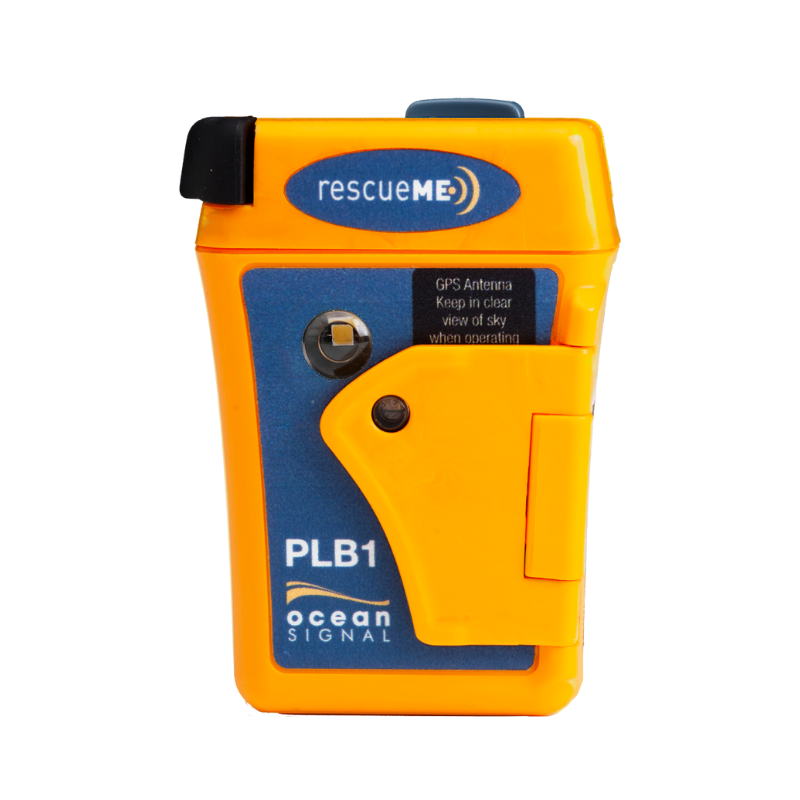
The Ocean Signal rescueME PLB1 is a personal locator beacon that does exactly one thing: when you activate it, it gets a GPS fix, broadcasts your position and distress call on 406 MHz to the Cospas-Sarsat satellite network, and that signal gets relayed to search and rescue. It’s aimed at hikers, kayakers, mountaineers, and offshore adventurers who want a compact, no-frills emergency signal device without the recurring cost of a satellite communicator subscription. It weighs just 116 g and is waterproof to 15 m, transmitting a distress signal via Cospas-Sarsat satellites with fast, accurate GPS positioning and a powerful 1 candela strobe and homing beacon.
Key Specs
| Spec | Value |
|---|---|
| Weight | 116 g (4.1 oz) |
| Dimensions | 76 × 51 × 33 mm (3 × 2 × 1.3 in) |
| Frequency | 406 MHz |
| GPS Channels | 66 |
| Waterproof Depth | 15 m (49 ft) |
| Battery Standby Life | 7 years |
| Operational Life | 24+ hours |
| Strobe Output | 1 candela |
| Operating Temp | -20°C to +55°C |
| Subscription Required | No |
| Antenna | Retractable |
| Warranty | 2 years (extendable to 5 years upon registration) |

Would the rescueME PLB1 earn its spot in your pack?
116 g · 4.1 ozAdd the Ocean Signal rescueME PLB1 to your Gear Closet and see exactly what it does to your base weight, then start packing for your next trip.
Free · No credit card · iOS, Android & web · Trusted by 3,000+ backpackers
Performance
Signal & Coverage
The technical backbone here is what makes the PLB1 compelling. The 5-watt transmitter is notably stronger than the 1.5–1.6 watts in Iridium-based devices like the inReach — it’s not a direct apples-to-apples comparison, but more power helps in marginal conditions. The 406 MHz signal is received by multiple satellite types: low earth orbit, medium orbit, and geostationary — more satellites listening from more positions means fewer gaps in coverage.
Crucially, you’re not fully dependent on getting a GPS fix. Even without one, the COSPAS-SARSAT system can locate you via the Doppler effect of your moving signal, producing a 2–4 km search radius — far less precise than GPS, but not nothing. The COSPAS-SARSAT system has been running since 1982 and has saved tens of thousands of lives. It’s the same system professional mariners and aviators rely on. That track record matters.
Size & Portability
Weighing just 4 ounces with batteries and measuring a mere 3 × 2 × 1.3 inches, this is about as light and compact as you can get.
Testers find that the tiny stature of the PLB1, in addition to its budget price point, encourages carriage of emergency satellite communications on every adventure — even in the most mundane of trips, the PLB1 can be tucked into a pants pocket.
That’s a real behavioral effect: a device you’ll actually carry beats a more capable one sitting at home.
Activation
To activate the PLB: pull the retractable antenna out by its end tab, flip open the spring-loaded cover over the activation button, hold the button for 1 second until the lights blink. Visual instructions are clearly printed on the case.
The rescueME PLB1 can be operated with a single hand in even the most challenging situations.
That matters when you’re hypothermic or injured. A few users add a small piece of electrical tape over the button cover for extra protection against accidental activation in a pack — a reasonable precaution.
After the 24-Hour Mark
Even after more than 24 hours of continuous operation, and when the battery power is insufficient to transmit the satellite signal, the PLB1’s homing beacon and strobe light will continue to operate.
That’s a meaningful detail if rescue is delayed — the 121.5 MHz homing signal gives SAR teams something to home in on even when the main distress transmission has wound down.
Testing & Battery Health
To keep the PLB ready, test it periodically. Ocean Signal recommends monthly; some users do it every three months. The test checks for failures and gives a battery status. The GPS test (getting a full position fix) drains more battery and should only be done once a year.
The LED feedback system is simple once you understand it — a green flash means you’re good, amber means replace the battery, red means it’s no longer reliable.
Registration
You buy the device, and the device taps into the COSPAS/SARSAT search and rescue satellite network, which covers the entire globe.
Set-up requires you fill out an online form and mount a mailed sticker. You can make some changes to your registration if needed, and then you’re good to go for two years. You renew, for free, every two years.
In the US, registration is with NOAA, and instructions are included in the box.
Pros & Cons
Pros
- No subscription fee — ever. One purchase price, free COSPAS-SARSAT network access for the life of the battery.
- Genuinely tiny: lightest and most compact PLB in its class, at 116 g / 4.1 oz.
- 7-year standby battery means you charge it once and never again — buy it, register it, forget it (mostly).
- 5-watt transmitter, significantly more powerful than Iridium-based satellite communicators.
- Doppler backup location even without GPS fix.
- Single-hand activation with instructions printed on the unit itself.
- Waterproof to 15 m — usable in serious marine conditions.
- Homing beacon and strobe continue running after the main 24-hour satellite transmission window.
- Comes with a float pouch for marine use.
Cons
-
SOS only. No messaging, no tracking, no two-way communication during an emergency. You can’t tell rescuers you’re injured but stable, or cancel a false alarm.
-
The battery must be replaced after activation in an emergency or when it reaches the expiration date. The battery is not user-replaceable and must be serviced by an authorized dealer.
Battery replacement runs $100–150 and typically includes a unit test and seal replacement.
-
US-based users needing repairs may face the added cost and hassle of international shipping back to the UK.
-
No way to confirm receipt of your distress signal from the device itself.
-
The self-test protocol isn’t immediately intuitive; first-timers should read the manual carefully.
Who Should Buy This
Get the PLB1 if you don’t want a subscription and only care about life-or-death emergencies.
It’s a strong pick for backpackers who already carry a smartphone with offline maps and just want a reliable SOS fallback, as well as kayakers, sailors, and mountaineers who need a compact emergency option rated for immersion.
Some testers carry this device as a backup to their primary, two-way satellite communication product — in the most remote, most serious settings, everyone’s peace of mind is improved with that kind of redundancy.
If you want tracking, two-way messaging, or the ability to communicate with rescuers during an incident, step up to a Garmin inReach or SPOT Messenger instead.
Verdict
The rescueME PLB1 is the most compelling argument for the “simple tools done right” school of gear philosophy. It is half the size of its closest competitor, and when considering subscription costs and product expiration, it is more than half the cost of any product with additional features. It won’t replace a two-way satellite communicator for multi-day remote travel where communication matters, but as a standalone emergency device or a belt-and-suspenders addition to a satellite messenger kit, it’s hard to beat — especially at a weight that makes it genuinely disappear into a hip pocket. Rating: 8.5 / 10.