Garmin inReach Mini 3 Review
Garmin's smallest satellite communicator gets a touchscreen and years more relevance—here's how the base inReach Mini 3 holds up against its pricier Plus sibling.
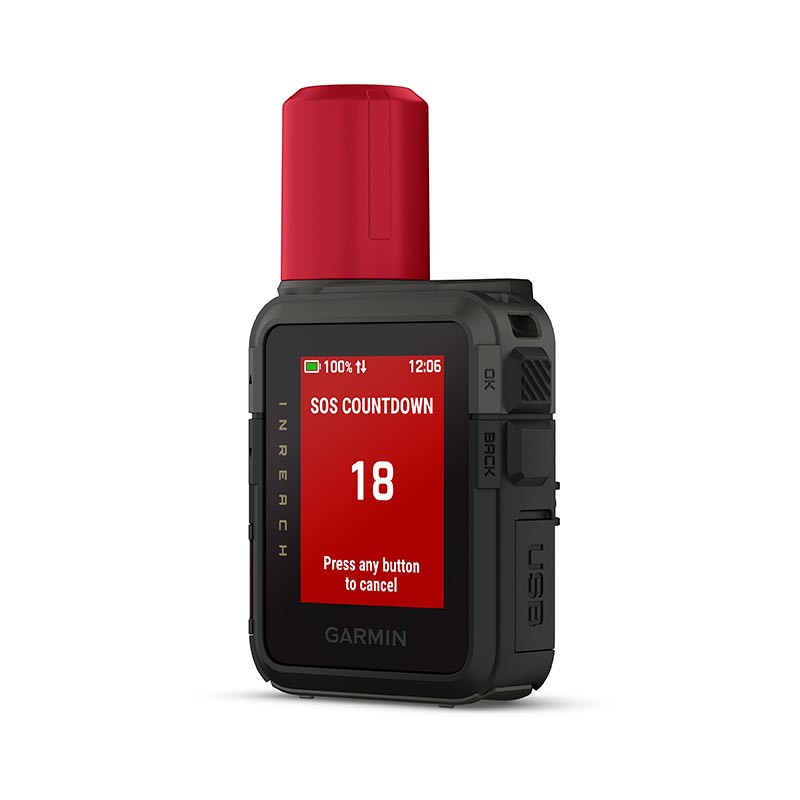
Overview
The Garmin inReach Mini 3 is the base model in Garmin’s latest satellite communicator lineup, giving thru-hikers, backcountry skiers, and anyone who spends serious time off-grid a way to send two-way texts and trigger emergency SOS from basically anywhere on Earth. It’s built for people who want the smallest, lightest safety net possible and don’t need the voice notes or photo messaging that the pricier Mini 3 Plus offers.
Key Specs
| Spec | Detail |
|---|---|
| Weight | 122 g (4.3 oz) |
| Satellite network | Iridium |
| Display | 1.9” 64-color MIP touchscreen |
| Resolution | 306 x 230 px |
| Water rating | IP67 |
| Battery life | Up to 350 hours (10-min tracking) |
| MSRP | $449 |
| Key features | Two-way texting, emergency SOS, LiveTrack, GPS |

Build your Gear Closet
View all of your gear in one place, create packing lists and hit the trail with confidence. Available on iOS, Android and the web.
Get StartedPerformance
The headline change from the Mini 2 is the screen, and it’s the single biggest quality-of-life upgrade in this device’s history. The touchscreen is the biggest quality-of-life upgrade — on the Mini 2, typing directly on the device meant scrolling through letters with buttons, but on the Mini 3 you tap on a full QWERTY keyboard. If the keyboard feels cramped on a 1.9” screen (and it will, especially with gloves or cold fingers), the keys are small and easy to fat-finger, so you can also switch to a T9 grid layout that works more like an old phone keypad. As always, pairing with the Garmin Messenger app on your phone is faster than typing on the device itself, so most people will only lean on the on-device keyboard when their phone is dead or out of reach.
Battery life is where the Mini 3 continues to earn its reputation. Garmin’s own numbers claim an impressive 350 hours of life (about 14.5 days) when using a standard 10-minute tracking interval, which can be dialed down to 95 hours (about 4 days) in “performance messaging mode” for those who are communicating more frequently. Real-world testers are quick to point out those numbers assume near-ideal conditions — one field test found that Garmin’s battery estimates assume optimal conditions, and in real backcountry use with cold temps, tree cover, and photo messaging you should expect 50-70% of claimed battery life. Even discounted, that’s still multiple days of runtime on a device this small, which matters a lot if you’re on a multi-week resupply cycle without reliable power access.
Where the base Mini 3 diverges from the Plus is worth spelling out clearly, because Garmin doesn’t make it obvious in the marketing. The base version lacks the more powerful antenna, voice messaging/commands, microphone/speaker, photo messaging, siren, comes with an even more rudimentary map, and does not include a carabiner. That antenna difference isn’t trivial — it’s the actual satellite hardware, not a software gate, so if you’re hiking in deep canyons or dense tree cover, the Plus model’s stronger reception could matter more than the $50 price gap suggests. One owner who deliberately skipped the Plus features summed up the frustration of not realizing how much else was tied to that upgrade: “Picked up the base Mini 3. Skipped the voice and photo model as they looked like gimmicks… Turns out Garmin buried the real differences where no one would notice.”
Navigation on the Mini 3 is still fundamentally a backup, not a primary tool. Even reviewers who like the device overall are blunt that it’s not the best for navigation unless paired with a smartphone. For actual routefinding, you’ll want the Garmin Explore app doing the heavy lifting while the Mini 3 handles tracking and emergency comms in the background.
The subscription and activation costs are the part nobody loves. Garmin still charges a jarring fee just to turn a device on — one reviewer flatly called it “the completely insane $39 activation fee for a new device” — and you’ll need an ongoing monthly plan on top of the $449 hardware cost to actually use it. Budget for that before you buy.
Pros & Cons
Pros:
- Genuinely excellent battery life for the size — multiple days even in real-world (non-ideal) conditions
- New color touchscreen and QWERTY/T9 keyboard are a massive usability jump over the old button-and-dial Mini 2 interface
- IP67 water resistance and Garmin’s long track record of rugged, reliable hardware
- Global Iridium coverage with proven two-way texting and SOS
- Smallest, lightest way into the current-generation inReach ecosystem
Cons:
- Weaker antenna than the Mini 3 Plus, which could mean more dropped connections in tough terrain
- No voice notes, photo messaging, speaker, or siren — and no carabiner in the box
- $39 activation fee plus a required monthly subscription stack on top of an already steep $449 price
- Keyboard, while much improved, is still fiddly for extended typing
- Only a $50 jump to the Plus model makes the base Mini 3’s value proposition harder to justify for many buyers
Who Should Buy This
The base Mini 3 makes the most sense for weight-obsessed hikers who mainly want an emergency safety net and basic check-ins, primarily communicate through a paired phone via the Messenger app, and don’t care about voice or photo messaging. If you’re regularly hiking in deep canyons, dense forest, or you want the strongest possible connection when it counts, the extra $50 for the Mini 3 Plus’s better antenna is probably worth it — several reviewers make that same case, and it’s hard to argue against paying a little more for a stronger link to help when you actually need an SOS.
Verdict
The inReach Mini 3 is a real improvement over the Mini 2 thanks to its touchscreen and keyboard, but Garmin buried enough of the useful upgrades — antenna strength, mic/speaker, siren — behind the Plus tier that the base model’s value proposition is murky. It’s a solid, reliable safety device on its own merits; just go in knowing exactly what you’re not getting for that $449.