Osprey Ultralight Raincover Review
Osprey's Ultralight Raincover is a taped-seam, 40D recycled nylon pack cover in three sizes, from 90 to 138 g. Here's how it holds up and who it suits.

Overview
The Osprey Ultralight Raincover is a stuff-sack-sized shell that pulls over a loaded pack when the sky gives up. It suits backpackers who want a quick, no-fuss layer over a pack with a lot of external pockets, and who don’t mind that it protects the pack but not the hiker’s back. The trade-off is familiar: it deploys in seconds, but it is a cover, not a sealed liner, and it sits at the heavier end of the category for something sold as “ultralight.”
Key Specs
| Spec | Detail |
|---|---|
| Weight | 90–138 g depending on size |
| Sizes | Medium (30–50 L), 50–75 L, XL |
| Material | bluesign® approved 100% recycled 40D high-tenacity nylon |
| Water treatment | DWR, made without PFAS |
| Seams | Taped |
| Fit adjustment | Draw cord |
| Stowage | Packs into itself; about 6 x 6 x 2 in stuffed (Medium) |
| Price | Roughly $40–42.50 for the Medium at major retailers |
Versions compared
| Image | Version | Weight | vs. lightest |
|---|---|---|---|
| 50-75L | 90 g (3.2 oz) | lightest |
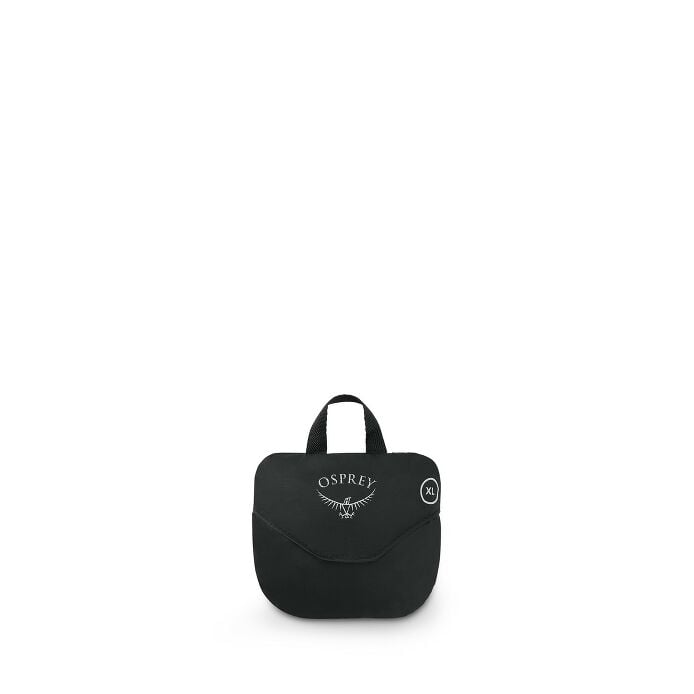 | XL | 100 g (3.5 oz) | +10 g |
| Medium | 138 g (4.9 oz) | +48 g |

Build your Gear Closet
View all of your gear in one place, create packing lists and hit the trail with confidence. Available on iOS, Android and the web.
Get StartedPerformance
Weather protection. The fabric is a 40-denier recycled nylon with a PFAS-free DWR finish, and the seams are taped. That is the right recipe for a cover that has to shed sustained rain rather than a passing shower. Owner reports from the trail are consistent on the point that matters. One buyer described a five-mile hike in driving rain with an Osprey 55 L pack that stayed completely dry. A Trailspace reviewer with a 70 L pack and a partner with a 65 L reported the same result through repeated downpours, and said the cover also kept a bear bag dry overnight.
Fit and security. A draw cord cinches the hem, and the cover is designed to be pulled snug rather than left flapping. An REI buyer with an Osprey Talon 44 praised the elastic strap at the top, which keeps the pack from shifting under the cover on the move. The same reviewer noted that the cover wraps the whole lid. Earlier versions of the cover also carried a hipbelt and harness attachment, and owners of those versions with packs spanning 50 to 75 L found the cord range forgiving enough to share one cover across several packs. Sizing is still worth getting right. A cover that is too big catches wind, and one that is too small leaves the bottom exposed.
Packability. The cover stuffs into itself, which removes the separate stuff sack that is easy to lose. Owners say it goes back into its pocket without a fight, even after being used wet. The Medium compresses to roughly the size of a fist, small enough to live in a lid pocket or a side pocket. The reviews on REI average 4.4 out of 5 across 18 ratings.
Limitations. This is a cover, so it does nothing for the back panel, the shoulder straps or anything clipped to the pack’s inside face. Heavy sustained rain can also find its way in from the bottom, and a cover can’t stop water running down the hiker’s back and into the pack’s back panel. Anyone who wants guaranteed dry insulation will still want a pack liner or a dry bag for the sleeping bag. A Trailspace reviewer also noted that the large Osprey logo makes the cover anything but low-profile, which matters little on a trail and more when traveling.
Choosing a Version
Osprey sells the cover in three sizes, and the fit is set by pack volume, not by torso or style.
- Medium (138 g): For 30–50 L packs: daypacks, weekend packs and many lightweight thru-hiking packs. Choose this if the pack is at or under 50 L.
- 50–75 L (90 g): For the volume most multi-day packs fall into. The cord range is wide enough that owners have used one cover across a 50, 65 and 75 L pack.
- XL (100 g): For expedition-sized loads above that range.
On the listed weights, the Medium is the heaviest of the three, so there is no weight reason to move up a size. Pick by liters, then use the draw cord to take out slack.
Pros & Cons
Pros
- Taped seams and 40D nylon shed sustained rain; owners report dry packs in all-day downpours
- Packs into itself, so there is no separate stuff sack to lose
- Draw cord and top strap hold the cover on in wind
- Three sizes cover roughly 30 L up to expedition volumes
- Recycled bluesign® approved fabric and a PFAS-free DWR
Cons
- Roughly $40 for a piece of nylon that weighs 90–138 g
- Does not protect the back panel, shoulder straps or the inside of the pack
- Not a substitute for a liner when gear has to stay dry no matter what
- Large branding on the cover
Who Should Buy This
This cover suits weekend and section hikers in wet climates, and anyone whose pack has external mesh pockets that hold wet-sensitive items or a pack fabric that wets out. It’s also a sensible option for travelers who want a quick shell for flights and rainy transit days. Thru-hikers counting every gram, or anyone who already carries a trash-compactor liner or a roll-top dry bag, will get more from a liner and may skip the cover entirely.
Verdict
The Ultralight Raincover does the unglamorous job of keeping rain out of a pack’s main body, and owners report it works across years of use. It is fairly priced for its construction but not cheap, and it is less weight-efficient than a liner. Buy it for rain-prone trips with external pockets, and pair it with a liner if the dry-sleeping-bag guarantee matters.