Osprey Stratos 50 Review
A ventilated, 50L overnight pack built for weekend and multi-day trips up to about 35 lbs — comfortable and well-organized, but not the pack for ultralight base weights.
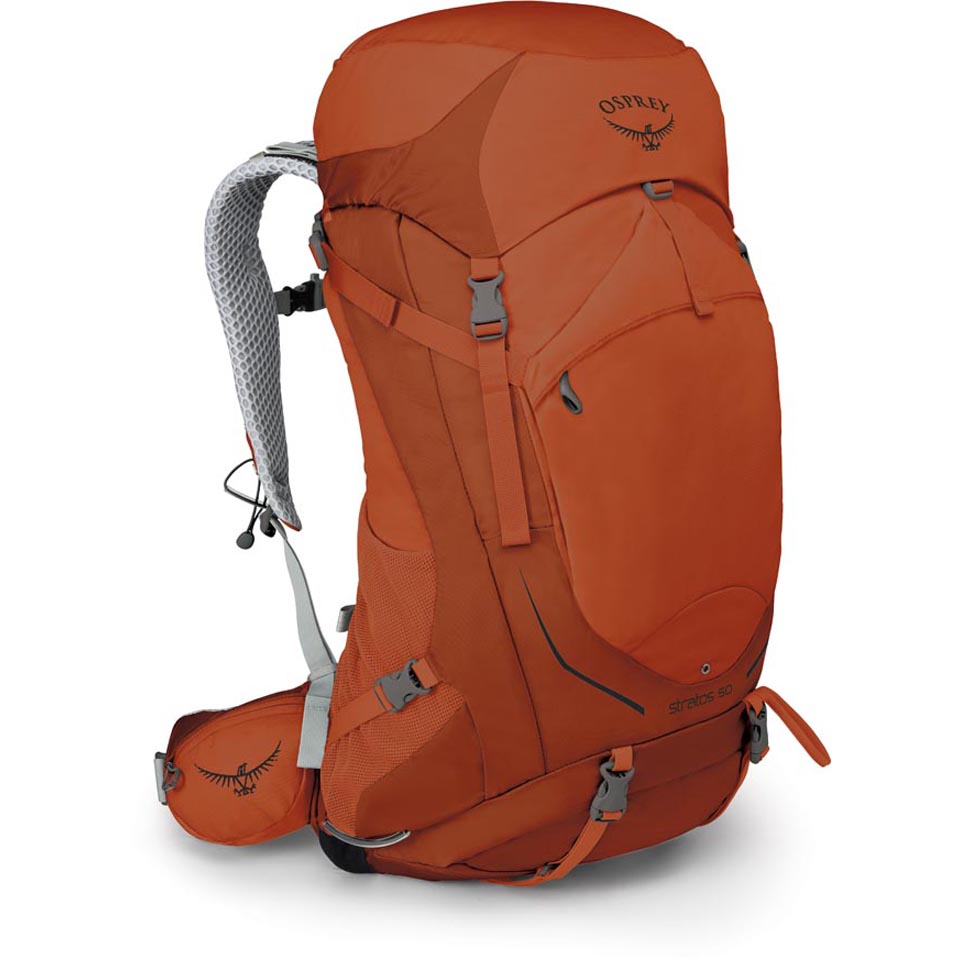
Overview
The Stratos 50 is Osprey’s mid-weight, ventilated backpacking pack, built around their AirSpeed suspension — a tensioned mesh backpanel that stands off your back to move air while a LightWire alloy frame handles load transfer. It’s aimed at weekend and 2-5 day backpackers carrying moderate loads (Osprey rates it 20-40 lbs) who want more organization and back ventilation than a frameless ultralight pack, without stepping up to Osprey’s pricier Anti-Gravity (Atmos AG) line. This isn’t a pack for the sub-20-lb base weight crowd — it’s for hikers who value comfort and features over shaving every last ounce.
Key Specs
| Spec | Value |
|---|---|
| Weight | 1670 g (3 lb 11 oz), M/L size |
| Volume | 50L (S/M size runs 47L) |
| Main fabric | 210D Nylon Crosshatch |
| Accent/bottom fabric | 420HD Nylon Packcloth |
| Recommended load range | 20-40 lbs |
| Frame | LightWire alloy peripheral wire + 1 aluminum stay |
| Backpanel | AirSpeed tensioned mesh suspension |
| Sizes available | S/M (47L, 1614g), M/L (50L, 1670g) |
| Included | Integrated rain cover, hipbelt pockets, hydration sleeve |
Would the Stratos 50 earn its spot in your pack?
1670 g · 58.9 ozAdd the Osprey Stratos 50 to your gear closet and see exactly what it does to your base weight — then build your next packing list around it. Free, in about two minutes.
Free · No credit card · iOS & Android · Trusted by 3,000+ backpackers
Performance
The main draw here is the AirSpeed suspension, and it delivers on its core promise. The signature feature is the AirSpeed suspension, a seamless, tensioned mesh panel integrated into the hipbelt and shoulder straps that allows air flow across your entire back, for a superior cooling effect on hot days of hiking. On a hot, sweaty climb this genuinely matters — your back doesn’t turn into a swamp against solid foam the way it does with more traditional panels.
Load carrying is solid but has a ceiling. Multiple independent testers landed on the same number: the Stratos was stable and comfortable carrying loads in the 30 to 35 pound range, and didn’t move around or float despite scrambling up steep ascents and descending rugged mountainous terrain. Push past that, though, and the pack starts to show its limits — the pack did begin to float in the 40-pound range, reducing stability and comfort. That tracks with Osprey’s own 20-40 lb range; treat 35 lbs as the practical ceiling for confident carrying, not the max.
One reviewer who took the Stratos 50 on a 300-mile trek — well outside its intended use case — ran into strap issues under sustained heavy load: he didn’t regret taking this backpack with him on his 300-mile trek, even despite the issue he had with the shoulder straps tending to loosen due to the heavy load. His overall framing is useful: if I was going to suggest this pack for a specific trip, I’d say it’s first and foremost a bag for weekend-length adventures. That matches my read of the pack’s design intent — it’s not built for extended thru-hiking abuse at the top of its weight range.
Organization is a strong point. The Stratos 50 follows Osprey’s tradition for two-zippered pockets on the lid, which make for easy access to contents and plenty of room, plus a small hidden compartment in the very bottom of the pack that contains an integrated rain fly, and two large zippered hipbelt pockets that could carry a small camera, GPS, snacks, hat or gloves. The built-in rain cover is a small thing that saves you buying a separate one, and one Costa Rica-based reviewer specifically cited it as the reason he picked the Stratos over the pricier Atmos: he decided to purchase the Stratos for one key feature, the integrated rain cover, since it’s rainy in Costa Rica and having that feature is quite advantageous even though the Atmos has a more elaborate suspension system.
Durability held up in longer-term testing too. The Stratos 50 proved durable in a variety of conditions — the zippers, pockets and fabrics all performed well despite weeks of rugged use. The 210D main body paired with 420HD Packcloth on the bottom is a sensible durability-to-weight tradeoff for a pack that isn’t trying to be ultralight in the first place.
Fit is worth double-checking before you buy. One reviewer noted the backpack felt a tad too narrow on his shoulders, and the mesh panel has a different material on the outer edges — a reminder that torso and shoulder width vary enough between hikers that trying it on (or buying from a retailer with an easy return policy) is worth the effort.
Pros & Cons
Pros:
- AirSpeed mesh suspension provides genuinely excellent back ventilation on hot days
- Stable, comfortable carry in the 30-35 lb range, even on technical terrain
- Thoughtful organization: dual lid pockets, hipbelt pockets, hidden bottom compartment
- Integrated rain cover saves an extra purchase
- Durable fabrics and hardware that held up to weeks of rugged use in testing
- Adjustable torso length lets you dial in fit
Cons:
- At 1670g, it’s roughly double the weight of a comparable ultralight 50L pack — not for base-weight-obsessed hikers
- Comfort and stability degrade once you approach 40 lbs
- Shoulder straps reportedly loosened under sustained heavy loads on very long trips
- Some users found the shoulder fit narrow
- Frame and suspension add bulk that frameless packs don’t have
Who Should Buy This
The Stratos 50 is best suited to weekend and multi-day backpackers carrying 25-35 lbs who prioritize back ventilation, load-carrying stability, and organized storage over shaving grams. If you run hot, hike in warm climates, or just find sweaty-back syndrome miserable on long climbs, the AirSpeed suspension is a legitimate upgrade over a standard foam-panel pack. It’s not the right choice if you’re chasing an ultralight base weight or plan to load it past 35-40 lbs regularly — in either case, look at a frameless ultralight pack or Osprey’s own Atmos AG for heavier loads instead.
Verdict
The Stratos 50 does exactly what it sets out to do: keep you cool and comfortable carrying a moderate load over a weekend or multi-day trip, backed by genuinely useful organization and a rain cover you won’t have to buy separately. It’s not ultralight and it’s not meant to be — judge it against other traditional/midweight packs, not against your cuben fiber wishlist, and it holds up well. I’d put it at a 7.5/10: excellent execution for its intended niche, with real weight and load-range tradeoffs if you push it outside that niche.