Ortovox AVABAG LiTRIC TOUR 40 ZIP Review
A deep dive into Ortovox's 40L zip-on cargo bag for the LiTRIC electronic airbag system — is the extra volume worth it for big touring days?
Overview
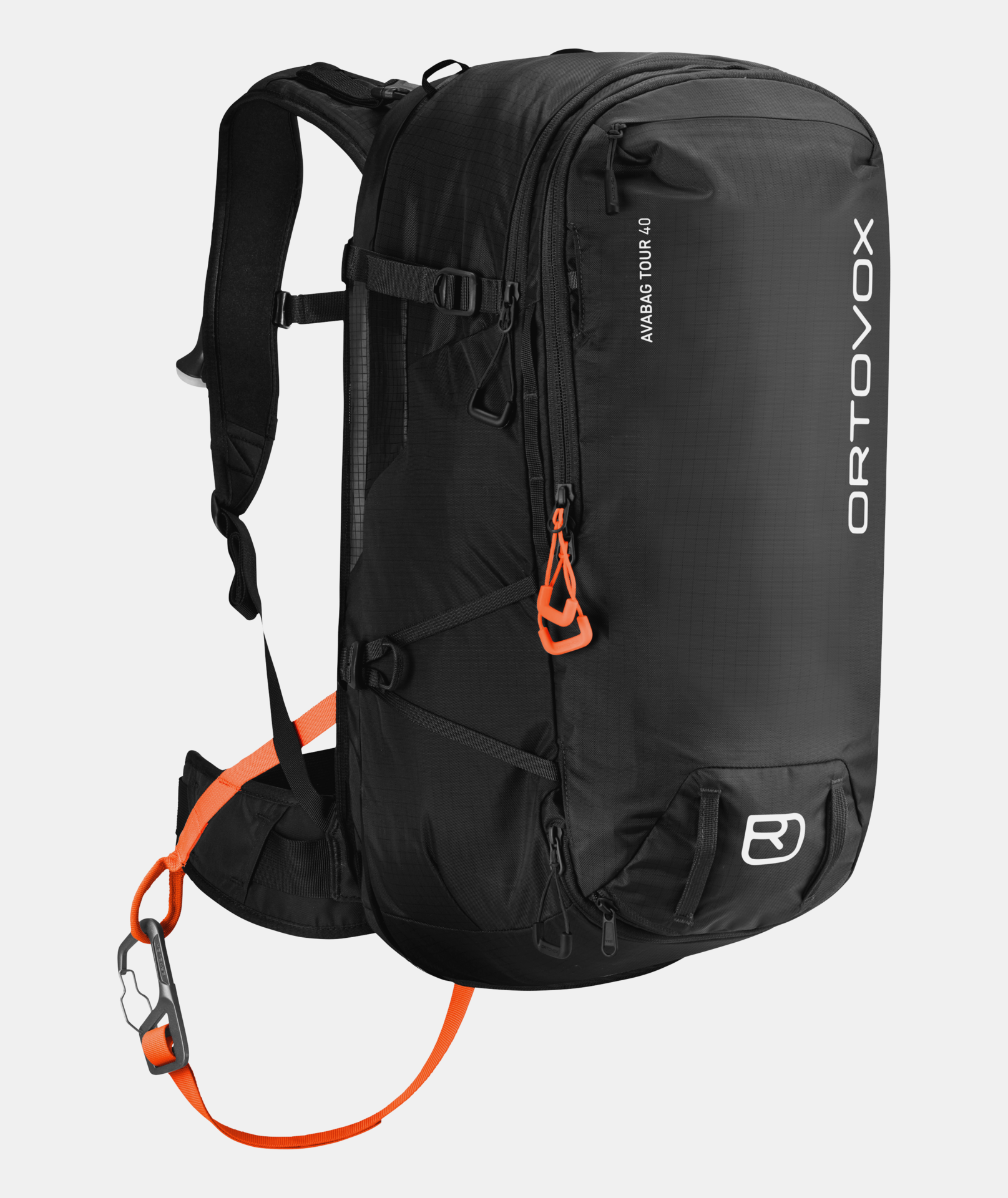
The AVABAG LiTRIC TOUR 40 ZIP isn’t a standalone backpack — it’s the largest “cargo” module in Ortovox’s modular LiTRIC system, a zip-on bag that attaches to a LiTRIC Regular BASE unit (the harness, back panel, and electronic airbag deployment hardware) to create a full 40-liter touring pack. If you already own a LiTRIC Tour or Freeride base and want more room for hut trips, multi-day tours, or just hauling extra layers and a rope, this is the piece that gets you there. It’s built for skiers and splitboarders who spend serious time in avalanche terrain and want the lightest, most reliable electronic airbag setup available without buying an entirely new pack every time their volume needs change.
Key Specs
| Spec | Detail |
|---|---|
| Volume | 40L |
| Total system weight (base + 40L zip-on) | 2,460 g / 5.42 lb |
| Airbag system | LiTRIC (supercapacitor + lithium-ion battery) |
| Charging | USB-C, ~25 minutes to full charge |
| Activations per charge | Rated for 2 |
| Certification | EN 16716 |
| Compatibility | LiTRIC Regular BASE units only (TOUR and FREERIDE) — not compatible with S-Bases |
| Access | Top zip + 270° clamshell zipper |
Would the AVABAG LiTRIC TOUR 40 ZIP earn its spot in your pack?
2460 g · 86.8 ozAdd the Ortovox AVABAG LiTRIC TOUR 40 ZIP to your gear closet and see exactly what it does to your base weight — then build your next packing list around it. Free, in about two minutes.
Free · No credit card · iOS & Android · Trusted by 3,000+ backpackers
Performance
The headline feature of the whole LiTRIC platform is the airbag system itself, and it carries over unchanged whether you’re running the 18L Freeride zip-on or this 40L Tour version. Instead of a compressed-gas canister, LiTRIC uses super-capacitors instead of cartridges, making the airbag extremely light and placing this system among the lightest on the market. That means no weighing cartridges before a flight, no swapping canisters after a practice pull, and — critically for training — it charges in about 25 minutes via USB-C, allowing for numerous test activations at no additional cost, with one charge allowing at least two activations. Testers at Treeline Review found the LiTRIC airbag system deploys quickly and easily, with the twist-to-arm handle easy to pull and the airbag inflating in under five seconds.
Where the 40L zip-on specifically earns its keep is volume and access. Wildsnow’s tester noted the top zip is perfect for stashing a puffy or grabbing a drink of water mid-tour, while the outer 270-degree clamshell zipper is better for donning crampons or stopping for lunch. That same top zip is also the mechanism that lets you swap bag sizes: it can zip the backpack completely off the base airbag system, so you can swap the pack for different-sized add-ons. In practice this worked as advertised for the Treeline crew, who found zipping the 40-liter pack on-and-off easy, and anticipated the system is robust enough to work for years without fail.
Organization is a strong point for the 40L specifically — this is the version with dedicated avalanche-gear storage, whereas the smaller Freeride zip-ons handle it differently. One reviewer noted the Tour 40 has its own compartment for avalanche equipment, while the Freerider 18 has an inner compartment for this instead, and skis can be attached to the side on the Tour 40. On the comfort side, a long-term Wildsnow tester who used it fully loaded plus towing an overpacked pulk sled said the padded shoulder straps and hip belt are comfortable, and he didn’t have any pressure points on long days.
One quirk worth flagging: the deployment handle stays permanently deployed rather than tucking into the shoulder strap the way some competitors’ handles do. Ortovox’s rationale, per Arc’teryx, is that leaving it permanently out is an effort to combat the common problem of users forgetting to pull the handle out before descending. It’s a reasonable trade-off for safety, though one tester noted he’d have preferred the stowable option for travel days and to make the pack less conspicuous and protect the airbag system in transit.
It’s also important to know this platform’s history. Ortovox voluntarily recalled the original LiTRIC line — Tour, Freeride, and Zero models, including zip-ons — shortly after North American launch, due to a technical issue where, in rare cases, the airbag’s inflation system delivered in winter 22/23 was impacted and its protective effect reduced. Ortovox was explicit that there was no risk from the LiTRIC system itself, but the recall delayed US availability by a full season. Ortovox’s fix reportedly addressed a physical failure point: users had reported breaking the plastic around the guard to the air intake inside the pack, and Ortovox redesigned the intake to be stronger without small parts that could break off and get into the intake. The current-generation packs sold today are the post-recall, reinforced version, and I haven’t seen reports of a repeat issue — but it’s worth knowing the system’s growing pains before you commit real money to it.
Pros & Cons
Pros:
- Supercapacitor-driven airbag is genuinely light and lets you practice-deploy for free, as many times as you want, on a 25-minute USB-C charge
- Swapping between bag sizes on the same base unit is fast and reportedly durable over repeated use
- Dedicated avalanche-gear compartment and side ski carry make the 40L version well suited to full-day and multi-day missions
- No cartridge logistics — easier air travel, no weighing canisters, no disposal costs
- Comfortable harness even under heavy, sled-towing loads per long-term testers
Cons:
- Only compatible with Regular BASE units — S-Base owners need a different zip-on entirely, so check your base before buying
- History of a voluntary recall on the original LiTRIC line adds a note of caution, even though the redesign addresses the known failure point
- Fixed, permanently-out deployment handle is less travel-friendly and less discreet than some competitors’ stowable designs
- This is an add-on only — you’re on the hook for a separate, expensive LiTRIC base purchase if you don’t already own one
- At $1,200+ for the full system, LiTRIC packs run almost double the retail price of a canister-powered Mammut Free pack
Who Should Buy This
This zip-on makes sense for one specific person: someone who already owns (or is buying) a LiTRIC Regular BASE unit and regularly needs more than 18-30L of capacity — think multi-day ski traverses, hut trips, or days where you’re hauling a rope, extra layers, and a full overnight kit on top of standard avalanche gear. If you’re a S-Base owner, skip this listing entirely and look at the S-compatible zip-ons instead. And if you’re brand new to backcountry travel and only get out a couple times a season, the investment (and the modular system’s added complexity) probably isn’t worth it over a simpler mechanical airbag pack.
Verdict
The AVABAG LiTRIC TOUR 40 ZIP delivers exactly what it promises: a spacious, well-organized cargo module that turns your LiTRIC base into a genuine big-day or multi-day touring pack, without sacrificing the airbag system’s low weight or ease of practice-deployment. The recall history and premium price keep this from being an unreserved recommendation, but for riders already bought into the LiTRIC ecosystem, it’s a smart, versatile way to scale up volume. I’d put it at an 8/10 — excellent execution on a system that asks you to trust some genuinely new technology.