Naturehike Rock Review
Naturehike's Rock is a framed 40+5L or 60+5L pack with a rain cover for $100–$130. It carries well, but pockets and strap spacing hold it back.
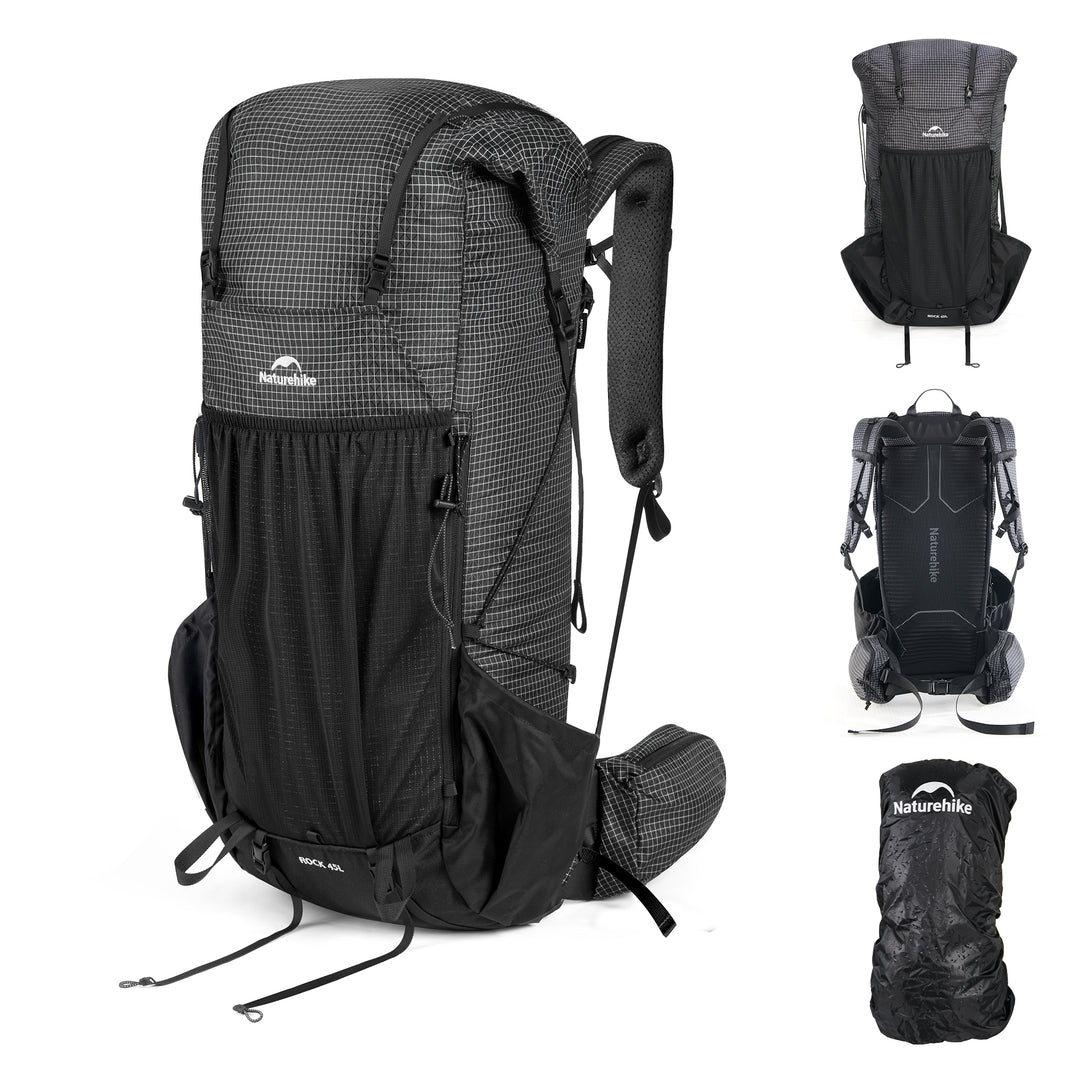
Overview
The Naturehike Rock is a framed backpacking pack that has the feature list of a much pricier bag. It has an aluminum stay, a padded hipbelt, a hydration port and a rain cover stowed in the base. It suits budget-minded weekend and multi-day hikers who want a real suspension. It isn’t a gram-counter’s pack, and its small pockets and narrow shoulder straps are the price of the low sticker.
Key Specs
| Spec | Detail |
|---|---|
| Weight | 1,060–1,310 g depending on version (37.4–46.2 oz) |
| Capacity | 40+5 L, 60+5 L, or 60+5 L updated |
| Dimensions | 56 × 26 × 18 cm (40+5 L); 67 × 26 × 18 cm (60+5 L) |
| Frame | Internal aluminum stay with channeled back pad |
| Fabric | 420D ripstop nylon on standard versions; 94% polyester / 6% TPU blend on the updated 60+5 L |
| Back length | 54–55 cm (updated 60+5 L) |
| Recommended load | Up to about 15 kg (33 lb) |
| Extras | Rain cover in base pocket, hydration sleeve with hose port, removable shoulder bottle pouch, two hipbelt pockets |
| Price | $99.99–$129.99 direct from Naturehike |

Would the Rock Hiking Backpack earn its spot in your pack?
1060 g · 37.4 ozAdd the Naturehike Rock Hiking Backpack to your Gear Closet and see exactly what it does to your base weight, then start packing for your next trip.
Free · No credit card · iOS, Android & web · Trusted by 3,000+ backpackers
Performance
Carry. The Rock’s selling point is that it has a frame at all. The aluminum stay and padded hipbelt move weight onto the hips, and the channeled back panel gives some airflow behind the spine. A Thrifty Hiker review found the suspension comfortable and the hipbelt secure. It also called the straps strong. The stated ceiling is about 15 kg. That is fine for a pack in the 10–12 kg range, and it is not meant for hauling a week of winter food. Torso length matters. Taller hikers, a six-footer among them, fit comfortably, while shorter hikers may find the hipbelt sits in the wrong place.
Weight. At 1,060 g for the 40+5 L, the Rock is light for a framed pack at this price. It still isn’t ultralight. Pack weight climbs to 1,310 g in the updated 60+5 L, and a tarp-and-quilt hiker with a sub-10 lb base weight can find lighter, frameless alternatives. The Rock is for hikers who carry a bit more and want the support.
Fabric and weather. The standard versions use a 420D nylon with a tight jacquard-style weave that testers describe as sturdy. The updated 60+5 L moves to a polyester/TPU blend. The fabric is water-repellent, not waterproof. One owner reported the pack stayed dry in light rain even before the included cover came out of its base pocket. Anything heavier calls for that cover or a liner, as with any pack in this class.
Organization. Owners praise the pocket count. The back mesh pocket and side mesh pockets get good marks, and the removable shoulder bottle pouch is a favorite. The complaints are specific and consistent. Side pockets run small. The hipbelt pockets are tight and awkward to reach. There is no vertical or panel opening, so anything at the bottom of the main bag means digging from the top. The shoulder straps sit close together, and owners with wider necks report them digging in at the inner shoulder.
Capacity. The 60+5 L has drawn a mixed verdict. One UK buyer said it doesn’t hold a true 60 liters. Another countered that the extension collar unrolls upward and the pack swallows a lot of gear. A reviewer reported fitting sleeping bag, tent, pad, cooking kit, food and spare clothes into the 60+5 L for a three-day trip.
Choosing a Version
Three versions share the same layout and suspension concept.
- 40+5 L (1,060 g): 56 × 26 × 18 cm. This is the one for overnights and two- or three-night summer trips with a compact kit. It is the lightest and the cheapest of the three, at the low end of the $99.99–$129.99 range.
- 60+5 L (1,160 g): 67 × 26 × 18 cm. For multi-day trips, bulkier sleeping systems and cold-weather layers. It adds only 100 g over the smaller pack, so hikers who are unsure should pick this one. The extra volume costs little to carry.
- 60+5 L updated (1,310 g): The same capacity in a polyester/TPU blend, with a stated back length of 54–55 cm. It is 150 g heavier than the standard 60+5 L, a trade of weight for abrasion resistance. Brush-heavy routes and rough handling in transit are where it earns its keep.
Pros & Cons
Pros
- Real aluminum frame and padded hipbelt at $99.99–$129.99
- 1,060 g in the smallest version is light for a framed pack
- Rain cover included, stowed in the base
- Hydration sleeve with hose port and removable shoulder bottle pouch
- Plenty of external pockets and mesh storage
- Three sizes and fabrics cover weekends to week-long trips
Cons
- Shoulder straps sit close together and can chafe at the neck
- Side and hipbelt pockets are small and hard to reach
- Top-loading only, with no vertical access panel
- 1,310 g in the heaviest version is well off ultralight territory
- Fabric is water-repellent, not waterproof
- Fit range is narrow for shorter torsos
Who Should Buy This
The Rock suits newer backpackers upgrading from a frameless daypack, or budget-conscious hikers who want a load-bearing pack for weekend and multi-day trips. It also works for travelers who want a framed bag with a built-in rain cover. Experienced thru-hikers with dialed base weights, wide-necked hikers who dislike close-set straps, and anyone who wants a roll-top, fully waterproof fabric should look elsewhere. Those buyers are better served by cottage-brand frameless or lightly framed packs, or by Naturehike’s own newer Rock 2.0.
Verdict
The Naturehike Rock offers a frame, hipbelt and rain cover for roughly the price of a mid-range daypack. Its pockets are small and its straps narrow, but the carry is solid for loads up to about 15 kg. Buy the 40+5 L for short trips or the standard 60+5 L for everything else, and spend the extra 150 g on the updated version only if abrasion worries you.