Naturehike Rock 2.0 Review
Naturehike's Rock 2.0 pairs a removable aluminum frame and a full feature set with a sub-three-pound weight in 30L, 45L and 60L sizes, at a budget price.
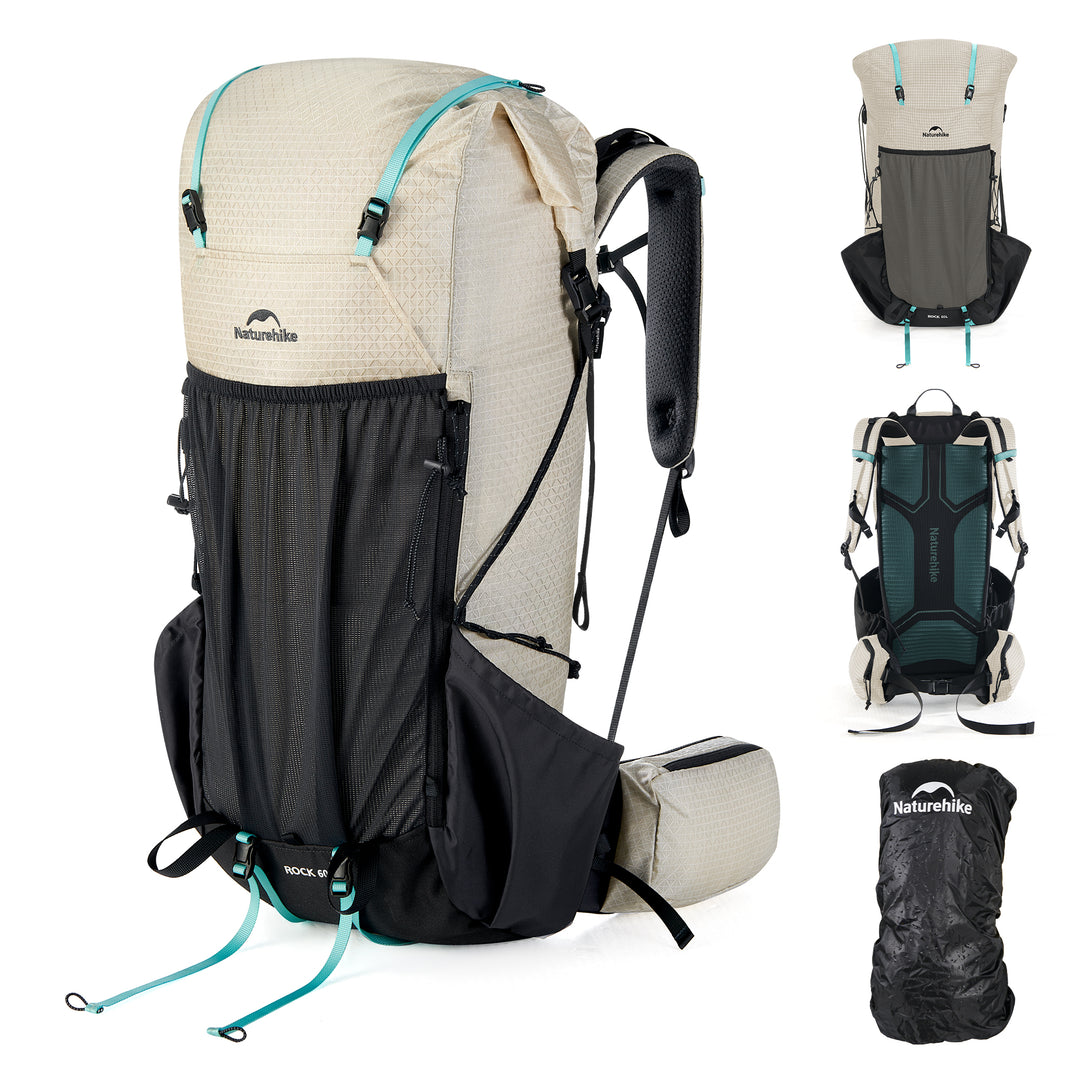
Overview
The Rock 2.0 is Naturehike’s second attempt at a framed, feature-heavy pack that stays under three pounds. It comes in 30L, 45L and 60L, and it targets hikers who carry moderate loads and want pockets, load lifters and a rain cover without paying cottage-brand prices. The trade-off is fit and finish: the pack is stiffer and less adjustable than the original Rock, and early owners have reported some hardware and strap-comfort issues.
Key Specs
| Spec | Detail |
|---|---|
| Capacities | 30L, 45L, 60L |
| Weight | 1,197–1,270 g for the 45L and 60L (45L M: 2.64 lb / 1,197 g; 45L L: 2.75 lb / 1,247 g; 60L claimed at about 2.8 lb) |
| Frame | Removable aluminum alloy internal frame |
| Back system | MOUNT RIDGE ergonomic back support |
| Fabric | High-strength blended fabric |
| Closure | Roll-top, single buckle |
| Rain cover | Included |
| Carry features | Load lifters, adjustable sternum strap, padded hip belt with pockets, side compression and bottle pockets |

Would the Rock 2.0 Hiking Backpack earn its spot in your pack?
1197 g · 42.2 ozAdd the Naturehike Rock 2.0 Hiking Backpack to your Gear Closet and see exactly what it does to your base weight, then start packing for your next trip.
Free · No credit card · iOS, Android & web · Trusted by 3,000+ backpackers
Performance
Weight and features. At 2.64 lb for a medium 45L, the Rock 2.0 is not a gram-counter’s pack. Cuben-fiber and Dyneema frameless packs run far lighter. What it offers is a different bargain: a removable aluminum frame, load lifters, an adjustable sternum strap and a pocket layout that most ultralight makers strip out to save ounces. One reviewer put the 60L at a claimed 2.8 lb and noted that a full frame system at that capacity and weight is the pack’s central selling point.
Carry and comfort. The first Rock had shoulder straps sewn so close together that a forearm would not fit between them. The 2.0 fixes that. A tester who logged about 14 miles at roughly 25 lb with the 60L called it comfortable and well made. The new back panel and hip belt are noticeably stiffer, though. One owner who had used the older 40+5 on the Camino de Santiago said the new plate and belt felt rigid at first and expected them to soften with use. Another, who owns both generations in 45L, finds the 2.0 still comfortable over about 20 miles but a step below the old one.
Organization. The roll-top has a single buckle and opens wide, which makes loading a tall pack easier than it sounds. The sides are deliberately asymmetrical. One side has a compression strap, a stretch pocket that can be cinched down, and a bottle pocket that doubles as gear storage. Owners single out the large hip-belt pockets and say a bottle is reachable behind the back without taking the pack off. A zippered pocket takes tent poles and stakes, which keeps them out of a pack liner. Reviewers also describe plenty of room for an ultralight kit, with the 60L reading as roomy for a lightweight setup.
Weather. The pack is not waterproof. The included rain cover is the intended answer for sustained rain, and a liner is the better choice for anything serious. Users of the previous Rock found the cover quick to deploy from its bottom pocket, and the 2.0 keeps it in the box.
Durability and quality control. Naturehike says the blended fabric improves tear resistance, but the pack is too new for multi-season wear reports. Early buyer feedback is mostly positive, with a few specific complaints. One owner had a hip-belt buckle break right out of the box. Another found the shoulder-strap fabric scratchy against bare skin. The same owner said the straps and belt don’t extend far enough to fit over a bulky jacket in cold weather, and that the narrow strap range made it hard to put on a loaded pack alone.
Choosing a Version
The three sizes change capacity more than they change design.
- 30L: Suits fast overnights and warm-weather trips with a compact kit. Anyone with a bulky sleeping bag or a winter layering system will outgrow it.
- 45L: The best fit for most three-season thru-hikers and weekenders with a modern lightweight base weight. It weighs 2.64 lb in medium and 2.75 lb in large. Owners report it takes the same kit as the old 40+5 without the squeeze.
- 60L: For longer food carries, bulkier gear or hikers who want winter margin. It is the largest in the line, at a claimed 2.8 lb. It is a better value for carrying volume than most ultralight packs, which stop at 40–45L. A full 60L at this weight comes with a practical ceiling on load, so heavy loads will test the frame.
Pros & Cons
Pros
- Removable aluminum frame, load lifters and a padded hip belt at under three pounds
- Large hip-belt pockets, an asymmetric side-pocket layout and a wide roll-top opening
- Rain cover included
- Three capacities, including a 60L that few ultralight makers match at this weight
- Price well below cottage-brand packs with similar features
Cons
- Heavier than frameless and Dyneema packs
- Stiff back panel and hip belt; at least one owner found it less comfortable than the original Rock
- Shoulder straps reported as scratchy against bare skin, with a limited adjustment range over bulky layers
- A hip-belt buckle failed on arrival for one buyer
- Not waterproof; the pack relies on the cover or a liner
- Too new for long-term durability data
Who Should Buy This
The Rock 2.0 suits weekend and section hikers, first-time lightweight upgraders and budget-minded thru-hikers who carry 20 to 25 lb and want a real frame with every pocket included. It also suits anyone moving down from a 4–5 lb pack who wants to spend little. Gram-obsessed hikers with sub-10-lb base weights, cold-weather hikers who need generous strap range over a puffy jacket, and anyone who wants a proven multi-year track record should look at a frameless or cottage-brand pack.
Verdict
The Rock 2.0 fixes the worst flaws of the original and delivers a feature set that cost far more elsewhere not long ago. Stiffness, strap fit and unproven long-term durability keep it from the top of the category. For under three pounds and a modest price, it is a strong first framed lightweight pack. Try it on loaded before you commit.