Fjällräven Kajka 65 Review
A wooden-framed Swedish load hauler that trades ultralight weight for old-school durability, adjustability, and genuinely comfortable heavy-load carrying.
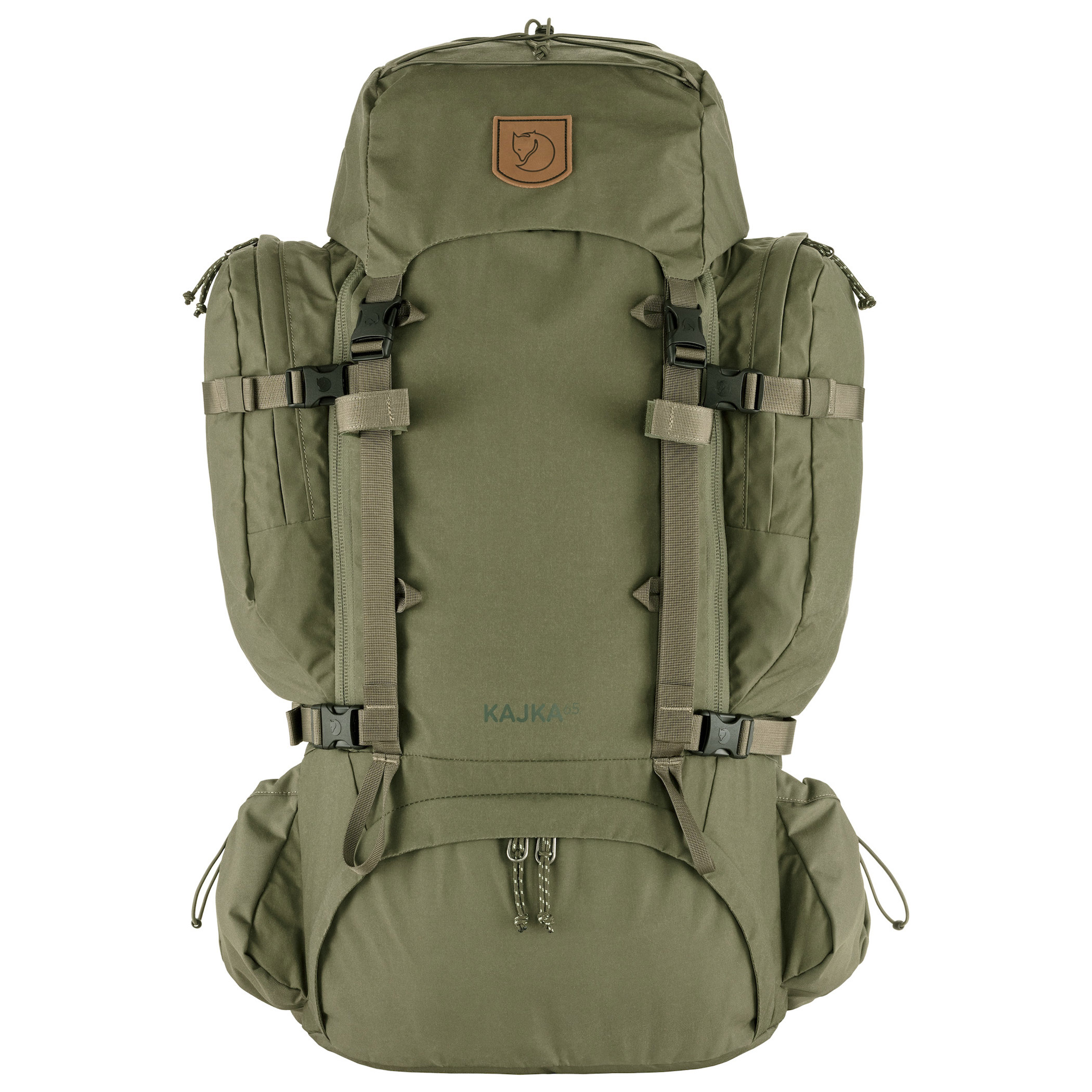
Overview
The Kajka 65 is Fjällräven’s flagship trekking pack, and it’s been around in one form or another since the 1970s, built around a genuinely unusual feature for a modern pack: a load-bearing frame made from FSC-certified birch instead of aluminum stays or a plastic framesheet. This isn’t a pack for anyone counting grams. It’s for hikers, guides, and expedition users who want a pack that will carry heavy, awkward loads comfortably for years and who don’t mind paying a weight penalty (and a real dollar premium) to get there.
Key Specs
| Spec | Detail |
|---|---|
| Weight | 3,150 g (6.9 lb) |
| Volume | 65 L |
| Frame | FSC-certified birch (wood) |
| Outer material | Vinylon F (100% vinylal) + 100% polyamide 500D (recycled) |
| Lining | 100% polyamide 210D (recycled) |
| Sizes | S/M, M/L (gender/torso-specific fit) |
| Dimensions | 75 x 49 x 26 cm |
| Back length range | ~41–58 cm (adjustable) |
| PFAS | Produced without PFAS |
Would the Kajka 65 earn its spot in your pack?
3150 g · 111.1 ozAdd the Fjällräven Kajka 65 to your gear closet and see exactly what it does to your base weight — then build your next packing list around it. Free, in about two minutes.
Free · No credit card · iOS & Android · Trusted by 3,000+ backpackers
Performance
The wooden frame is the whole story with this pack, and it’s more than a gimmick. The sturdy-but-flexible parallel wooden stays mimic a spring-steel frame surprisingly well, and testers found they kept loads from wobbling even with 60 pounds of cargo on Zion National Park’s steeper trails. There’s also a nice quiet-carry side effect: the eco-friendly canvas and birch-wood frame don’t squeak like plastic or metal, even under heavy loads. If you’ve ever hated the creak of an aluminum stay on a cold morning, that’s a small but real quality-of-life upgrade.
Fit adjustability is where the Kajka separates itself from most packs in this weight class. It offers a generous 6.7 inches of torso-length adjustability — the most in one comparison test — and lets you adjust both the height and width of the shoulder harness independently. Fjällräven backs this up with size-specific cuts: S/M models have slightly tapered shoulder straps for smaller frames with more room for the bust and a shorter hipbelt, while M/L models use longer, non-tapered straps for wider torsos. One tester who struggled to find well-fitting women’s packs found that once dialed in, “once I hit the sweet spot, this one rode well on my hips and never pulled on my shoulders.”
Long-term users back this up. A Trailspace reviewer who uses the Kajka professionally noted it’s what they use as a Wilderness Guide in Tasmania — durable, adjustable, and holding more gear than it rightly should, all while transferring load to the large hip belt comfortably. Another described it plainly as a pack built with old-school workmanship and new-school features, chosen for its adjustability and durability despite being quite heavy compared to most packs, and designed fundamentally as a load hauler.
Ventilation is a pleasant surprise given the pack has no dedicated mesh back panel. The harness only contacts the wearer’s upper back and pelvis, leaving a gap at the lower back that, combined with hip belt cutouts, makes it a surprisingly cool pack to wear — likely cooler than even a lightweight mesh back panel. On loading and access, the design has genuinely thought-through touches: multiple access points including a top lid, front panel, and bottom compartment make organizing gear effortless, a built-in rain cover protects against wet weather, and numerous attachment points make securing trekking poles or a sleeping pad convenient. The main compartment also has a snow-lock closure for shoulder-season use.
The obvious trade-off is weight. At 3,150 g, this pack is roughly double what you’d carry in a modern ultralight 65L pack (think 800g–1,200g territory), and it shows up on your back even before you load it. Reviewers are candid about it — one flatly stated it’s not the place to look if you want an ultralight pack.
Pros & Cons
Pros
- Wooden frame transfers heavy loads to the hips exceptionally well and doesn’t squeak or flex under load
- Best-in-class torso and shoulder-width adjustability, with genuine size-specific fits for different body types
- Surprisingly breathable despite lacking a mesh back panel, thanks to the gapped lower-back design
- Multiple access points (top, front, bottom) plus integrated rain cover and generous attachment points
- Built from durable, PFAS-free, largely recycled materials — a pack designed to be repaired and used for decades, not replaced yearly
Cons
- Heavy at 3,150 g — a serious penalty if you’re chasing a lighter base weight
- Premium price point compared to mainstream trekking packs
- The wooden frame, while functional, is a novel format that some hikers may be wary of trusting on remote trips (though long-term users report no issues)
- Not a pack built for fast-and-light missions; it’s clearly optimized for load-hauling over speed
Who Should Buy This
The Kajka 65 makes the most sense for guides, expedition trekkers, and long-haul backpackers who regularly carry heavy or bulky loads and prioritize comfort and durability over shaving ounces. If you’re doing multi-week resupply-heavy trips, guiding clients, or just tend to overpack, the frame and harness system genuinely earn their keep here. It’s a poor match for anyone chasing an ultralight base weight or fast-and-light objectives — for that crowd, the weight alone is disqualifying regardless of how well the pack carries.
Verdict
The Kajka 65 isn’t trying to compete with ultralight packs, and it shouldn’t be judged against them — it’s a load-hauling specialist with a frame and adjustment system that genuinely deliver on comfort with heavy weight, backed by years of field use from guides and long-distance hikers. If your priority is carrying capacity, durability, and dialed-in fit over grams, it’s a strong 6.5/10; for anyone optimizing pack weight first, look elsewhere.