Durston Gear Wapta 30 Review
The Durston Wapta 30 is a 490 g frameless ALUULA Graflyte pack with a removable hipbelt and huge external storage, best for base weights under 25 lb.
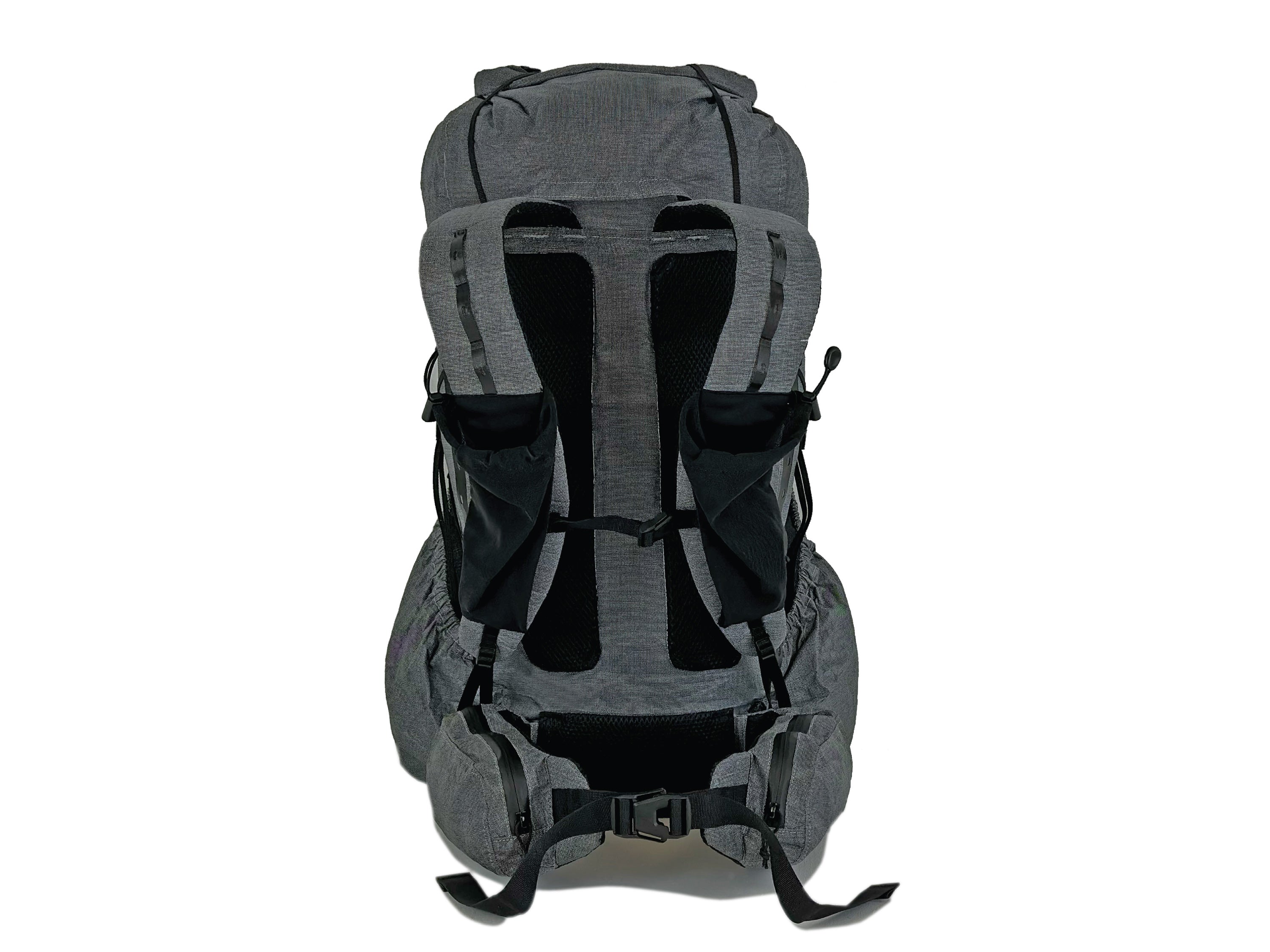
Overview
The Wapta 30 is a frameless, roll-top pack from Durston Gear, built from ALUULA Graflyte, a composite with a woven UHMWPE face and a waterproof film behind it. At 490 g with every removable part attached, it sits at the line where ultralight packs usually give up comfort and pockets. This one keeps both. The price of admission is a frameless carry that works only with light loads and careful packing.
Key Specs
| Spec | Value |
|---|---|
| Weight (all components) | 490 g |
| Base pack weight (no hipbelt, sternum or top strap) | 365 g |
| Main compartment volume | 30 L (plus roughly 16 L of external pockets) |
| Main fabric | ALUULA Graflyte V-98 |
| Daisy chains | Laser-cut ALUULA Durlyte |
| Torso fit range | 17–19.5 in (43–50 cm) |
| Suspension | Frameless, with heat-bonded air mesh back pads |
| Closure | Roll top |
| Hipbelt | Removable, padded, S/M size 105 g |
| Sternum strap | Removable, 15 g |
| Top strap | Removable, 5 g |
| Pockets | 7 (two hipbelt, two shoulder strap, front, two side) |
| Seams | Taped and heat-bonded |
| Hydration port | No |
| Suggested max load | About 25 lb (12 kg) |

Build your Gear Closet
View all of your gear in one place, create packing lists and hit the trail with confidence. Available on iOS, Android and the web.
Get StartedPerformance
Weight and modularity. The weight arithmetic is simple. The bare pack is 365 g. The padded hipbelt adds 105 g, the sternum strap 15 g and the top strap 5 g. A hiker carrying a 10 lb base weight on a dry weekend can leave the belt at home and end up near the 12.8 oz mark Durston advertises. A hiker with a week of food can put the belt back on and still be under 500 g.
Carry comfort. The Wapta’s comfort features are unusual for a pack this light. Two heat-bonded air mesh strips run down the back panel, which keeps the ALUULA fabric off the wearer’s back and gives some airflow. The shoulder straps are S-shaped, a design borrowed from Durston’s larger Kakwa packs. Reviewers rate them as a better fit than straight straps. The hipbelt is three-dimensionally shaped and padded, which is more than the webbing belts on most packs in this weight class.
The limits are those of any frameless pack. SectionHiker’s reviewer found the suspension minimal and said it needs careful packing or some added padding, such as a folded sleeping pad against the back. Durston and reviewers put the practical ceiling at about 25 lb. Beyond that, the load sits on the shoulders however well the straps are shaped.
Storage. The pockets are where the Wapta pulls ahead of its competition. Side, hipbelt, bottom and front pockets add about 16 L on top of the main compartment, according to The Trek’s reviewer, who said the pack feels larger than some 40 L packs. Stretch-mesh pockets on the shoulder straps and zippered hipbelt pockets take snacks, a phone and a map without stopping to unclip anything. The bottom pocket is made from Graflyte rather than the stretch mesh that wears out first on many ultralight packs. Laser-cut daisy chains on the front and sides give plenty of lash points for a sit pad, wet shelter or trekking poles.
Durability and weather. Road Trail Run’s reviewer reported that the pack handled rocks and rough surfaces well and was scraped and set down on rock without visible wear. That matches the pack’s reputation for outlasting the thinner nylon and Dyneema Composite Fabric packs in its weight range. The seams are taped and heat-bonded. Durston calls the pack waterproof. The same reviewer, like many hikers, treats any roll-top pack as highly water resistant rather than submersion-proof. A liner is still cheap insurance on a long wet trip.
Hardware. The weak points are small. SectionHiker’s reviewer thought the top Y-strap and side compression straps could use easier hardware, because they snag in brush. The roll top works, though one commenter found its limits less than ideal. The pack has no hydration port, so hoses have to route out the top or through a side pocket.
Pros & Cons
Pros
- 365 g base weight, with a 105 g hipbelt that can be removed
- Roughly 46 L of total usable volume, most of it in external pockets
- Graflyte body and bottom pocket stand up to abrasion
- S-shaped shoulder straps and air mesh back pads add comfort at this weight
- Taped, heat-bonded seams
- Laser-cut daisy chains for external lashing
Cons
- Comfort drops quickly above about 25 lb
- Top strap and side compression hardware can snag off-trail
- Roll top only, and no hydration port
- Expensive for a 30 L pack
- Needs deliberate packing to build structure without a frame
Who Should Buy This
The Wapta 30 suits experienced ultralight hikers whose base weight is low enough that a frameless pack carries well. That means weekend trips, fast thru-hike sections, and long-distance hikers who resupply often. It also suits anyone who wants lots of pockets in a sub-500 g pack. Hikers who start long trips with heavy food loads and gear, or who prefer a structured pack that carries weight on the hips, should look at a framed pack in the 700–900 g range. Those who dislike roll tops or need a hydration port should also look elsewhere.
Verdict
The Wapta 30 is one of the most carefully designed frameless packs available. It combines a sub-500 g weight with durable fabric, a removable belt and a lot of well-placed pockets. It rewards hikers who keep their loads light and pack with care, and it costs more than other packs in its class. For that user, it is an easy recommendation.