Berghaus Freeflow 50 Review
A discontinued 50L ventilated hiking pack with Berghaus's tensioned mesh Freeflow IV back system — great for sweat reduction, less great for packing.
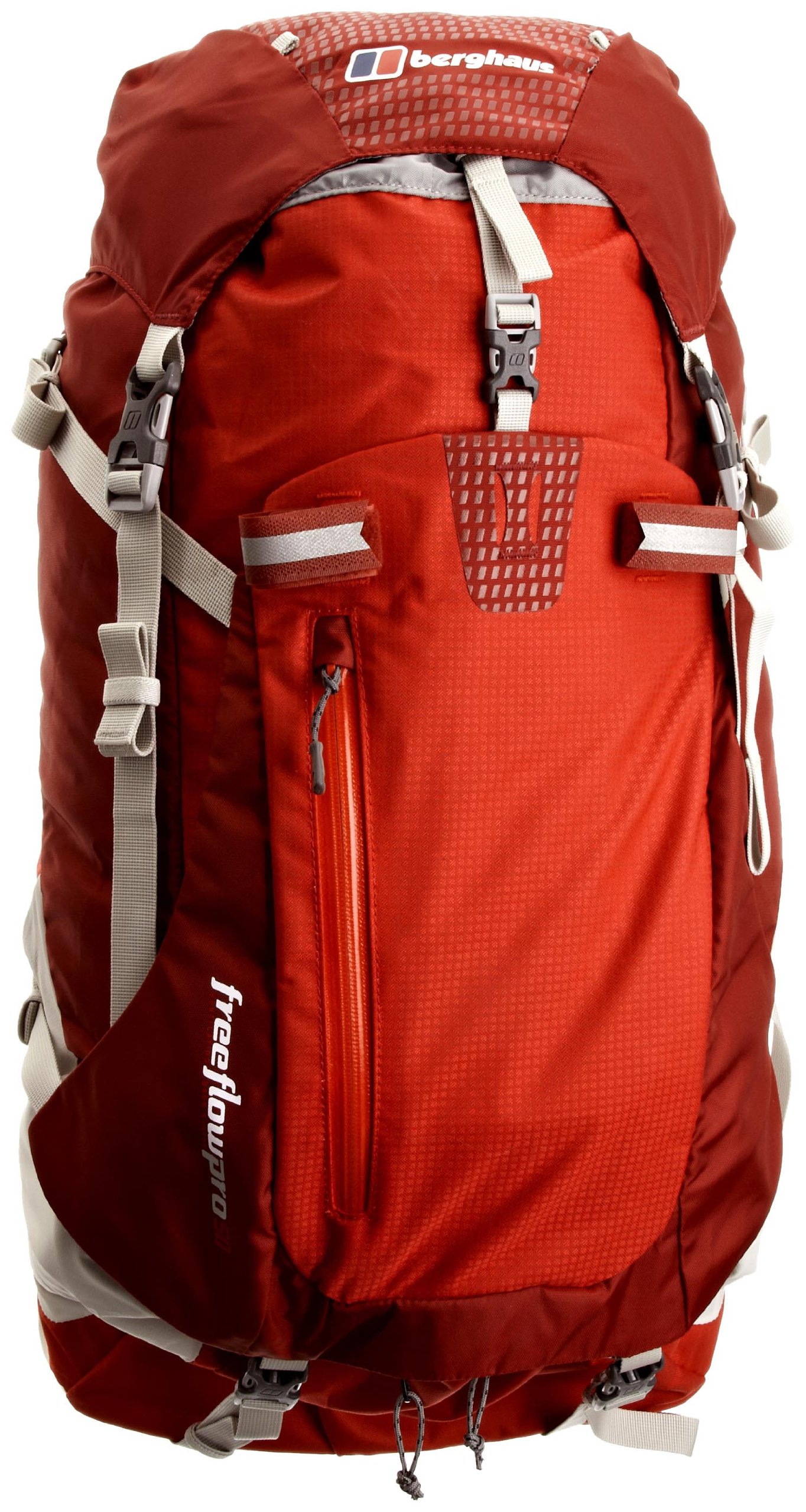
Overview
The Freeflow 50 is Berghaus’s mid-size hiking pack built around the brand’s tensioned-mesh “Freeflow” back system — a rigid frame that holds the main bag a couple of inches off your back to maximize airflow. It’s aimed at weekend and multi-day hikers who run hot and are willing to trade some packing convenience and a bit of extra weight for a drier back. Berghaus has discontinued this specific version (it’s now on its “Freeflow IV” back system iteration, part of a long-running line that dates back to the mid-2000s), so you’ll mostly find it secondhand or in clearance now.
Key Specs
| Spec | Detail |
|---|---|
| Volume | 50L |
| Weight | 1,640g (3.6 lb) |
| Back system | Freeflow IV (tensioned mesh, off-back frame) |
| Category | Overnight/multi-day hiking pack |
| Status | Discontinued |

Build your Gear Closet
View all of your gear in one place, create packing lists and hit the trail with confidence. Available on iOS, Android and the web.
Get StartedPerformance
The whole point of the Freeflow system is ventilation, and on that front it delivers. The design suspends a taut mesh panel a good couple of inches away from the back of the pack, doing away with the need for any moulded or foam padding while massively reducing sweating. Users across multiple Freeflow generations report the same thing: your back stays noticeably drier than with a conventional foam-panel pack, especially on warm-weather hikes or bike commutes where a soaked back is normally a given. One long-time user of the smaller Freeflow Light put it simply — a back drenched in sweat is basically a thing of the past, though you’ll still sweat and your back will get damp, just way, way less.
That ventilation comes at a real cost, though, and it’s the same complaint that shows up again and again in owner threads: packing is awkward. Because the frame has to keep that air gap open, the main compartment is curved rather than a straight cylinder, and it can feel very constraining when stuffing it full of kit — it really feels smaller than the advertised capacity, and you can’t put rigid items in very easily. More than one UKClimbing forum poster described it bluntly as packing round a corner essentially, and others confirm you’re packing round a corner essentially too — this isn’t a one-off gripe, it’s the pack’s defining trade-off.
Load carriage is the other recurring theme, and it’s more polarizing. Several owners like the fit for straightforward hiking — one 50L owner called it extremely comfortable and just about accommodating enough for a couple of nights out wild — but the moment you add scrambling, climbing, or off-trail movement, the off-back frame starts working against you. Multiple climbers reported the pack helps stop your back getting so drenched in sweat, but really throws off your centre of gravity for scrambling and climbing, taking a while to get used to, and another simply said the weight sits too far back and pulls you off balance more than traditionally seated packs. If your hiking is mostly on-trail with a stable gait, this is a non-issue. If you’re doing anything technical, expect to notice it.
Durability feedback is mixed but leans toward “adequate, not bombproof.” A few forum posters mentioned zipper failures or the plastic back frame cracking under stress (one described breaking his by sitting on it), while others reported years of reliable use with no complaints. Given the pack is now several generations old and discontinued, I’d treat any unit you find secondhand with a bit of extra scrutiny around the frame attachment points and zipper pulls, since those seem to be the recurring failure spots.
Storage-wise, older Freeflow 50 versions include a large-access lid pocket that makes storing and accessing guide books easy, plus side pockets and a bottom compartment — reasonably functional for a pack in this class, if not class-leading.
Pros & Cons
Pros
- Genuinely reduces back sweat compared to a standard foam-panel pack — the mesh-and-frame system works as advertised
- Comfortable for straightforward on-trail hiking with a couple of nights of gear
- Biofit-style adjustable back length shows up across the Freeflow range, letting you dial in torso fit
- Useful lid pocket and secondary bottom access on most versions
Cons
- Curved main compartment makes packing (and finding things) noticeably more awkward than a straight-barrel pack
- Effective capacity feels smaller than the 50L label suggests once you try to fill it
- Frame holds weight further from your back, which shifts your center of gravity and can feel unstable while scrambling or on uneven terrain
- At 1,640g it’s on the heavier side for a 50L pack by current ultralight standards
- Discontinued — no manufacturer support, and secondhand units may have zipper or frame wear
Who Should Buy This
This suits a hiker who runs hot, sticks mostly to maintained trails, and prioritizes a dry back over packing convenience or minimal weight. It’s a poor match for anyone doing technical scrambling, off-trail travel, or chasing an ultralight base weight — the frame’s stability trade-offs and the pack’s own heft work against both those use cases.
Verdict
The Freeflow 50 does exactly what its name promises — it keeps your back drier than a conventional pack — but that comes bundled with a curved, harder-to-pack main compartment and a center of gravity that some users find unstable off-trail. Since it’s discontinued, I’d only consider it secondhand and at a steep discount versus current 50L packs that solve ventilation without the same packing penalty. Call it a 6/10: solid at its one core trick, mediocre everywhere else.