Zpacks Dyneema Stuff Sack Review
A no-frills, ultralight DCF stuff sack from Zpacks that trades bombproof durability for weight savings and packability.
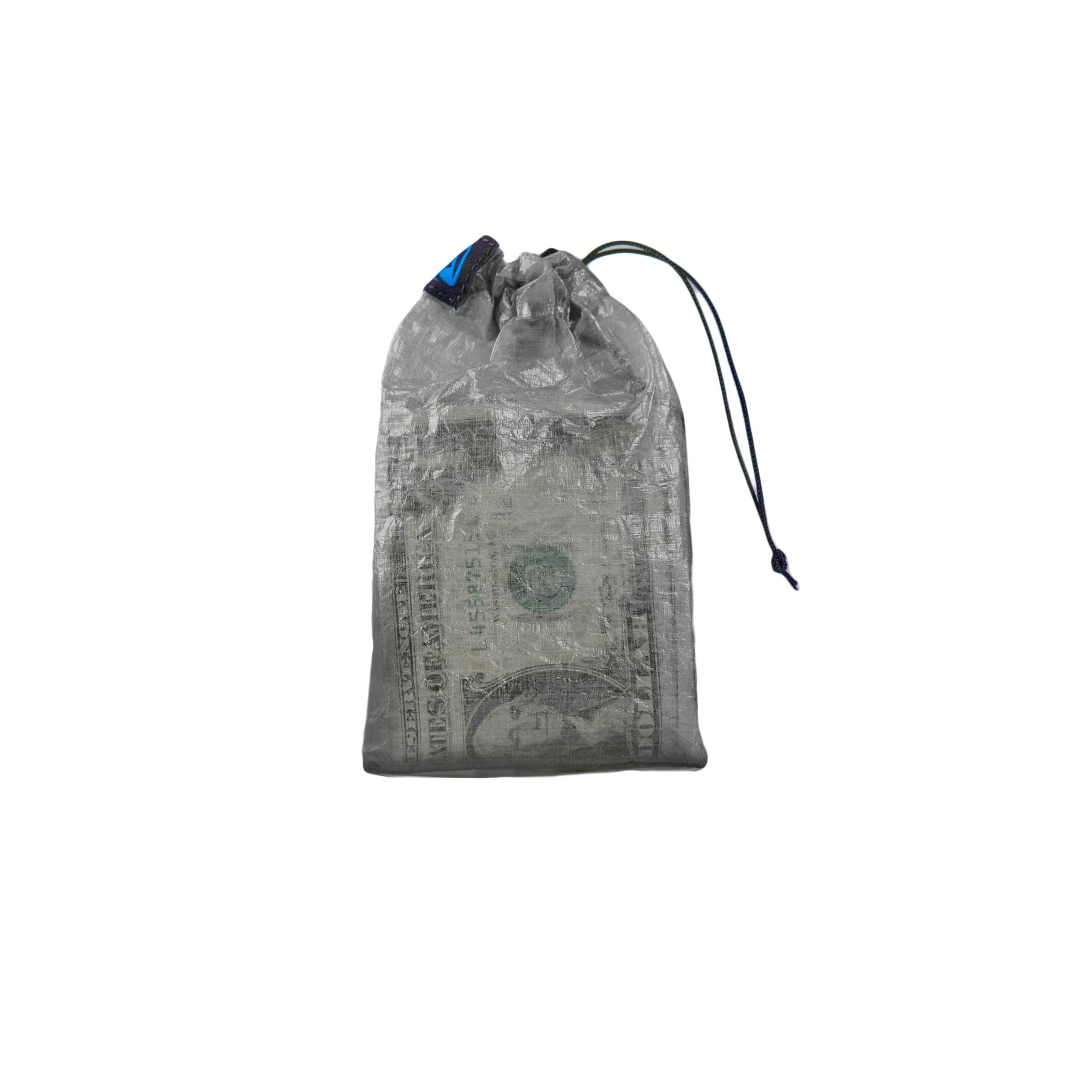
Overview
Zpacks’ Dyneema Stuff Sack is about as simple as gear gets: a drawcord bag made from .55 oz/sqyd Dyneema® Composite Fabric (DCF), sold across eight sizes from Mini to Large. It’s not trying to be a dry bag or a compression sack — it’s just the lightest reasonable way to organize a quilt, clothing, or a tent inside your pack. If you’re already deep into the Dyneema ecosystem (or building toward it), this is the low-effort way to shave a few ounces off the stuff sacks you’re already carrying.
Key Specs
| Spec | Detail |
|---|---|
| Weight | ~20.0 g (varies by size) |
| Material | 0.55 oz/sqyd Dyneema® Composite Fabric |
| Water resistance | Water resistant only — taped side seam, but open drawcord closure |
| Transparency | Semi-transparent, contents visible through the fabric |
| Closure | Drawcord |
| Available sizes | Mini, Small, Small-Plus, Medium, Medium-Plus, Big, Large, Slim |
| Colors | Blue, Olive Drab (White/Spruce Green on some sizes) |

Build your Gear Closet
View all of your gear in one place, create packing lists and hit the trail with confidence. Available on iOS, Android and the web.
Get StartedPerformance
The single biggest thing to understand about this stuff sack is what it isn’t: it’s not waterproof. The side seam is taped for strength but these should only be considered water resistant due to the draw cord opening. That’s an important distinction if you’re used to Zpacks’ dry bag line — those are constructed from black 1.0 oz/sqyd Dyneema Composite Fabric which is inherently waterproof, while the regular stuff sacks are made from thinner .55 oz/sqyd material. In practice, that means light rain or pack-splash won’t soak through the DCF face fabric itself, but water can wick in around the drawcord opening if your pack gets dunked or you’re hiking through a downpour with the sack in an exposed pocket. Treat it as organizational, not as your rain protection strategy — pair it with a pack liner or dedicated dry bag for anything you actually can’t afford to get wet (down quilt, electronics).
Where it shines is exactly where you’d expect DCF to shine: weight and bulk. At roughly 20 g for a mid-size bag, it’s dramatically lighter than the silnylon stuff sacks that ship with most quilts, tents, and sleeping bags — those routinely run 30-40 g on their own. DCF also doesn’t absorb water or stretch out over time the way nylon does, so the sack keeps its shape and doesn’t develop that saggy, worn-in look after a season of stuffing and unstuffing.
The semi-transparency is a small but genuinely useful feature — I could tell at a glance which sack had my rain gear versus my sleep layers without opening anything, which matters more than it sounds like at 6 a.m. in a dark tent. The size range is also a real strength here: with eight options from Mini up to Large, you can dial in a sack for almost anything — Zpacks notes the Small will fit a small tarp or a NeoAir sleeping pad, while the Big and Large sizes are built for multiple clothing items, larger tents, bigger sleeping bags, or other soft bulky items.
The trade-off for that weight savings is durability. DCF doesn’t tear easily along its fibers, but it is a laminate, and repeated abrasion or a sharp puncture (tent stakes, a multitool corner) will eventually compromise it. Zpacks sells thicker options for exactly this reason — their dedicated stake sacks and food bags step up to 1.6 oz/sqyd material because, as they put it, this stake sack is constructed from extra thick 1.6 oz/sqyd Dyneema Composite Fabric to prevent punctures. If you’re going to stuff something abrasive or pointy into the .55 oz sack, expect to eventually patch it — the fix is straightforward, since stuff sacks can easily be patched with Dyneema Composite Fabric Tape.
I wasn’t able to find much dedicated long-form testing or forum deep-dives specifically on the plain stuff sack (as opposed to Zpacks’ dry bags or packing cubes, which get more attention from reviewers like SectionHiker). That’s not unusual for an accessory this simple — it does one job, and most user chatter tends to be a quick “works as expected, get the right size” rather than an extended review. Take the lack of detailed third-party testing as a sign this is a low-drama purchase, not a red flag.
Pros & Cons
Pros
- Genuinely light — around 20 g, a fraction of a comparable silnylon sack
- Eight size options cover everything from socks to a full sleeping bag
- Semi-transparent fabric lets you ID contents without opening the bag
- DCF doesn’t absorb water, stretch, or sag with age like nylon
- Taped side seam adds some structural durability
- Easily field-repairable with DCF tape
Cons
- Not waterproof — the drawcord opening means water resistance only
- Thin .55 oz/sqyd face fabric is puncture-prone with sharp or abrasive items
- Colors are limited (Blue, Olive Drab, occasionally White/Spruce Green depending on size)
- Pricier per gram than nylon alternatives, as with most DCF gear
- No compression strap — this is a stuff sack, not a compression sack
Who Should Buy This
This makes sense for ultralight backpackers who already have DCF gear and want to shave the last few ounces out of their pack organization, or for anyone replacing the bulky stock sack that came with a quilt or tent. It’s not the right choice if you need guaranteed dry storage — grab one of Zpacks’ actual dry bags or a heavier-duty DCF weight (1.0 oz or above) instead, especially for items like stakes, cookware, or anything with sharp edges.
Verdict
The Zpacks Dyneema Stuff Sack does exactly one job — lightweight, semi-transparent gear organization — and does it well, as long as you don’t mistake “water resistant” for “waterproof.” For hikers chasing grams, it’s an easy, low-risk upgrade over stock nylon sacks. I’d put it at a 7.8/10: excellent at what it’s designed for, just don’t expect it to double as rain protection or abuse-proof storage.