Tatonka Zip Pouch Review
Tatonka's Zip Pouch is a flat, see-through, PFAS-free organizer in four sizes from 30 to 100 g: durable and tidy, but heavier than a plastic bag.
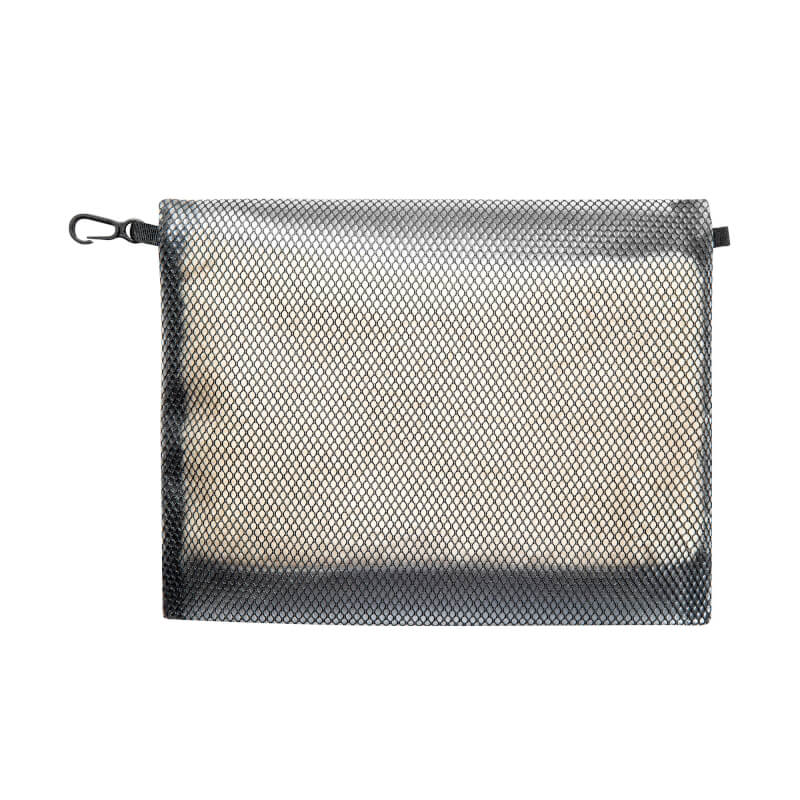
Overview
The Tatonka Zip Pouch is a flat, transparent organizer made from “Laminated Square Mesh”: a polyester mesh outer bonded to a clear polyurethane film. It comes in four sizes, from a 30 g pouch for a lip balm and a headlamp to a 100 g A4-sized sleeve. It suits backpackers and travelers who want a reusable, PFAS-free alternative to the freezer bag, and the trade-off is weight. It is a few times heavier than the disposable plastic it replaces.
Key Specs
| Spec | Detail |
|---|---|
| Weight | 30–100 g depending on size |
| Sizes | S, M, L and XL, plus a four-pouch set (Set IV, 230 g) |
| Dimensions | 10 x 15 cm to 25 x 35 cm |
| Outer material | 100% polyester, laminated square mesh |
| Inner material | 100% polyurethane |
| Closure | Zipper, with a side clip for attaching to pack loops |
| Water protection | Water-repellent (not waterproof) |
| Transparent | Yes |
| PFAS/PFC-free | Yes |
Versions compared
| Image | Version | Weight | vs. lightest |
|---|---|---|---|
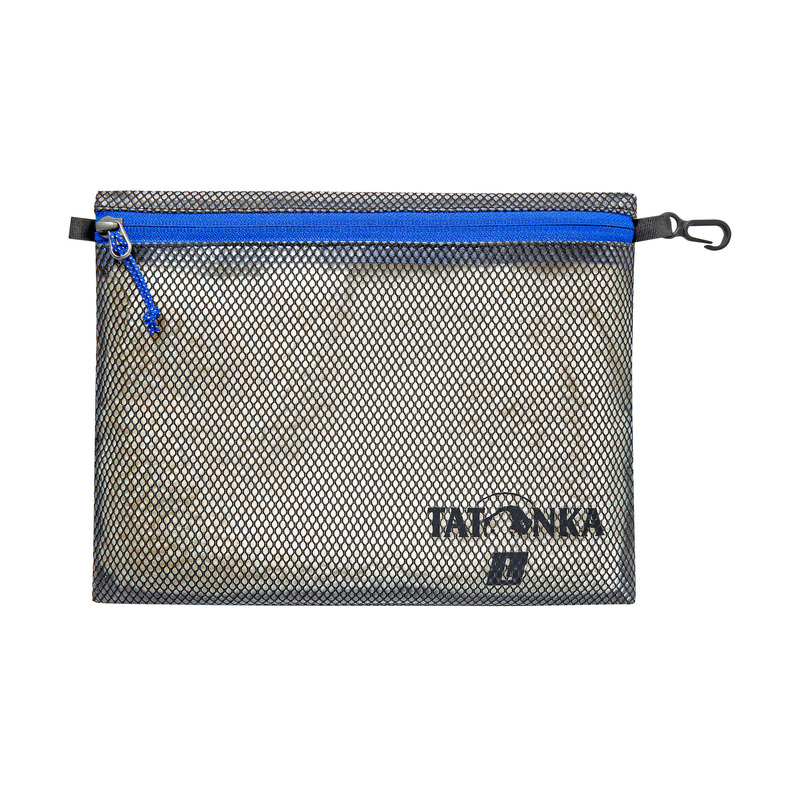 | 30 g Small / 10 x 15 cm | 30 g (1.1 oz) | lightest |
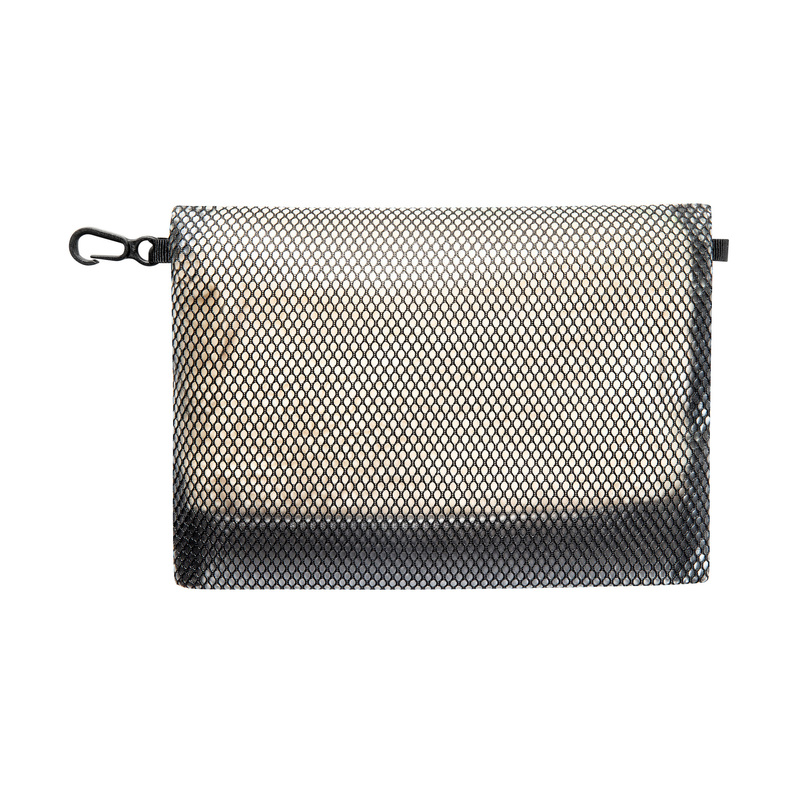 | 30 g 20 x 15 cm | 40 g (1.4 oz) | +10 g |
| 60 g | 60 g (2.1 oz) | +30 g |
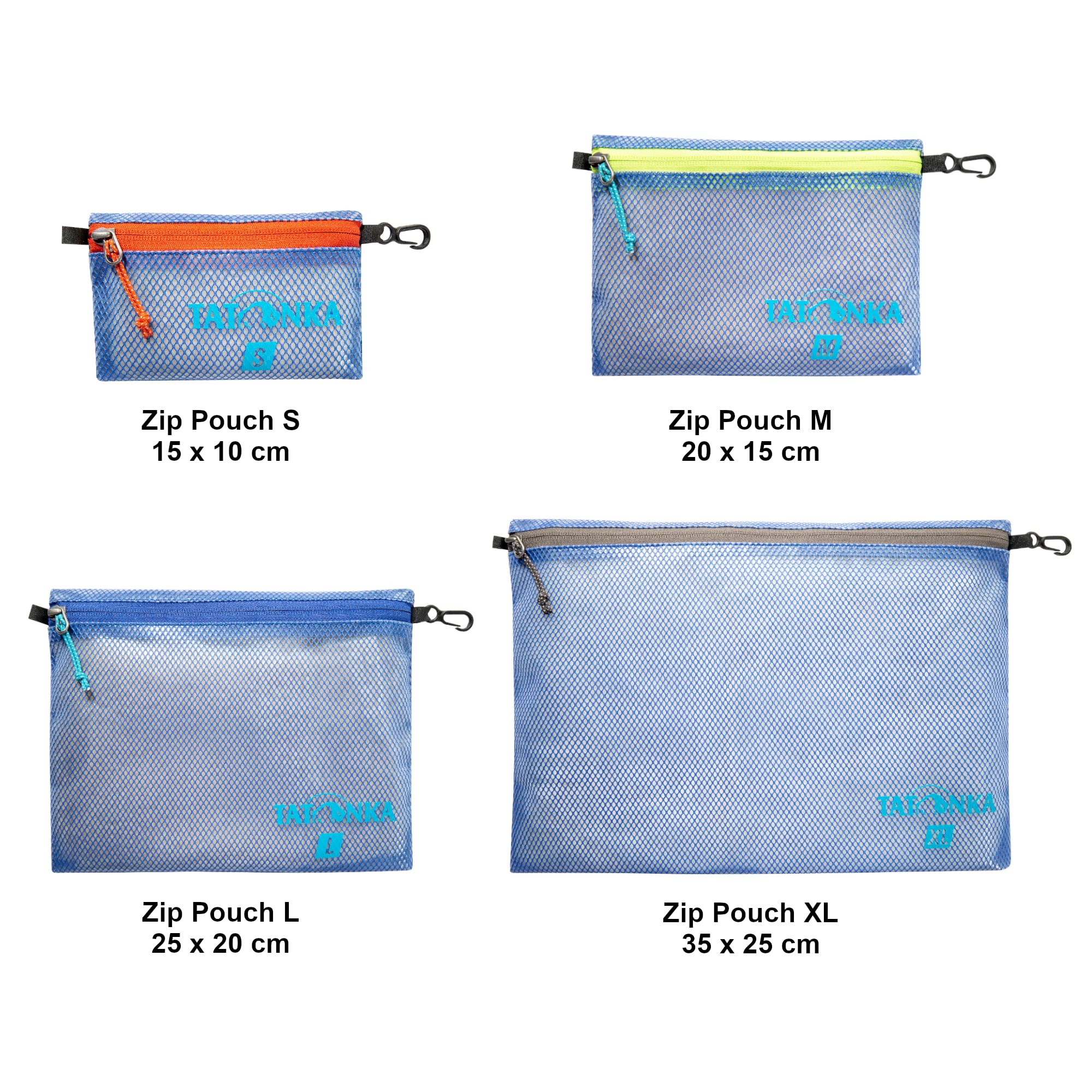 | 30 g 35 x 25 cm | 100 g (3.5 oz) | +70 g |

Build your Gear Closet
View all of your gear in one place, create packing lists and hit the trail with confidence. Available on iOS, Android and the web.
Get StartedPerformance
The pitch is simple: see the contents without opening the bag. The PU film is clear enough to pick out a first-aid kit, a charging cable or a power bank from the outside. That saves rummaging through opaque stuff sacks at camp. Tatonka’s own suggestions run from compass and sunscreen to power banks, the small items that tend to end up in the back corners of a pack.
The mesh outer is what separates this from a bare plastic pouch. Retailers and owners point to a pleasant hand feel and a grippy surface, which makes the pouch easier to pull from a pack pocket with cold or wet fingers than a slick film bag. The laminate also gives the pouch more body, so it holds its shape better than a floppy bag when it is half full. Owners on Amazon.de give it a perfect 5.0 across 34 ratings, with durability and easy cleaning the recurring points. A rinse under the tap or a wipe with a damp cloth is all it needs after a sunscreen leak.
Water resistance is modest, and Tatonka is clear about it. The material is water-repellent, and the zipper means the pouch is not waterproof. It will shrug off splashes and a damp pack interior. It is not a substitute for a dry bag when a river crossing or a day of sideways rain threatens a phone or battery bank. Anything that must stay dry still belongs in a proper roll-top.
A side clip lets the pouch attach to a D-ring or key loop in a pack lid, which keeps it from sinking to the bottom of the bag. It is a small touch that makes the pouch easier to find.
Weight is the sticking point for ultralight use. The L pouch weighs 60 g and the XL weighs 100 g. A disposable zip bag of similar size weighs a fraction of that, and a few pouches add up fast in a base weight. What the extra grams buy is a pouch that survives repeated use and a PFC/PFAS-free construction. Over several seasons, one pouch replaces a drawer’s worth of bags.
The flat cut limits what fits. These are for slim, flat or soft items: documents, cables, a toiletry kit, a spare map. A bulky stove or a lumpy pile of snacks will strain the zipper and the shape.
Choosing a Version
All four sizes share the same material and construction. What changes is the footprint and what each size can hold.
- S (10 x 15 cm, 30 g): Pocket-sized, for things that get lost: lip balm, ear plugs, a few batteries, a lighter, a headlamp. This is the lightest size. It is the easiest to justify for a gram-counter.
- M (15 x 20 cm, 40 g): A good size for a first-aid kit, a charging cable and wall plug, or a toiletry set. For most hikers it is the most useful size.
- L (20 x 25 cm, 60 g): Roughly A5, and the size most retailers feature. It fits a power bank with cables, a small notebook, a map or permits. It is the size to pick if one pouch has to do several jobs.
- XL (25 x 35 cm, 100 g): Large enough for A4 documents, a tablet or a stack of paper maps. It is the heaviest, and mostly suits travel, trips with paperwork, or organizing a duffel more than a trail pack.
- Set IV (230 g): All four sizes together. It makes sense for a travel or bike-touring kit, but backpackers will usually do better picking one or two sizes than carrying the full nest.
Pros & Cons
Pros
- Transparent, so contents are visible without unzipping
- Water-repellent PU laminate handles splashes and damp pack interiors
- PFC/PFAS-free
- Grippy mesh texture that holds its shape and is easy to handle
- Side clip for attaching to pack loops
- Wipes or rinses clean
- Four sizes, from 30 g to 100 g, cover everything from small parts to A4 paper
Cons
- Heavier than disposable plastic bags and other minimalist pouches
- Water-repellent only; the zipper means it is not waterproof
- The flat cut limits capacity for bulky items
- Larger sizes are hard to justify on a trail with a tight base weight
Who Should Buy This
This pouch is for the backpacker or traveler who values reusability and durability over the last few grams. It suits section hikers, weekend packers and long-distance travelers who organize electronics, documents and first-aid supplies, especially in the small and medium sizes. The XL and the full set are better for travel than for the trail. Thru-hikers with a strict base-weight target, and anyone who needs a pouch that is actually waterproof, should look elsewhere.
Verdict
The Zip Pouch does what it says. It is clear, tidy, PFAS-free and tougher than a plastic bag, and it is cheap at around 10 € for the L size. It is a convenience product rather than an ultralight one, so buy the S or M for everyday organization and skip the larger sizes if every gram counts.