Zpacks Ultralight Camp Shoes Review
Zpacks' 53 g Ultralight Camp Shoes pack flatter than almost any camp footwear and cost about as much as a good dinner out. Fit and durability are the trade-offs.
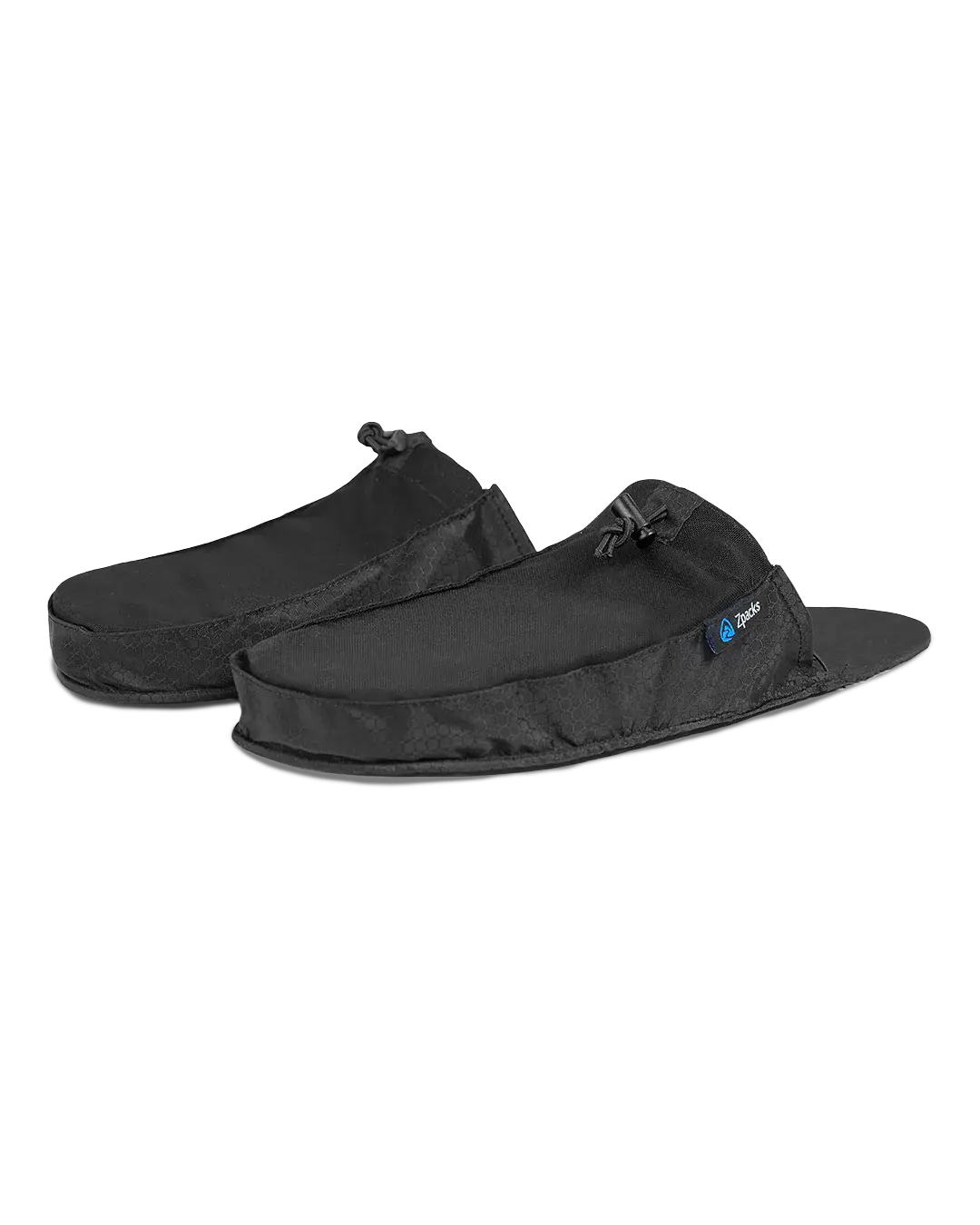
Overview
The Zpacks Ultralight Camp Shoes are a closed-toe, clog-style slip-on built from the same Robic ripstop nylon the company uses in its packs, with a 4 mm foam sole underneath. At 53 g for the pair, they weigh less than a single Xero Shoes Z-Trail sandal. They are made for hikers who want something between their feet and the dirt at camp, and who will accept that “something” is very little.
Key Specs
| Spec | Detail |
|---|---|
| Weight | 53 g (pair) |
| Sole | 4 mm foam with light wavy tread |
| Upper | 100D Robic ripstop nylon (front and sides), Lycra mesh (top) |
| Closure | Adjustable shock cord at the heel |
| Packability | Packs flat or rolls |
| Style | Slip-on, open back, closed toe |
| Waterproof | No |
| Insulation | None |

Would the Ultralight Camp Shoes earn its spot in your pack?
53 g · 1.9 ozAdd the Zpacks Ultralight Camp Shoes to your Gear Closet and see exactly what it does to your base weight, then start packing for your next trip.
Free · No credit card · iOS, Android & web · Trusted by 3,000+ backpackers
Performance
Weight and packability. This is the whole pitch, and it delivers. New Atlas noted that the shoes are lighter than the ultralight alternatives it compared them with, including the 85 g Western Mountaineering Flash Down Booties and the 136 g Exped Camp Slipper. The North Face NSE Tent Mule IV, at 228 g, is more than four times heavier. Published weights vary a little by size and scale, from roughly 51 g up to 2.8 oz (about 79 g) for a men’s XXL tested by Backpacker. The shoes lie flat against a pack wall or roll up, and one UK-based owner who normally skips camp shoes said he has taken them on every trip since buying a pair. His main complaint is that he sometimes finishes packing and then realizes he has left them behind. A shoe that disappears into a pack gets forgotten.
Camp comfort. The mesh top lets feet air out and dry, and the ripstop sides and toe keep out pine needles, grit and the odd sharp twig. The shoes work with or without socks. The roomy cut also leaves space for thick socks or down booties, and Zpacks’ own marketing leans on that cold-evening use. Backpacker’s testers found them the easiest of three ultralight camp shoes to get on and off. They could slip them on one-handed, or cinch the heel cord and walk a few hundred yards to a water source.
Underfoot protection. The sole is thin, and every reviewer says so. One owner reports that he can still feel pointy stones, roots and pinecones, though rough ground is far more tolerable than in bare socks. Backpacker rated the protection about on par with other ultralight camp shoes and suggested a thin insole or felt pad for extra cushion. Zpacks’ own description frames them as shoes for around camp, and New Atlas stresses that they are not for extended side hikes, wading or scrambling.
Water. Backpacker’s testers found the Zpacks more capable than they expected. They were the only shoe in that three-way test to exceed expectations on river crossings. The foam sole gripped better than the competitors’, the mesh drained quickly, and the shoes dried fast. The testers would not trust them in deep or swift water, but slow, knee-deep crossings of a rocky river were manageable.
Fit. The shoes run large. Backpacker’s size 14 tester had about an inch of spare sole, which made walking a bit awkward and tripping easy, though trimming the back of the sole with scissors is a simple fix. One video reviewer also noted a slight tendency to slide on the foot. Anyone between sizes should size down.
Durability. Owner reports are positive but short on long-term data. Backpacker’s testers noted that the shoes are less durable than heavier camp shoes. One reviewer suspects the foam sole could crack over time if the shoes are rolled for storage. Another flagged the stitching under the sole as a likely wear point. These are plausible weak spots in a 53 g shoe, not documented failures, and the price makes them easy to forgive. Reviewers have cited a price in the mid-$30s.
Pros & Cons
Pros
- 53 g per pair, lighter than any enclosed camp shoe or slipper in the comparisons reviewers have made
- Packs flat or rolls, so it fits in a full pack
- Breathable mesh top and ripstop sides keep out debris and dry quickly
- Heel cord allows a secure fit for short walks and easy one-handed entry
- Handles knee-deep, slow river crossings better than other ultralight camp shoes in Backpacker’s test
- Roomy enough for thick socks or down booties
Cons
- Thin 4 mm sole transmits stones and roots
- Runs large, which can make walking awkward without trimming
- Not waterproof and not insulated
- Sole and underfoot stitching may wear faster than on heavier shoes
- Not meant for anything beyond a short walk around camp
Who Should Buy This
Thru-hikers and gram-counters who want to get out of wet trail runners at night, and who currently carry nothing or a pair of 200 g sandals, get the most from these. They suit hikers in three-season conditions who plan to wear them mostly with socks, and who want a closed toe to keep out bugs and grit. Hikers who plan to wade, collect firewood on rough ground or walk to a distant trailhead restroom should look at a sandal, a clog or a lightly cushioned slipper. Anyone who wants warmth should pair these with insulated socks or choose a down bootie.
Verdict
The Zpacks Ultralight Camp Shoes do one job and weigh almost nothing doing it. Backpacker called them the one ultralight camp shoe it would seriously consider for a thru-hike, and the combination of weight, packability and price is hard to match. Size down if between sizes, expect to feel the ground, and don’t ask them to be more than camp shoes.