Timberland White Ledge Waterproof Mid Hiker Boot Review
A budget-friendly full-leather mid hiker that's comfortable out of the box, but is it durable enough for real trail use? Here's what I found.
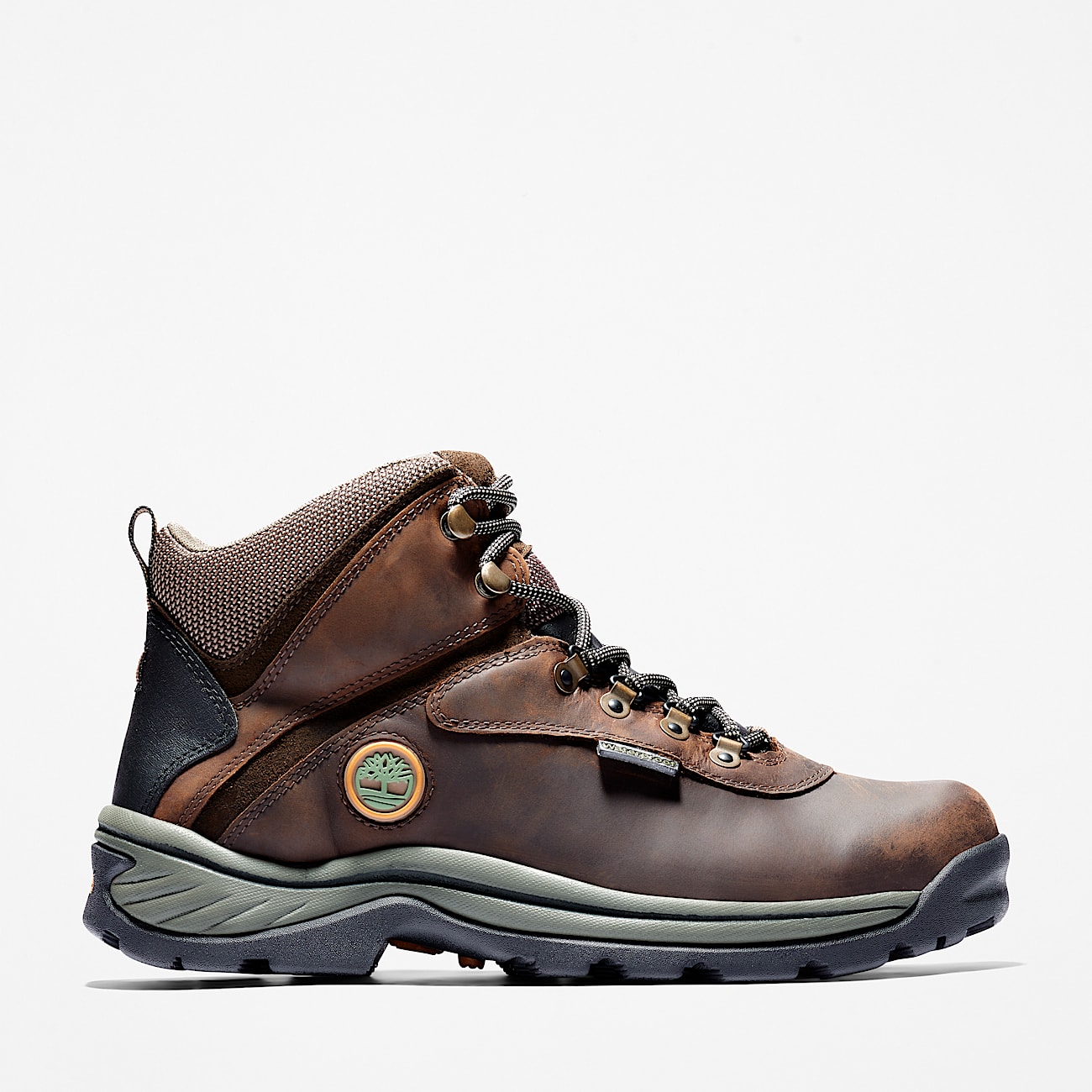
Overview
The White Ledge is Timberland’s entry-level leather hiking boot, and it’s been a mainstay of the “affordable hiking boot” conversation for well over a decade. It’s built around a full-grain waterproof leather upper, an EVA midsole, and a lugged rubber outsole — the classic recipe for a boot that looks at home on a job site or a casual day hike. This one’s aimed at people who want a durable-looking, no-fuss boot for light trail use without spending Salomon or Merrell money, not ultralight backpackers chasing grams.
Key Specs
| Spec | Detail |
|---|---|
| Weight | 539 g / ~19 oz (single boot, size 10) |
| Upper material | Premium waterproof leather |
| Construction | Seam-sealed |
| Midsole | EVA |
| Footbed | EVA |
| Outsole | Solid rubber, multi-directional lugs |
| Lacing | Rustproof speed lace hardware with lace hooks |
| Lining | ReBOTL fabric (50%+ recycled plastic) |
| Shaft height | 5 in |
| Heel height | 1.5 in |

Build your Gear Closet
View all of your gear in one place, create packing lists and hit the trail with confidence. Available on iOS, Android and the web.
Get StartedPerformance
Comfort and fit. This is where the White Ledge earns most of its reputation. Multiple reviewers note that the leather is soft enough out of the box that there’s little friction getting them on and hiking right away, since the leather is soft and well-conditioned with a minimal break-in period. That’s a genuine point in its favor for a full-leather boot — plenty of leather hikers need a week of wear before they stop feeling like bricks. Fit runs best for medium-to-high volume feet; the wide, durable laces run through metal eyelets, making it easy to get a snug fit as long as you have a medium or high-volume foot. Narrow-footed hikers may find it sloppy without an aftermarket insole.
Weight and on-trail feel. At 539 g per boot (about 1.1 lb), it’s noticeably lighter than you’d expect from a full-leather, seam-sealed boot with a 5-inch shaft. OutdoorGearLab’s testers made the same observation, noting these boots are actually quite light for the style, and testers hardly noticed them while hiking. That’s a real plus if your hiking is mostly day-hike or light-backpacking mileage — you’re not hauling around a construction boot.
Waterproofing. The seam-sealed leather construction does what it says on casual to moderately wet trail conditions. Testing found the leather upper with sealed seams does a good job of keeping water out, and even without a waterproof membrane, feet stayed surprisingly dry. Don’t expect miracles, though — it didn’t handle a five-minute full immersion test well, with water leaking in over the forefoot, though it kept feet dry through wet grass and puddle splashes. Translation: fine for dewy mornings and stream splashes, not for wading. Some longer-term owners also report the waterproofing fading with heavy use — one review flagged that the waterproofing may diminish after 6-7 months of heavy, consistent use. A yearly application of leather conditioner/waterproofing wax will help here.
Traction and support. The multi-directional lug pattern handles mixed terrain reasonably — nothing exceptional, nothing alarming. One long-term Trailspace reviewer who used the boots across five years of “well maintained trails to harsh desert bushwacking” summed it up as a comfortable and durable boot with average grip. The 5-inch shaft and padded collar give a reasonable amount of ankle support for a mid-height boot, though it’s not going to feel like a rigid backpacking boot under a heavy pack.
Durability — the mixed part of the story. This is the boot’s biggest point of disagreement across reviews. Some owners report years of solid service — the same Trailspace long-termer noted using the boots on and off for about five years across different environments, and finding the uppers pretty durable and waterproof. But it’s not universal. Multiple more recent write-ups flag sole delamination as a recurring complaint, with reports that some users have reported issues like delamination and insufficient ankle support and that some users report issues with the outsole separating from the leather upper at the toe over time. Given the boot’s budget price point, this isn’t shocking — corners get cut somewhere — but it’s worth going in with realistic expectations rather than assuming heirloom-quality construction.
Pros & Cons
Pros
- Genuinely comfortable out of the box with minimal break-in for a full-leather boot
- Light for the category at 539 g per boot
- Seam-sealed leather handles everyday wet conditions (rain, dew, puddles) well
- Classic looks that work as a casual shoe, not just a trail boot
- Budget-friendly price relative to premium leather hikers
Cons
- Not immersion-proof — expect leaks if you’re wading through deep water
- Sole/upper delamination reported by a meaningful number of long-term users
- Waterproofing can degrade after several months of heavy use without re-treatment
- Average traction and support — not built for technical terrain or heavy pack loads
- Best suited to medium/high-volume feet; narrow feet may find the fit loose
Who Should Buy This
The White Ledge makes the most sense for casual day hikers, dog walkers, and people who want one boot that can do yard work, light trail miles, and errands without looking or feeling like a work boot. If your idea of “hiking” is well-maintained trails, occasional wet grass, and moderate distances, this covers it comfortably and cheaply. It’s a harder sell for anyone doing regular backpacking trips, technical terrain, or multi-day wet-weather use, where the delamination reports and modest support start to matter more.
Verdict
The White Ledge delivers on comfort and everyday waterproofing at a price that undercuts most leather hiking boots, but the durability story is inconsistent — some owners get years out of them, others see the sole separate well before that. I’d call it a solid pick for light, casual use and a riskier bet if you’re putting serious backcountry miles on it. On a 1-10 scale, I’d put it at a 6.5: good value for what most people actually use a hiking boot for, but not a boot I’d trust on a demanding trip without a backup plan.