Salomon Quest 4 GORE-TEX Review
The Salomon Quest 4 GORE-TEX is a stiff, protective 663 g-per-boot backpacking boot built for heavy loads, not for ultralight miles.
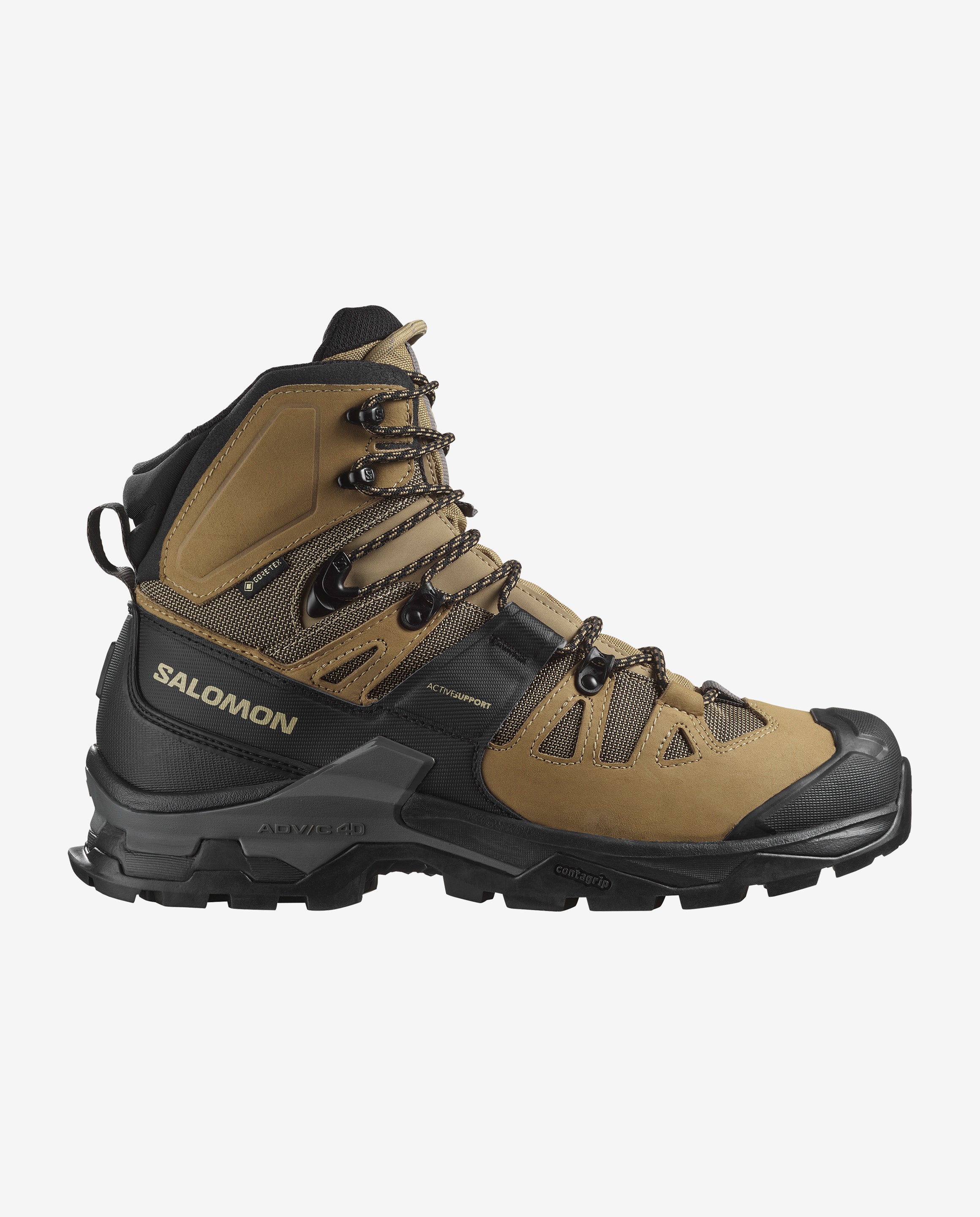
Overview
The Salomon Quest 4 GORE-TEX is a high-cut, waterproof leather-and-mesh backpacking boot. It’s built around a stiff chassis that keeps ankles upright under heavy loads on rough ground. That’s the opposite of the ultralight approach, so the trade-off is simple: you get excellent stability and protection, and you pay for it with weight, bulk, a break-in period and slow drying.
Key Specs
| Spec | Detail |
|---|---|
| Weight | 663 g per boot (about 1.3 kg per pair) |
| Shaft height | 5.5 in |
| Upper | Nubuck leather and mesh |
| Waterproofing | GORE-TEX liner |
| Midsole | EnergyCell EVA foam |
| Chassis | 4D Advanced Chassis |
| Outsole | Contagrip TD |
| Price | About $230 |

Would the Quest 4 GORE-TEX earn its spot in your pack?
663 g · 23.4 ozAdd the Salomon Quest 4 GORE-TEX to your Gear Closet and see exactly what it does to your base weight, then start packing for your next trip.
Free · No credit card · iOS, Android & web · Trusted by 3,000+ backpackers
Performance
Stability and support. This is the Quest 4’s reason for existing. Outdoor Gear Lab’s testers wore it with moderate and heavy packs and singled out its confidence-inspiring stability, and they recommend it mainly for backpacking. The 4D Advanced Chassis adds structure to the outer foot without turning the boot into a plank. The high collar and lacing hold the ankle firmly. CleverHiker’s testers say the boot comes into its own with loads of 40 lb or more. Under that weight, the boot’s stiffness works in its favor.
Traction. The Contagrip TD outsole gets consistent praise for gripping a wide range of surfaces, including wet rock and loose shale. Live For The Outdoors’ testers found the rubber balances tackiness and longevity well. They noted that the heel breast isn’t sharply undercut, so descents on soft slopes get less bite than in some rivals. Better Trail’s testers rated traction 4 out of 5.
Cushioning. The midsole is EnergyCell EVA, not the firmer polyurethane common in heavy boots. It feels more forgiving over long days. The trade-off is that EVA resists long-term compression less well than PU. RunRepeat’s lab measured heel shock absorption below the average of the boots it tests, so “forgiving” here means relative to other stiff boots, not relative to a trail runner.
Waterproofing and drying. Reviewers who submerged the boots to the tongue line report dry feet. The GORE-TEX liner and a leather upper that sheds water get high marks from RunRepeat and Outdoor Adept. The downside is the usual one. Several leather and textile panels plus a membrane mean a soaked boot takes a long time to dry. The same layers run warm in summer heat, and the boot suits cool and cold conditions better.
Durability. Lab and field testers mostly report strong results. Outdoor Gear Lab tested the boot longer than usual with no durability problems. CleverHiker’s testers bushwhacked and hiked rocky Cascade trails without significant wear. RunRepeat’s toebox abrasion test gave it a top score. Owner reports on retail sites are more mixed. A minority describe soles wearing quickly or separating, and a few describe wet feet after puddle crossings. Testers have flagged the upper’s many seams and the midsole bonding as places to inspect after hard use.
Fit and break-in. The fit runs medium in width with enough room that wide-footed owners often report a good match. Some owners size up a half size for toe room. CleverHiker’s testers note a break-in period and that the boot feels bulky on short outings. Owners also report fatigue over long days in a boot this heavy.
Weight. At 663 g per boot, this is a different category from the trail runners and light mids that dominate thru-hiking. A boot weighs roughly twice what a typical trail runner does, and weight on the foot costs more energy than weight in the pack. Salomon’s trail-running heritage keeps the Quest 4 more agile than a traditional leather mountaineering boot. It remains an expedition-weight boot, and testers describe it that way.
Pros & Cons
Pros
- Highly stable under heavy loads, with a supportive chassis and high collar
- Grippy Contagrip TD outsole across wet and loose terrain
- GORE-TEX liner keeps feet dry through deep puddles and creek crossings
- Protective rubber toe cap and robust upper handle rock and bushwhacking well
- Usually requires less break-in than traditional all-leather boots
- Lab and expert testing indicates strong durability
Cons
- At 663 g per boot, far heavier than trail runners or light hikers
- Slow to dry once wet and warm in hot weather
- Mixed owner reports on sole bonding and long-term waterproofing
- EVA midsole may compress over time
- Stiff and bulky on short or fast hikes
- About $230
Who Should Buy This
The Quest 4 suits backpackers carrying heavy loads over rough, off-trail or snowy terrain. That includes winter and shoulder-season trips, hunting packouts, mountaineering approaches, and anyone with weak ankles who wants a supportive structure. It’s also a good fit for hikers who simply prefer a boot and will give up weight for security.
Thru-hikers and ultralight backpackers with base weights under 15 lb should look elsewhere. A pack that light doesn’t need this chassis, and the added weight, slow drying and heat will cost more than they return. Light mid-height hikers or trail runners are a better match. Warm-weather hikers and anyone who expects to wade streams daily should also skip it, since wet leather and a membrane dry slowly.
Verdict
The Salomon Quest 4 GORE-TEX is a well-regarded heavy-duty backpacking boot with stability, grip and weather protection that few boots at its price match. It earns a high score for what it’s built to do, but its weight and slow drying keep it from the ultralight world. Buy it for heavy loads and rough ground. For a light pack on a long trail, wear something lighter.