Lowa Renegade GTX Mid Review
The Lowa Renegade GTX Mid is a stiff, durable Gore-Tex leather boot built for heavy loads and wet trails, with a weight penalty ultralighters will feel.
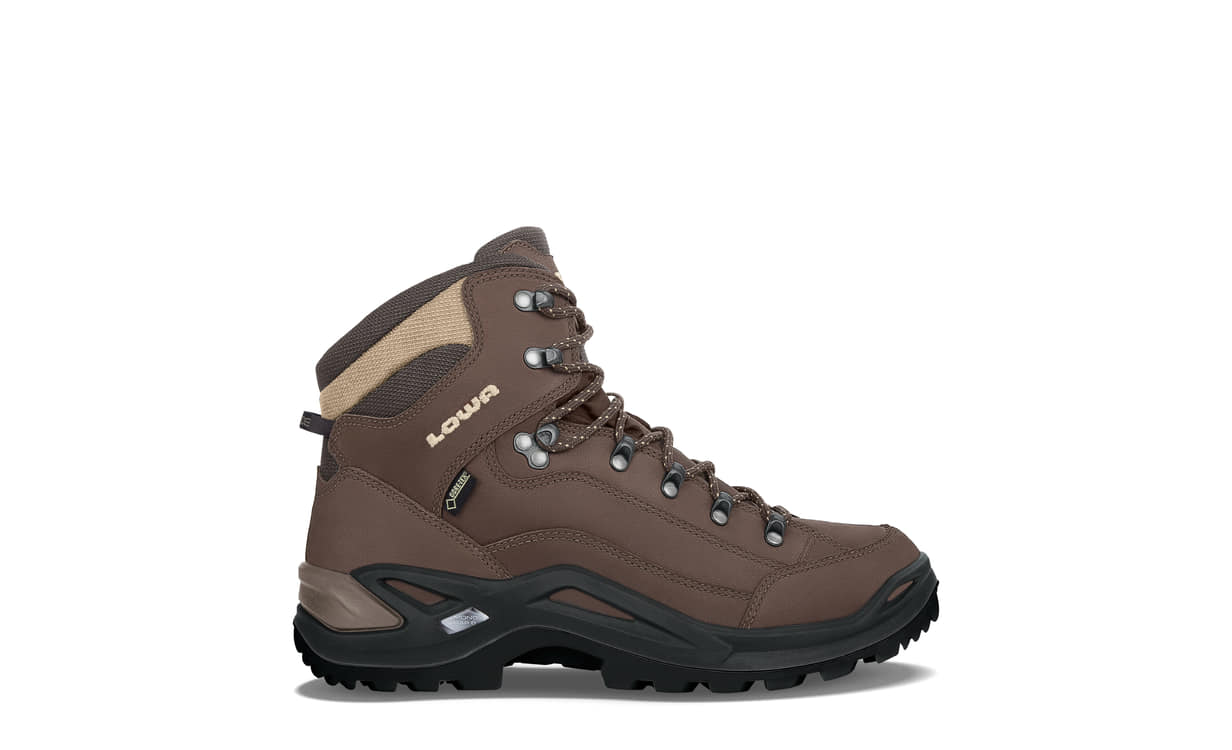
Overview
The Renegade GTX Mid is the kind of boot that looks the same in a 1997 trailhead photo as it does today: nubuck leather, tall cuff, Gore-Tex lining, Vibram sole. It has been Lowa’s bestselling hiking boot since launch, and it earns the spot with stability under load and a fit that rarely needs a break-in period. The trade-off is plain. At 41.6 oz per pair, it is a boot for hikers who want protection and support more than they want to shed ounces.
Key Specs
| Spec | Detail |
|---|---|
| Weight (pair) | 41.6 oz (about 1,180 g) |
| Upper | Nubuck leather |
| Waterproofing | Gore-Tex lining |
| Outsole | Vibram |
| Midsole | DuraPU / DynaPU polyurethane |
| Cut | Mid, higher than many boots in the class |
| Best use | Backpacking, hiking |
| Widths | Standard and wide (narrow also offered in some markets) |

Build your Gear Closet
View all of your gear in one place, create packing lists and hit the trail with confidence. Available on iOS, Android and the web.
Get StartedPerformance
Support and stability. This is the Renegade’s calling card. Outdoor Gear Lab’s testers rated it among the top scorers for stability, crediting a full-length nylon shank that keeps the boot feeling burly on rough, uneven ground. RunRepeat’s lab review credits the shank and a midsole that wraps the foot, and found little compression underfoot. Better Trail’s testers hauled 40-pound packs over rocky trail in Havasupai, descended wet metal ladders, and worked steep alpine terrain in Norway’s Lofoten Islands. They said the boot gave them confidence in places where a slip is expensive. CleverHiker calls it exceptionally supportive for heavy loads on rough terrain.
Comfort and fit. Most reviewers describe the boot as comfortable out of the box. Switchback Travel went straight from box to a multi-day trip in Washington’s Alpine Lakes Wilderness without trouble, and Advnture praised the roomy, blunt toe box and padded tongue and collar. Outdoor Gear Lab noted a tailored upper that hugs the foot more than most midweight boots, plus a noticeable forefoot rocker at push-off. Not everyone agrees on the ride. Better Trail’s testers split, with leather-boot veterans finding it quick to mold and others finding it stiff and unforgiving. One reviewer had to step up to the wide last to get enough toe room. Wide sizing is available, and for anyone with a broad forefoot it is the better starting point.
Waterproofing and warmth. The Gore-Tex lining keeps water out reliably, and the tall cuff adds margin in bogs and stream crossings. Owners report that the waterproofing holds up over time. One long-term owner reports nine years of use with the boots still dry and supportive. The cost is breathability. RunRepeat’s lab found the upper opaque and insulated, and several reviewers describe the boot as warm. It is a shoulder-season and cold-weather boot more than a July one. In heat, T3 suggests swapping to a fabric boot or low-cut shoe.
Traction. The Vibram outsole grips well on wet and dry surfaces, according to RunRepeat and T3. Better Trail found it dependable on most surfaces. The current Evo version adds a Vibram Ren-Trac outsole, fewer seams and a redesigned sole package.
Durability. An all-leather upper with double stitching holds up to abuse. In RunRepeat’s abrasion test, the leather finished with only a faint scuff, though the seams took the damage. Reviewers do flag the number of seams on older versions, which the Evo’s revisions address. One owner survey flagged a bonded sole that can’t be easily resB-soled and a restrictive 24-month warranty. Leather also needs more care than a fabric boot: cleaning and conditioning to keep it supple and water-resistant.
Weight. At 41.6 oz per pair, the Renegade is light for a full-leather backpacking boot, a point Outdoor Gear Lab and Switchback Travel both make. By ultralight standards it is still heavy. Advnture lists it as warmer and heavier than fabric-upper alternatives, and Outdoor Gear Lab says other boots beat it on most metrics while weighing less.
Pros & Cons
Pros
- Excellent stability and ankle support under heavy loads
- Comfortable with little break-in for most feet
- Reliable Gore-Tex waterproofing and a high cuff for wet ground
- Durable nubuck upper and Vibram outsole that can last for years
- Wide sizing improves the odds of a good fit
Cons
- 41.6 oz per pair is far from ultralight
- Warm and not very breathable in summer conditions
- Stiff feel, with little cushioning, for those used to trail runners
- Expensive, with the Evo listed around $280
- Leather needs regular care
Who Should Buy This
Hikers carrying 35 pounds or more, working off-trail, or heading into cold, wet and rough country will get the most from the Renegade. It also suits anyone who wants a boot to wear for years rather than a season, and those with high arches or weak ankles who value structure. Ultralight thru-hikers on well-graded trails with sub-20-pound base weights should look at trail runners or a lightweight fabric boot instead. So should anyone hiking mostly in hot, dry climates.
Verdict
The Renegade GTX Mid is a heavy-duty, long-lived boot that does exactly what a classic leather backpacking boot should: carry big loads, stay dry and keep ankles steady. It costs weight and breathability, and ultralighters will rarely need it. For the hiker who does need a boot, it ranks among the best.