Lowa Camino GTX Review
The Lowa Camino GTX is a stiff, waterproof leather backpacking boot for heavy loads and rough ground. It is also far heavier than anything a thru-hiker usually wears.
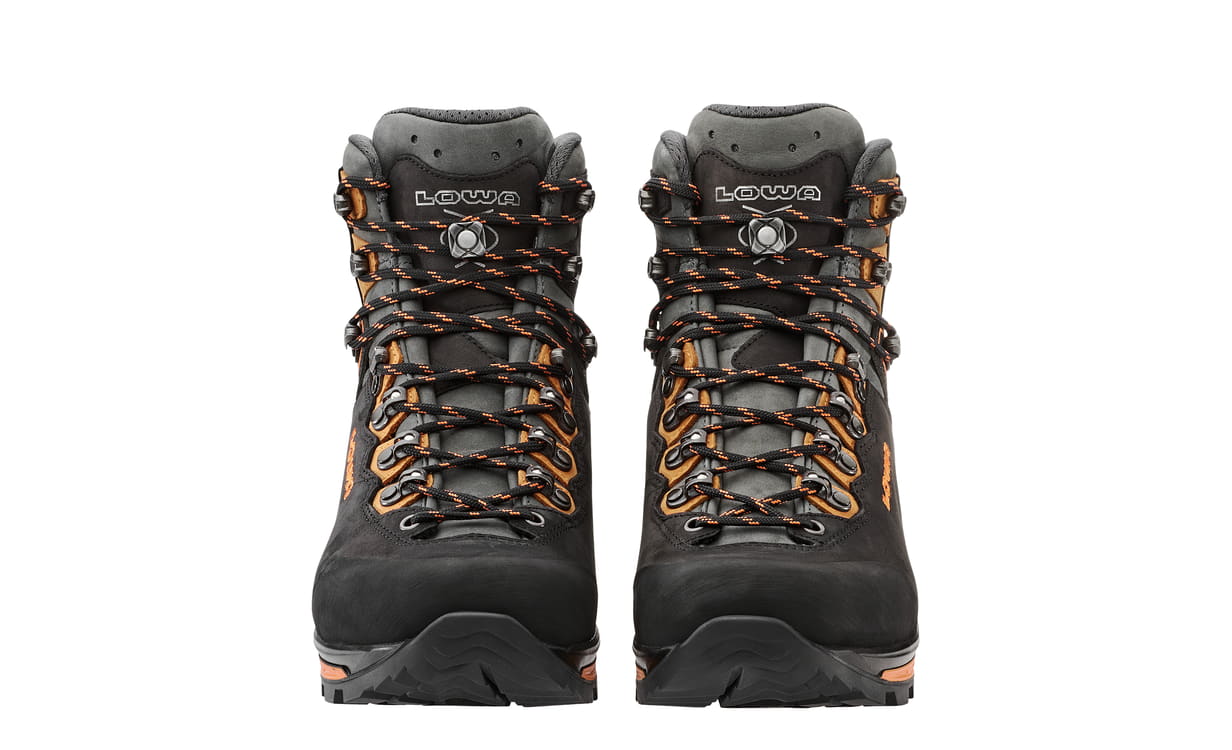
Overview
The Lowa Camino GTX is a full-leather, over-the-ankle backpacking boot. It is built for hikers who carry heavy packs over rough ground and want a stiff platform under them. At 1,550 g per pair, it sits well outside ultralight territory. In exchange, it offers support, protection and a service life that trail runners can’t match.
Key Specs
| Spec | Detail |
|---|---|
| Weight | 1,550 g per pair (about 52 oz; Lowa has also been cited at 54 oz) |
| Upper | Nubuck leather |
| Lining | Waterproof GORE-TEX |
| Outsole | Vibram AppTrail |
| Midsole | PU with SPS Cushion and Fluke Technology |
| Stabilizer | 5 mm nylon in the heel, 3 mm in the forefoot |
| Lacing | LOWA Flex / X-Lacing |
| Cut | Over-the-ankle |
| Resoleable | Yes |
| Width | Wide version available |

Would the Camino GTX earn its spot in your pack?
1550 g · 54.7 ozAdd the Lowa Camino GTX to your Gear Closet and see exactly what it does to your base weight, then start packing for your next trip.
Free · No credit card · iOS, Android & web · Trusted by 3,000+ backpackers
Performance
Support and stability. The Camino’s reputation rests on its chassis. A firm PU midsole and a nylon stabilizer sit under thick nubuck. Owners describe a platform that stays composed under big loads. One forum user called it stiff enough for a mountain boot with a 60-pound pack on steep, deep terrain. A tester who reviewed the related Camino Evo found the feel close to a light mountaineering boot, with the midsole isolating the foot from rock. The stiffness also helps on small edges and steps. A climber who tested the Camino praised its confidence on them.
Comfort and break-in. Most owners report little or no break-in. One reviewer wore them straight from the shop through a long day on rough ground with no soreness. Hunters who logged more than 80 hard miles with heavy loads in them said the same. Not everyone agrees. Testers of the Camino Evo called the leather stiff and unyielding at first, and the boot stayed firm after several outings. The safest reading is that the fit is forgiving for many feet, but the boot never becomes soft.
Lacing and fit. The Flex lacing uses ball-bearing lace loops on free-moving tabs, which lets hikers set separate tension zones over the instep and the ankle. Owners say this removes pressure points and locks the foot in. The roller eyelets make it easy to overtighten, so some hikers adjust the laces a few times early on. One owner had heel slip on a very steep hill and returned the boots. Another found the two-lace top section gave less ankle hold than a three-lace design. The wide version is noticeably wider, and one buyer found a few pairs ran small.
Traction. The Vibram AppTrail outsole gets steady praise. One hiker kept his footing on wet, slick rock above treeline after a summit push. A forum user called traction great in all conditions.
Waterproofing. Most reports are good. A UK reviewer partly submerged the boots to find their limit and said water only got in over the collar. A hunter who spent a week in wet weather reported dry feet. But some owners report leaks. One owner’s first pair leaked on a rainy New Hampshire climb, and REI replaced it. A forum user said he put up with wet feet for years. As with any GORE-TEX leather boot, a liner failure is the weak point, and nubuck needs regular cleaning and waterproofing treatment. Lowa recommends a wax cream rather than oil, which can soften the leather and shorten its life.
Weight. At roughly 775 g per boot, the Camino is not a light boot. Owners tend to describe it as light for what it is. One reviewer noted that it weighs less than Lowa’s Tibet, at 1,900 g a pair. Another called it a sweet spot among leather boots for weight, comfort and durability. It is still more than double what most trail-running shoes weigh. Under a light pack, that extra mass costs energy on every step.
Durability. Reviewers consistently call the build overbuilt. Resoleability is a real advantage. The Camino can be rebuilt rather than replaced.
Limits. A hunting reviewer wouldn’t choose the Camino for all-day off-trail climbing in very steep country. He wanted more ankle support, firmer heel lockdown and a stiffer sole there. Nor is it insulated, although one owner wore it through a cold, wet Chicago December without extra socks.
Pros & Cons
Pros
- Stiff, stable platform that handles heavy loads
- Vibram AppTrail grip on wet rock and mixed terrain
- Flex lacing allows zone-by-zone fit tuning
- Many owners report little or no break-in
- Resoleable, with a long service life
- Wide version available
Cons
- 1,550 g per pair is heavy for most backpackers
- Stiffness is overkill on groomed trail
- Some owners report leaks or heel slip
- High-priced for a boot that suits a narrow use case
- Nubuck needs regular cleaning and waterproofing
- Less than ideal for dry, hot-weather hiking
Who Should Buy This
The Camino suits backpackers who carry 40 pounds or more, hunters packing out meat, and anyone who needs ankle and foot protection on rocky, uneven ground. It also suits hikers who want a boot that can be resoled for years. Thru-hikers on well-maintained long trails, and anyone with a base weight under 15 pounds, should look to trail runners or lighter shoes instead. So should hikers who need a stiffer, more locked-down boot for relentless steep off-trail climbing.
Verdict
The Camino GTX is a durable, supportive boot with excellent traction. It is also one of the heavier ways to cover miles. For heavy loads and rough terrain, it’s a fair buy. For a standard ultralight setup, the weight alone rules it out.