La Sportiva Nepal Cube GTX Review
La Sportiva's Nepal Cube GTX is a leather, insulated, fully crampon-compatible mountaineering boot built for winter alpine, ice and cold-weather peaks. It is not a trail shoe.
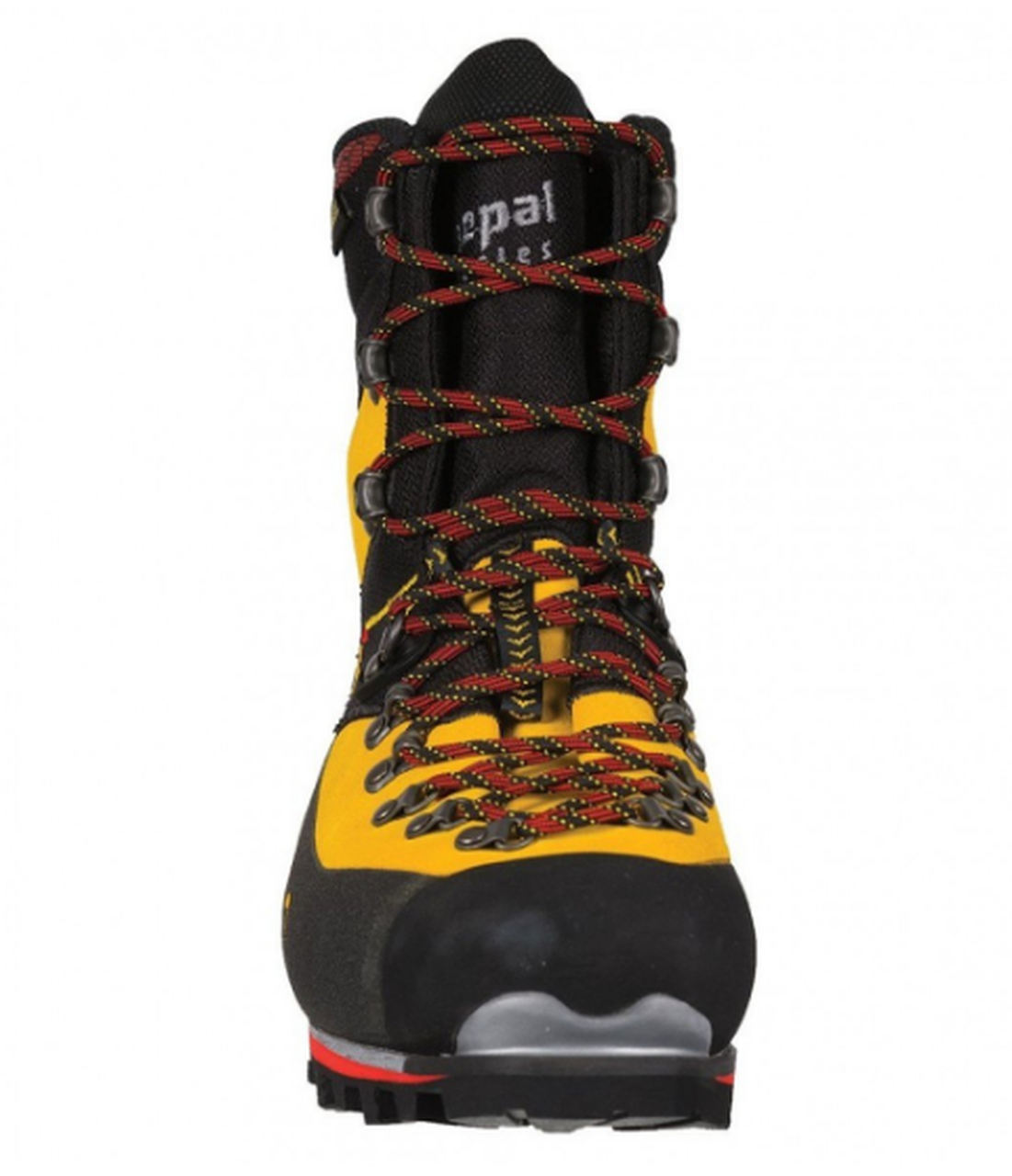
Overview
The Nepal Cube GTX is a single-layer leather mountaineering boot with a Gore-Tex Insulated Comfort liner, a stiff Vibram sole and a full rubber rand. It is made for winter alpine routes, glacier travel, mixed ground and steep ice. For lightweight backpackers it is the wrong tool for a thru-hike, and the right one for the trip where a trail runner would end in frostbite.
Key Specs
| Spec | Detail |
|---|---|
| Weight | 894–950 g per boot depending on version |
| Upper | 3+ mm Hydro Perwanger leather, waterproof |
| Lining | Gore-Tex Insulated Comfort |
| Lasting board | 3 mm Carbon Tech Honey-Comb insulation |
| Midsole | 2 mm polyurethane |
| Outsole | Vibram with Impact Brake System |
| Lug height | 8.5 mm |
| Stack height | 48 mm heel / 28 mm forefoot |
| Drop | 20 mm |
| Crampon compatibility | Fully compatible |
| Technology | Impact Brake System, 3D Flex System |
| Fit | Standard width (not offered in a wide fit) |
| Price | $649 (men’s, US) |
Versions compared
| Version | Weight | vs. lightest |
|---|---|---|
| Standard | 894 g (31.5 oz) | lightest |
| Men's | 950 g (33.5 oz) | +56 g |

Would the Nepal Cube GTX earn its spot in your pack?
894 g · 31.5 ozAdd the La Sportiva Nepal Cube GTX to your Gear Closet and see exactly what it does to your base weight, then start packing for your next trip.
Free · No credit card · iOS, Android & web · Trusted by 3,000+ backpackers
Performance
Weight and build. At 894–950 g per boot, the Nepal Cube is not light by trail standards. Next to other winter mountaineering boots, it is. One Bozeman-based reviewer put it at only 3.5 oz per boot heavier than La Sportiva’s G5, a gap of roughly 10 percent, and called it far more comfortable. Switchback Travel found the current Cube lighter, stiffer and more rigid than the Nepal Evo it replaced. Early testers credited the weight savings to a thinner insole and midsole stack. The Carbon Tech honeycomb lasting board does the work that bulkier foam did in older Nepals.
Warmth. The Gore-Tex Insulated Comfort liner is slim, and testers describe it as warm without bulk. A UKC Gear reviewer took the boots down to about -5 in Scottish winter conditions and found them warm enough, but said he would not push much colder, and not at high altitude. A Bozeman climber reported cold feet never turned up, even in sub-zero temperatures and after accidental plunges into frozen streams. A low-profile rubberized cuff keeps snow out. The flip side is heat: one long-term owner says the insulation makes them uncomfortable in summer weather.
Climbing and support. The sole is stiff enough for step-kicking and front-pointing. One 7 Summit Stories reviewer, who prefers a stiff sole, found the B3-rated platform still without any flex after 18 months. An Alaskan ice climber on REI notes the boot’s support limits calf fatigue on lead compared with softer, lower-cut boots. Trek & Mountain’s guide-reviewer came to a more guarded view: it is very stiff and a fine all-rounder, but lacks precision on harder technical climbing. The flex through the ankle is smooth and progressive rather than rigid.
Durability. This is the strongest point in the owner reports. UKC Gear saw virtually no wear after several multi-hour alpine approaches and granite scrambling, and called the stitching and gluing top notch. After 18 months, an owner reported tread, laces and leather all in good shape. The yellow leather marks easily and needs care to look presentable.
Fit. The Nepal Cube follows classic La Sportiva geometry: a low-volume, well-cupped heel and a reasonably roomy toe box. REI buyers confirm the pattern, with one wide-footed climber finding it comfortable. Another needed three sizes before a pair passed the triple-kick test without heel lift or forefoot pain. A removable tongue insert lets owners adjust volume and insulation in small steps. Outdoor Gear Lab’s testers praised the lacing system and ankle support, but also reported occasional biting pressure on the top of the foot, which they eased by changing the tongue and lacing. They also noted the round laces coming undone often, and snow collecting in the sole.
Choosing a Version
The two versions differ by 56 g (about 2 oz) per boot: the Standard at 894 g and the Men’s at 950 g. Construction, lining and sole specifications are the same across the Nepal Cube GTX. Fit decides this, not weight. Try both with the sock and tongue configuration planned for the trip, and size by the triple-kick test (the toe should clear the front when kicking a wall) rather than by the number on the box. A gap of about 2 oz per foot matters less than heel lift on a descent.
Pros & Cons
Pros
- Warm, waterproof Gore-Tex Insulated Comfort liner without a bulky feel
- Stiff, fully crampon-compatible sole that handles front-pointing
- Strong build quality; owners report little wear after months of use
- Smooth, progressive ankle flex and good support
- Adjustable tongue insert to tune volume and warmth
- Lighter than the Nepal Evo it replaced, with a lower-profile stack
Cons
- 894–950 g per boot is heavy by any backpacking standard
- Standard width only, with a low-volume heel; sizing can take several tries
- Too warm for summer and not an expedition-grade boot for extreme cold or high altitude
- Some testers report pressure on the top of the foot, round laces that loosen, and snow packing in the sole
- Yellow leather scuffs and needs care; at $649, it is a major investment
Who Should Buy This
The ideal buyer is a winter climber or alpinist who wants one boot for Scottish gullies, Alpine peaks and ice routes. A single pair of Nepal Cubes can handle that range, from general mountaineering to steep ice. Lightweight backpackers who occasionally push into snow and glacier terrain will also find it a sound choice for a few cold-season objectives. Thru-hikers, three-season trekkers and anyone planning high-altitude expeditions in extreme cold should look elsewhere: lighter trail footwear for the first two, double boots or insulated expedition boots for the last.
Verdict
The Nepal Cube GTX is a proven, durable, warm leather mountaineering boot with enough stiffness for ice and enough comfort for long approaches. It is easy to recommend for winter alpine climbing and hard to recommend for anything else. The weight, price and fit demands are real, so buyers should try before they commit.