Arc'teryx Synthetic Mid Sock Review
Packstack is reader-supported. When you buy through links on our site, we may earn an affiliate commission. This does not affect the independence or objectivity of our reviews.
A closer look at Arc'teryx's all-mountain synthetic hiking sock — where it shines, where merino still wins, and who should actually buy it.
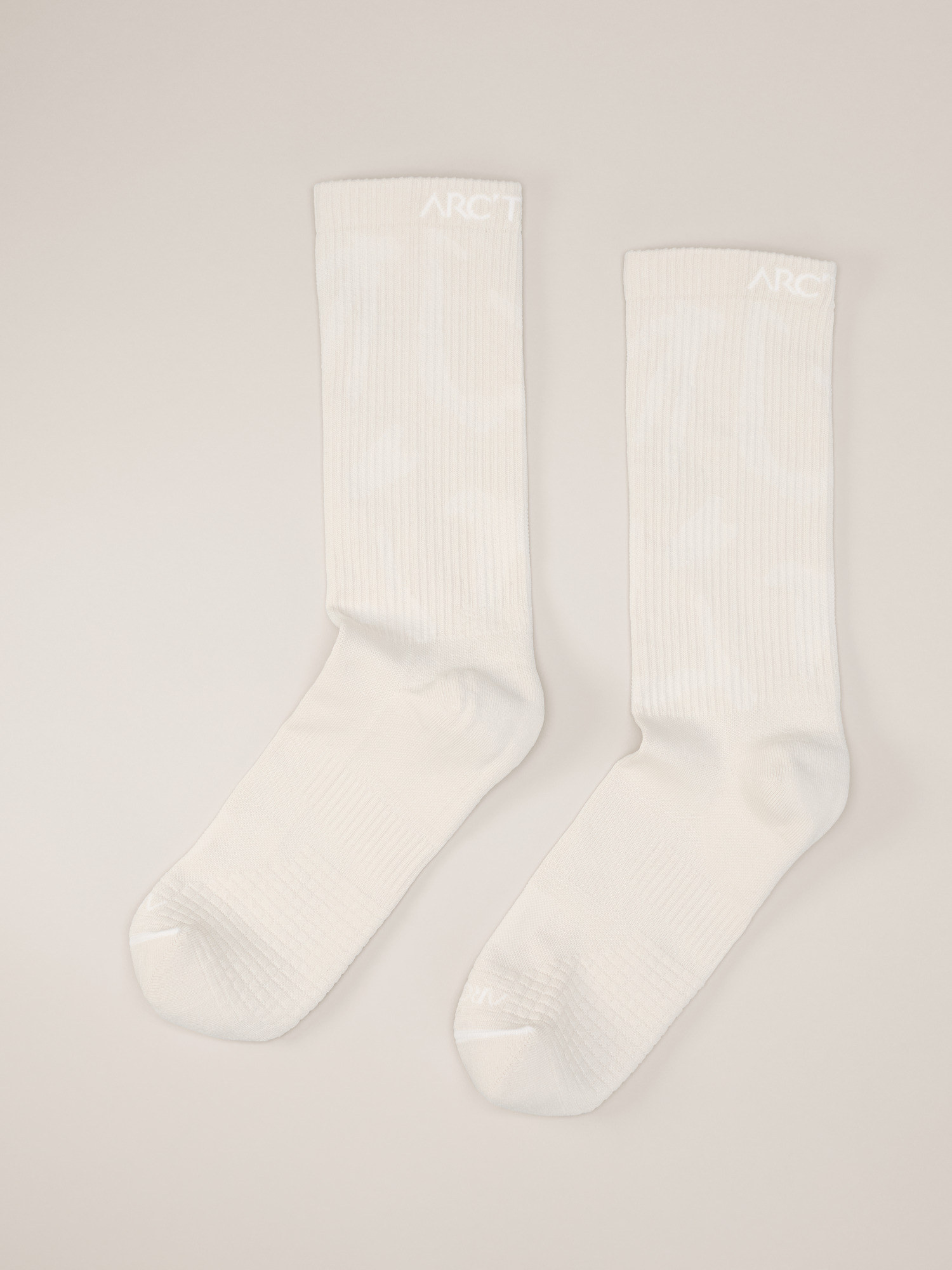
Overview
The Synthetic Mid Sock is Arc’teryx’s do-everything hiking sock — a mid-height, polyester-blend sock built for day hikes, approaches, and trail running rather than multi-day thru-hiking. It sits in the middle of Arc’teryx’s sock lineup: more cushioned than the Ultralightweight Mid Sock, less specialized than the Merino options, and aimed at hikers who want a synthetic sock that dries fast and shrugs off warm-weather miles.
Key Specs
| Spec | Detail |
|---|---|
| Weight | 48.0 g (per pair, size-dependent) |
| Height | Mid-height / crew collar |
| Material | Blended performance polyester yarns |
| Cushioning | Reinforced/targeted in high-friction zones |
| Arch support | Gridded knit construction at arch |
| Toe seam | Standard (not seamless) |
| Sizes | S / M / L / XL |
| MSRP | ~$24 USD |
Would the Synthetic Mid Sock earn its spot in your pack?
48 g · 1.7 ozAdd the Arc'teryx Synthetic Mid Sock to your gear closet and see exactly what it does to your base weight — then build your next packing list around it. Free, in about two minutes.
Free · No credit card · iOS & Android · Trusted by 3,000+ backpackers
Performance
Arc’teryx describes this as an all-mountain sock with reinforced cushioning in high-friction areas, a targeted grid construction at the arch for enhanced breathability and added support, and a mid-height collar to help keep out grit and trail debris. That matches how it feels on foot: there’s noticeably more padding at the heel and forefoot than you’d get from a true ultralight running sock, but it’s still thin enough that it doesn’t feel bulky inside a trail runner or light hiking shoe.
The material story is straightforward polyester rather than a nylon/spandex/merino blend, and Arc’teryx is upfront about the trade-offs on its own site: temperature regulation is better with merino, which adapts to varying conditions, while synthetic excels in warm weather, and synthetic requires more frequent washing since odor resistance favors merino. In practice, that tracks with what most synthetic hiking socks do — they wick sweat fast and dry quickly on the trail, but by day two of a warm, sweaty backpacking trip they start to smell noticeably more than a wool sock would. Arc’teryx itself points hikers toward merino for multi-day trips and variable conditions and reserves the synthetic line for fast day hikes in warm weather, which is honestly good guidance and matches my own experience with synthetic-heavy sock rotations on longer trips.
On the durability side, Arc’teryx claims synthetic typically offers higher abrasion resistance than merino, and that’s plausible — polyester fibers generally hold up better to repeated friction than wool. I haven’t put enough miles on this specific sock to give you a hard number on when the heel or toe starts to thin out, so treat any durability claim here as directional rather than tested. If you’re coming from a merino sock and expect similarly plush, cushioned comfort, temper those expectations — this is a firmer, thinner-feeling knit that prioritizes moisture management over cushioned comfort.
One thing worth noting: independent, hands-on reviews of this specific sock (as opposed to Arc’teryx’s other sock lines or general synthetic-vs-merino sock advice) are thin on the ground. Most of what’s out there is retail copy or roundups of Arc’teryx sale pricing rather than long-term trail reports, so a chunk of what I can tell you comes from the product description and general synthetic sock behavior rather than a deep well of user testimonials.
The mid-height collar is a genuinely useful detail if you’re hiking in low-top trail shoes on loose or sandy trails — it’s tall enough to keep small debris from working its way in over the top of your shoe without being so tall that it bunches under gaiters or pant cuffs.
Pros & Cons
Pros
- Fast-drying, warm-weather-friendly synthetic build
- Reinforced cushioning at heel/forefoot without feeling bulky
- Gridded arch panel adds structure and breathability
- Mid-height collar keeps trail debris out of low-top shoes
- Reasonably priced for a technical hiking sock (~$24)
Cons
- Synthetic yarns hold odor faster than merino on multi-day trips
- Standard toe seam (not the seamless construction Arc’teryx uses on its Ultralightweight sock)
- Less insulating than merino in cold or variable conditions
- Limited independent long-term durability data available
Who Should Buy This
This sock makes the most sense for day hikers, trail runners, and warm-weather backpackers who want a synthetic sock that dries quickly and won’t get soggy on sweaty climbs. If your trips are mostly single-day or short overnighters in mild-to-hot conditions, the Synthetic Mid Sock is a solid, unfussy choice. If you’re planning multi-day trips, cold mountain mornings, or you’re sensitive to sock odor by day two, Arc’teryx’s own merino options — or a merino/synthetic blend from another brand — are the better call.
Verdict
The Synthetic Mid Sock does what a mid-weight synthetic hiking sock is supposed to do: wick moisture, dry fast, and add just enough cushioning without turning into a marshmallow inside your shoe. It’s not the sock I’d reach for on a five-day trip through variable weather, but for day hikes and warm-weather outings it’s a reasonable, moderately priced pick. Call it a 7/10 — solid and purpose-built, just don’t expect it to replace a good merino sock for longer trips.