Ursack Major Review
The Ursack Major is an IGBC-certified, 221 g soft-sided bear sack that cuts about two pounds off a canister, but it won't fly in every canister-only zone.
Overview
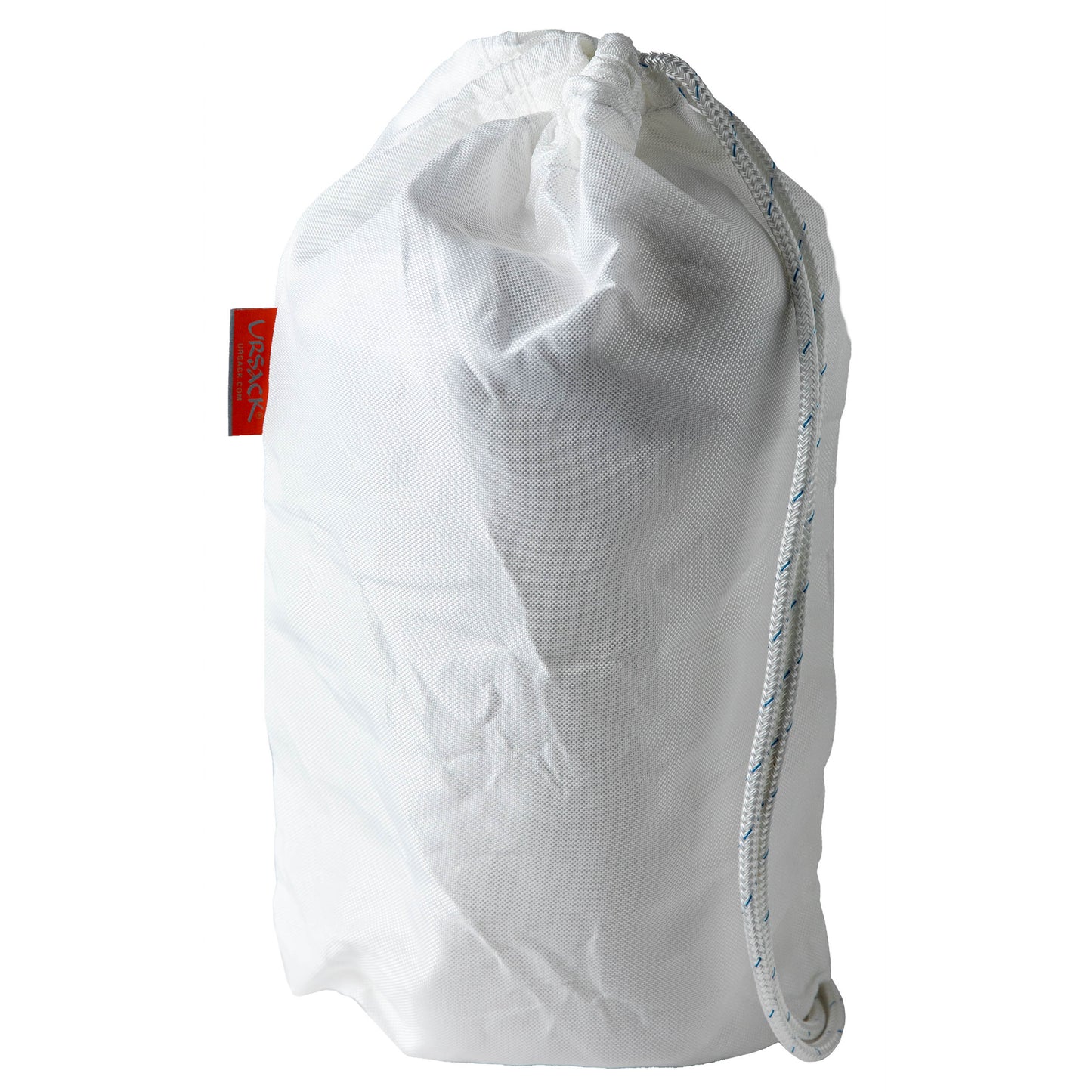
The Ursack Major is a soft-sided, IGBC-certified bear-resistant food sack woven from UHMWP (Spectra) fabric, with a 6-foot cord built into the bag. It’s aimed at backpackers who want legal, bear-resistant food storage without carrying a rigid canister. The trade-off is that a bear can’t get into it, but it can still crush what’s inside, and some land managers don’t accept it.
Key Specs
| Spec | Detail |
|---|---|
| Weight | 221–249 g depending on size |
| Capacity | About 10.7 L (650 cu in) Standard; about 15 L (925 cu in) XL |
| Dimensions | 12.5” x 18” Standard; 12.5” x 22” XL |
| Material | UHMWP (Spectra) fabric |
| Cord | Integrated 6 ft, 2,500 lb tensile strength cord |
| Certification | IGBC certified bear resistant |
| Food capacity | About 5 days for one person (Standard); 7+ days (XL) |
| Made in | USA |
Versions compared
| Image | Version | Weight | vs. lightest |
|---|---|---|---|
| Standard | 221 g (7.8 oz) | lightest |
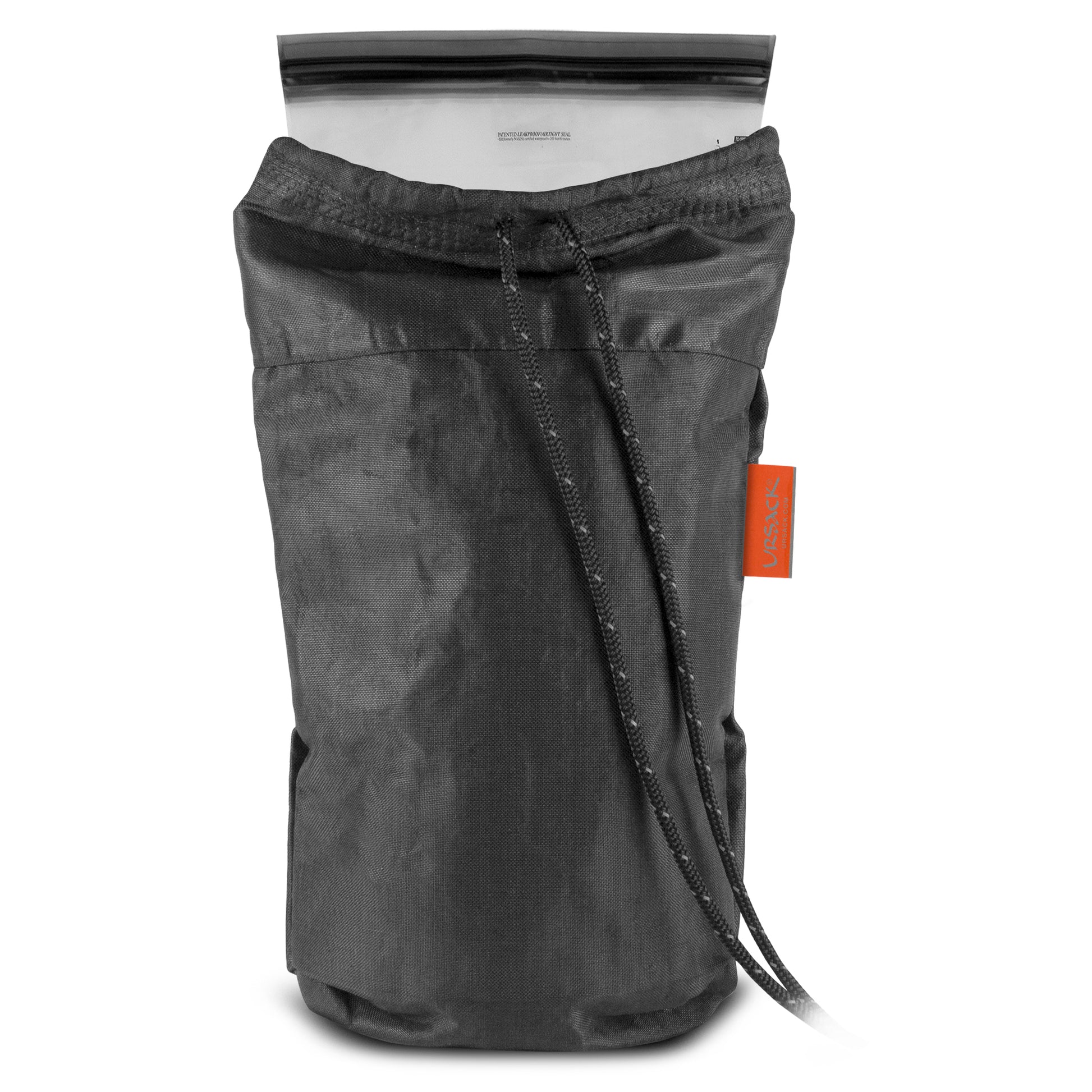 | XL | 249 g (8.8 oz) | +28 g |

Build your Gear Closet
View all of your gear in one place, create packing lists and hit the trail with confidence. Available on iOS, Android and the web.
Get StartedPerformance
Weight and packability. This is the whole pitch. At 221 g, the Standard Major weighs less than a full-size fuel canister. One test comparison from Ultimate Gear Lists found an equivalently sized BearVault canister weighs more than four times as much. Hikers also note that the sack collapses to almost nothing as the food runs down. It also squeezes into the odd gaps in a frameless pack that a rigid cylinder never fits. That is a real advantage on a week-long carry.
Bear resistance. The Major earned its IGBC listing by surviving a bear-contact test, and the Spectra weave is hard for teeth and claws to cut. Reviewers tend to agree on the limit. The bag keeps the food reward away from the bear, but the contents can still be flattened. One Backpacking Light forum thread notes that a sack has to be tied correctly to work at all, and that it asks more skill from the user than a canister does. Greenbelly’s reviewer says the bag needs only a double overhand knot to seal, and Ursack packages a diagram for it. A standard square knot, one Appalachian Trail writer warns, won’t hold against a determined bear.
The Major is also described as critter-resistant rather than critter-proof. Ursack says so itself, placing it below the Kevlar-reinforced AllMitey and the Minor on that count. In mouse-heavy shelters or squirrel-heavy campsites, the Major isn’t the strongest option.
Odor and crush protection. Owners and reviewers consistently treat the sack as one part of a system. Ursack recommends an OPSak odor-barrier liner inside, and trail writers call a smell-proof inner bag close to mandatory. Hikers who want to protect crushable food, such as chips and bars, often add a rigid insert or pack those items in the center of the sack. Those add-ons cost extra money and a little weight. The headline weight figure doesn’t include them.
Wet weather. Ultimate Gear Lists flags that the fabric absorbs water in heavy rain. It’s a minor penalty, but one worth knowing about on a drizzly Cascades trip.
Where it’s legal. This is the Major’s biggest practical constraint. Ursack is not accepted in Yosemite National Park, and a BPL thread notes it isn’t approved in several other canister-only areas. Where the sack is accepted, it must be tied to a fixed object such as a sturdy tree. In treeless alpine camps, that can be a problem. Hikers should check the rules for each wilderness unit on their route before trading a canister for a sack.
Choosing a Version
The two versions share the same fabric, cord and certification. What changes is volume.
Standard (221 g, ~10.7 L, 12.5” x 18”). Ursack rates it for about 5 days of food for one person, or roughly 37 single servings of freeze-dried breakfast, lunch and dinner. One owner on Ursack’s site says it holds a week of food by eating two freeze-dried meals a day. This size suits weekend and 3–5 day trips, and also suits hikers who resupply often on long trails.
XL (249 g, ~15 L, 12.5” x 22”). The XL carries about 50% more volume for 28 g, roughly an extra ounce. Ursack rates it at 7+ days for one person, and one owner reports fitting 8+ days. It’s the better choice for long food carries, big appetites, shared food on a two-person trip, or anyone who stuffs a bulky odor liner inside. The weight penalty is small enough that bigger eaters should default to it. Those who rarely carry more than four days of food can stay with the Standard.
Pros & Cons
Pros
- 221 g (Standard) or 249 g (XL), a fraction of a hard canister’s weight
- IGBC certified bear resistant
- Soft-sided, so it packs flat and fits awkward pack shapes
- Integrated 6 ft, 2,500 lb cord, with no separate hang kit
- Quick to secure: tie it to a tree, no rope-over-branch hang
- Made in the USA
Cons
- Not accepted in Yosemite or other canister-only areas
- Contents can be crushed by a bear
- Needs a proper knot and a sturdy anchor
- Less resistant to rodents and other small animals than the AllMitey
- Odor-barrier liner is a recommended extra purchase
- Absorbs water in heavy rain
Who Should Buy This
The Major suits ultralight backpackers and thru-hikers who travel mostly in areas where the IGBC listing is accepted and where a good tree is usually within reach. That covers many national forests and long-trail stretches outside the canister-only zones. The Standard fits short trips and frequent resupplies. The XL is the one to buy for long carries.
Hikers whose routes cross Yosemite or other canister-only areas should look at an approved canister instead. The same goes for anyone camping above treeline with nothing to tie to, and for those who can’t tolerate a crushed lunch.
Verdict
The Ursack Major delivers certified bear resistance for roughly a quarter of a canister’s weight, and it packs far better than any rigid container. It’s the right buy for ultralight hikers in areas that accept it, as long as the knot, the liner and the local rules are handled before the trailhead. Pick the XL if more than five days of food is common on the route.