LOKSAK OPSAK Odor-Proof Barrier Bags Review
LOKSAK's 12" x 20" OPSAK is a 23 g, 5-mil resealable bag that holds about five days of food. It's cheap and roomy, but durability is a gamble.

Overview
The LOKSAK OPSAK is a thick, clear, double-zippered polyethylene bag sold as an odor barrier for food, toiletries and trash in bear and rodent country. The 12” x 20” size is big enough to serve as a lone food sack on a long weekend or as a scent liner inside an Ursack. The trade-off is plain: a tiny weight penalty and a low price buy a bag that owners say is easy to puncture and best treated as semi-disposable.
Key Specs
| Spec | Detail |
|---|---|
| Weight | 23 g per bag (43–46 g for a two-bag pack) |
| Dimensions | 12 x 20 in nominal; about 12.25 x 20.75 in exterior, 12.25 x 19.5 in interior |
| Material | 5 mil (0.13 mm) patented polyethylene barrier film |
| Closure | Double hermetic zipper |
| Waterproof rating | 200 ft / 60 m |
| Temperature range | -40°F to 170°F; can hold boiling water |
| Food safety | FDA and USDA compliant; NSF-approved food-safe materials |
| Bags per package | 2 |
| Price | About $15.95 for a two-pack at REI |
| Made in | USA |
Versions compared
| Image | Version | Weight | vs. lightest |
|---|---|---|---|
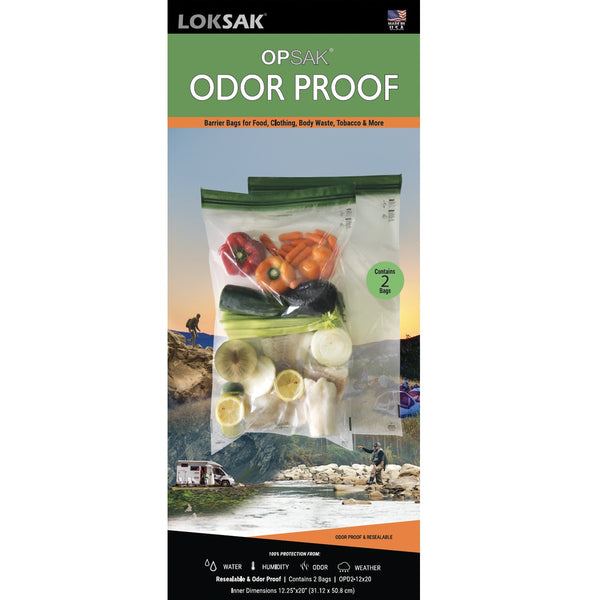 | 12" x 20" | 23 g (0.8 oz) | lightest |
| 2-Pack | 43 g (1.5 oz) | +20 g |

Build your Gear Closet
View all of your gear in one place, create packing lists and hit the trail with confidence. Available on iOS, Android and the web.
Get StartedPerformance
Capacity and fit. The 12” x 20” format is the reason many backpackers pick this bag over the smaller OPSAK sizes. Andrew Skurka, who has used it as both a stand-alone food sack and an Ursack liner, reports it swallows about five days of food, and perhaps six for hikers with modest appetites. The 12-inch width roughly matches a typical bar or sandwich bag, so it packs neatly in a pack’s main compartment. The film is clear, so an owner can see at a glance what’s left of the trail mix.
Odor control. Fresh from the package, the bag is odor-free and holds smells in. Skurka’s long-term take is that it probably stays odor-proof for several days of use, though the outside picks up food smell from handling, and he suggests washing it with soap and water between trips. He also makes a point that matters for the category: ordinary freezer bags, even double-zip ones, don’t contain scent the way the OPSAK film does. His test is easy to repeat at home: seal coffee inside, wrap the bag in a T-shirt, and see whether the shirt smells of coffee a few hours later.
Not everyone buys the marketing. Some Backpacking Light forum members argue that the OPSAK is simply thick polyethylene, and that multilayer barrier films resist odor molecules far better. They also say the “100% odor-proof” claim has failed more rigorous tests. Other members on the same forums report the opposite: they carry OPSAKs inside bear canisters and Ursacks, keep heavily spiced dinners from flavoring the oatmeal, and use them to pack out used toilet paper without complaint. REI reviewers describe sealing up a sick-stained item and an employee’s skunked dog pack with no detectable smell afterward. The practical read is that the bag reduces scent substantially but is no substitute for a canister, a hang or an Ursack where those are required. It is a smell layer, not a bear barrier.
Durability. This is the weak point. REI’s page lists 3.7 stars across roughly 120 reviews, and its most helpful critical review is a one-star complaint about durability. Buyers in the forums describe punctures on first use. Others say that a bag lasts only if it’s handled carefully, and a longtime user estimates 20 to 40 days of use before replacement. REI itself notes that the bags are disposable and must be replaced after extended use. Dedicated users sidestep the problem by keeping the bag inside a stuff sack or an Ursack rather than letting it ride loose against trekking-pole tips and stove corners. A few eBay buyers also say bags from some sellers feel thinner than the ones sold at REI stores, so buying from a known retailer is wise.
Closure and water. The double hermetic zipper works like a freezer-bag zip but is rated to 200 ft underwater, so rain, creek crossings and a wet pack bottom are not threats to the food. Dust and sand stay out as well. The seal is also the source of some owner frustration, as zippers can be fiddly with cold or greasy fingers.
Cooking and rehydration. The film tolerates boiling water, and LOKSAK lists food-contact approvals. Rehydrating a freeze-dried meal in the bag works, but B&H’s listing is explicit that it is not a boil-in or sous-vide bag. For cold-soaking or one-bag meals, a purpose-built freezer bag is the better-known option.
Weight. At 23 g per bag, the OPSAK is the sort of weight a thru-hiker can ignore. REI lists 0.8 oz per bag. Skurka’s earlier review put the same size at 1.5 oz, which suggests the product has been trimmed down over time. Either way, it adds less to a pack than a typical stuff sack.
Choosing a Version
All three listings are the same 12” x 20” bag; the only change is how many come in the package. The single bag at 23 g suits a hiker who wants one food sack or a spare. The two-pack listings, at 43 g and 46 g, are the better value for most people: one bag for food, one for toiletries, trash or a spare when the first gets a pinhole. The few grams of difference between the two pack listings reflect how each is catalogued, not a different product.
Pros & Cons
Pros
- 23 g per bag, with room for about five days of food
- Thick 5 mil film that holds scent far better than standard freezer bags, according to Skurka and many owners
- Waterproof to 200 ft, with a double zipper that keeps out dust, sand and humidity
- Food-contact compliant and tolerant of boiling water
- Clear film shows contents; washable and reusable
- Inexpensive, at about $8 a bag
Cons
- Punctures easily, and many buyers report short lifespans
- Odor-proof claims are disputed by some experienced backpackers, who point to the polyethylene construction
- Not bear-resistant on its own, and not a substitute for required canisters
- Exterior picks up food smell and needs washing
- Limited 30-day manufacturer warranty
- Not suitable as a boil-in or sous-vide bag
Who Should Buy This
This bag is for backpackers who want a light, cheap scent layer inside an Ursack or canister, or a lone food bag for short trips in low-risk areas. It also works for packing out used toilet paper or smelly gear. Hikers who want a bag that survives a whole thru-hike with little care should look at heavier barrier bags or a purpose-built food sack. Anyone who needs certified bear protection should carry the approved canister or sack and use the OPSAK as a liner.
Verdict
The OPSAK 12” x 20” is a good, inexpensive supplement to a proper food-storage system, and it’s roomy enough to hold a week’s lunches for a light eater. Buy the two-pack, protect the bags from sharp edges, and expect to replace them regularly. As a stand-alone defense against animals it is overpromised, which keeps the score modest.