Starlink Mini Review
The Starlink Mini puts 100+ Mbps satellite internet in a 1.1 kg dish that fits a pack pocket, but power and tree cover limit it on the trail.
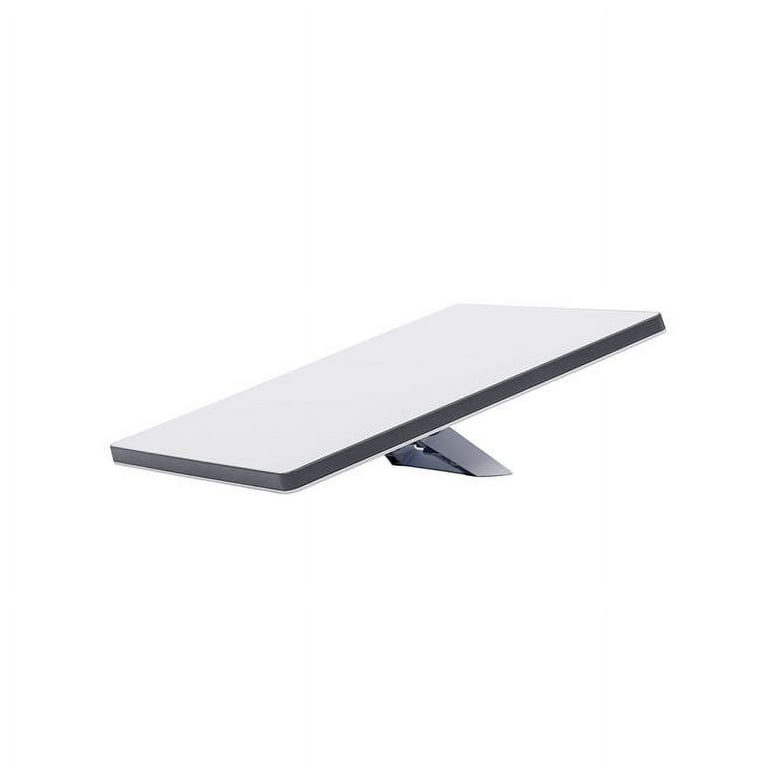
Overview
The Starlink Mini is a laptop-sized satellite internet dish with a built-in Wi-Fi router, built for vans, boats and, with some effort, backpacks. It delivers broadband speeds in places where a phone shows no bars at all. The trade-off is weight and power: at 1.1 kg before a battery, it is a heavy item for ultralight carry, and it needs a clear view of the sky to work.
Key Specs
| Spec | Detail |
|---|---|
| Weight | 1,100 g (dish only); about 1.45 kg with kickstand |
| Dimensions | 29.85 x 25.9 x 3.85 cm |
| Antenna | Electronically steered phased array, 110° field of view |
| Wi-Fi | Wi-Fi 5 (802.11ac), dual-band, built-in router |
| Power draw | 25–40 W average |
| Power input | DC, 12–48 V; USB-C PD adapters are available |
| Cable | 15 m DC power cable included |
| Weather | IP67; operates in winds of 96 kph+; melts up to 25 mm of snow per hour |
| Operating temperature | -30°C to 50°C |
| Included | Kickstand, pipe adapter, flat mount, power supply, Starlink Plug |

Would the Starlink Mini earn its spot in your pack?
1100 g · 38.8 ozAdd the Starlink Mini to your Gear Closet and see exactly what it does to your base weight, then start packing for your next trip.
Free · No credit card · iOS, Android & web · Trusted by 3,000+ backpackers
Performance
Speed. Starlink advertises speeds of 300+ Mbps. Independent testing typically lands between 100 and 200 Mbps, which is plenty for video calls, streaming and large downloads. A CNET writer streamed live sports in HD from a North Cascades summit. A CascadiaLink tester pulled 197 Mbps down and 23 Mbps up while sitting in a park with the dish in a backpack pocket.
Sky view. The Mini needs open sky. On a walk through tree-lined residential streets, the CascadiaLink tester got no lock at all for about 20 minutes. Once in an open park, the connection came up fast. Ping success while walking with the dish on a pack was 97.5%, with enough dropouts that a video call would stutter. On a forested trail, that means the dish stays in the pack until a ridge, a burn scar or a lakeshore opens the view. It is a camp-or-summit tool, not something that works while walking.
Power. The Mini has no internal battery, and power is the real constraint for backpackers. Draw is rated at 25–40 W, and testers have seen about 20 W when the dish is idle and connected. It draws more while searching for satellites, so a dish that can’t find sky drains a battery faster. A 99 Wh power bank, such as the PeakDo LinkPower 1 that clips to the dish’s back, runs it for a little over four hours. That gives one evening of use or a short daily check-in, and a multi-day trip needs several banks. Outdoor Gear Lab’s testers found that building a lightweight battery-and-solar setup was harder than expected, because small panels and batteries often fail to charge at the rate the dish needs. They also noted that battery life depends entirely on the pack you bring.
Durability. The IP67 rating covers dust and submersion. The dish is rated for -30°C to 50°C, and the electronics are not the weak point in the system. The 15 m power cable is more than a hiker needs, and it is worth leaving at home or swapping for a short one.
Router. The built-in router is Wi-Fi 5 and covers a campsite easily. It is not a mesh system, and it has no need to be. Hardware limits on the Mini mean it does not match the Standard dish’s routing options.
Plans. The Mini works with Roam plans, which are tiered by data. Starlink’s mobile tiers have been priced at $55 a month for 100 GB, $80 for 300 GB and $175 for unlimited. It is not intended as a home broadband replacement.
Pros & Cons
Pros
- 1.1 kg dish, less than half the weight of the Standard dish (3.2 kg)
- Real-world speeds of 100–200 Mbps, enough for video calls and streaming
- Built-in router, with no extra hardware to carry
- IP67 build and a wide temperature range
- Runs from DC or USB-C PD power, so it works with power banks, car batteries and vehicle outlets
- Setup is plug-in and point-at-sky, guided by the app
Cons
- Needs a wide, open view of the sky; tree cover blocks it
- Draws 25–40 W, so a 99 Wh bank lasts only about four hours
- 1.1 kg is far heavier than any satellite messenger, and the battery adds more
- Does not work reliably while walking
- Roam plan costs add up, and the hardware is a separate purchase
- Wi-Fi 5 only
Who Should Buy This
The Mini suits remote workers, trail-running crews, photographers and guides who need real bandwidth from a basecamp, a van at the trailhead or a vehicle-supported expedition. It also works for hikers who only carry it on short, planned trips with an open camp or summit. A group can split the weight and the power bank.
Thru-hikers and ultralight backpackers whose goal is to send a text, check weather or call for help should look elsewhere. A Garmin inReach Messenger weighs 113 g and lasts up to 28 days, according to Outdoor Gear Lab’s comparison data. The ACR Bivy Stick and ZOLEO weigh 102 g and 150 g. None of them provides internet, but none of them needs a battery bank the size of a brick.
Verdict
The Starlink Mini is the best portable satellite internet option for people who need it. It is also a poor fit for most ultralight kits, where 1.1 kg plus batteries buys a few hours of connection that tree cover can end at any time. Buy it for basecamp, vehicle or group trips. Skip it for long-distance hiking, where a satellite messenger does the job at a tenth of the weight.