Samsung Galaxy Buds Review
Samsung's 2019 original true wireless earbuds weigh about 51 g with their case and run 6 hours per charge, but they're discontinued and not rain-ready.
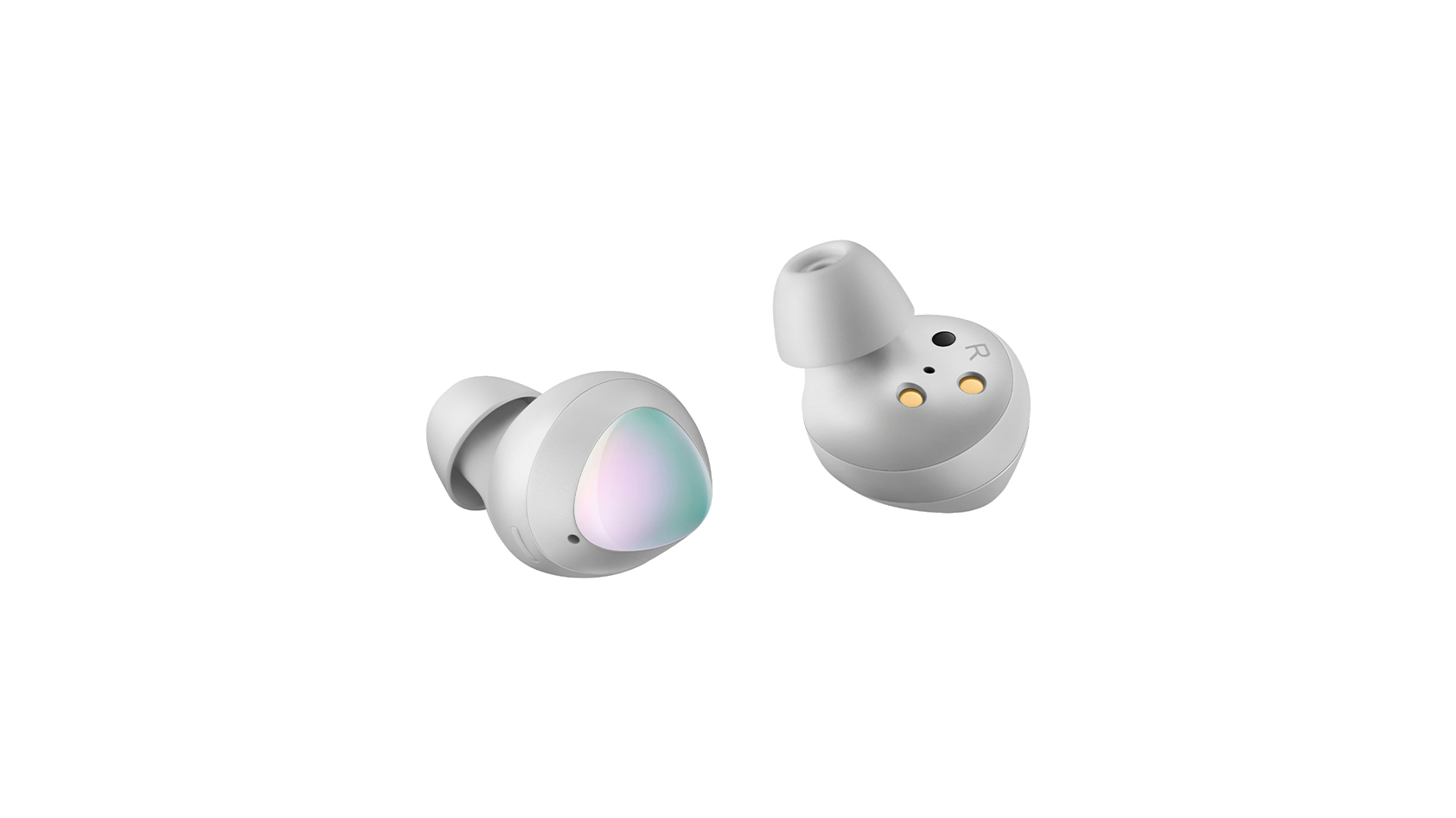
Overview
The Galaxy Buds are Samsung’s first set of true wireless earbuds under the Galaxy name. They launched in March 2019 alongside the Galaxy S10 and are now discontinued. They’re small, light, and stay put in the ear, which suits a pack’s hip-belt pocket. But six hours of playback, splash-only water resistance and an aging Bluetooth stack keep them from being a serious trail-audio pick today.
Key Specs
| Spec | Detail |
|---|---|
| Earbud weight | 5.6 g each |
| Case weight | 39.6 g |
| Earbud dimensions | 17.5 x 22.5 x 19.2 mm |
| Case dimensions | 70 x 38.8 x 26.5 mm |
| Playback time | Up to 6 hours per charge |
| Talk time | Up to 5 hours |
| Case battery | 252 mAh, roughly one extra full charge (about 7 additional hours) |
| Earbud battery | 58 mAh each |
| Bluetooth | 5.0 (A2DP, AVRCP, HFP) |
| Water resistance | IPX2 |
| Charging | USB-C or Qi wireless (case) |
| Compatibility | Android, iOS, Windows |

Would the Galaxy Buds earn its spot in your pack?
6 g · 0.2 ozAdd the Samsung Galaxy Buds to your Gear Closet and see exactly what it does to your base weight, then start packing for your next trip.
Free · No credit card · iOS, Android & web · Trusted by 3,000+ backpackers
Performance
Weight and packability. Two buds plus the case come to roughly 51 g. The case is the shape of a smooth pebble and slips into a coat pocket or a small pack compartment, according to What Hi-Fi. Most of the carried weight is the case, not the buds. That is the usual trade for true wireless earbuds, and it’s where they lose ground to a wired pair weighing a few grams.
Battery. Samsung rates the buds at six hours, and Tom’s Guide found they lived up to that claim. The case is the weak point. Its 252 mAh cell adds only about seven more hours, a figure Tom’s Guide called disappointing. That makes roughly 13 hours of total playback before the case needs a wall outlet or battery bank. On a weekend trip that’s fine. On a week-long section hike with daily listening, the case will be dead by midweek. Charging is flexible: the case takes USB-C or Qi wireless power, including from an S10 phone via Wireless PowerShare. The case tops up the buds. Nothing in Samsung’s specs presents it as a power bank for other devices.
Fit and comfort. This is the Buds’ strongest suit. Small rubber wingtips lock the earbuds in place. RTINGS described them as small and secure enough for sports, and noted good isolation against ambient chatter and high-frequency noise like air conditioning. Owners on Reddit’s Galaxy Buds communities still praise the original fit, with one recent owner reporting that the first-gen Buds never fell out while a pricey 2026 successor wouldn’t stay in. RTINGS did note that the in-ear fit may not suit everyone for a full workday of wear.
Sound and connection. The Buds were tuned with AKG and lean warm and bassy, per TechRadar. Reviews split on quality: SoundGuys called them a strong match for the S10, while What Hi-Fi likened the sound to a pair of ordinary cheap in-ears. What Hi-Fi’s testers also saw left-right balance shifts and signal dropouts in the first days. RTINGS found latency worse than Samsung’s previous Gear IconX. Both RTINGS and SoundGuys point to the Galaxy Buds+ as the better call quality and battery upgrade.
Trail awareness. There is no active noise cancellation. Instead, an Ambient Sound mode pipes in the surroundings, which is the more useful feature on a trail shared with mountain bikes, cars at road crossings or the occasional rattlesnake. Dual microphones on each bud handle calls.
Weather. IPX2 protects against light vertical drips and nothing more. A sustained rain, a sweaty climb or a stream crossing in a chest pocket is a risk. The case has no weather rating at all.
Platform quirks. Instant pairing by opening the case works only with Galaxy devices. Tap-control customization and the Galaxy Wearable app are limited to supported phones, and What Hi-Fi noted the app is Android-only. The buds still work as plain Bluetooth earbuds on iOS and Windows, though owners report occasional audio glitches and Windows incompatibility.
Pros & Cons
Pros
- 5.6 g buds with a pocketable 39.6 g case
- Secure wingtip fit that owners say holds through activity
- Six hours per charge, with flexible USB-C and Qi charging
- Ambient Sound mode helps with trail awareness
- Cheap on the used market
Cons
- Case adds only about seven hours, so multi-day trips need a recharge plan
- IPX2 rating is not enough for rain or heavy sweat
- Sound quality is average, with early reports of signal dropouts
- Full features depend on a Samsung phone
- Discontinued, with no ANC and a battery that has aged since 2019
Who Should Buy This
The Galaxy Buds suit a Samsung owner who finds a pair secondhand or deeply discounted and wants a light, secure-fitting set for day hikes, commutes, or weekend trips where there’s a charger within reach. They fit best as a listening-while-camp-chores pair. Thru-hikers, wet-climate hikers and anyone who needs multi-day battery should look elsewhere, whether at the Galaxy Buds+ for the improved battery or at a pair of wired earbuds that never need charging.
Verdict
The original Galaxy Buds are a comfortable, light set of earbuds with a reasonable six-hour runtime, and they were a solid debut in 2019. Seven years on, the weak water resistance, short case reserve and uneven sound make them a bargain-bin choice rather than a recommended one for the trail.